The trauma of wanting approval: Why so many of us are tired of performing
 The Mt Kenya Times
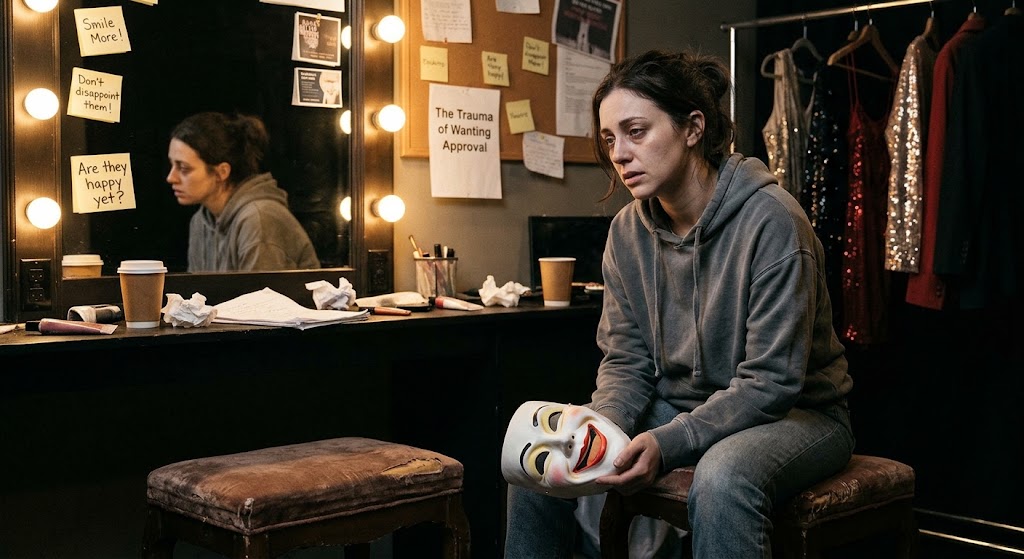
Across Kenya, millions of people spend their lives seeking validation they were never taught they already had.
By Wanjohi P Mugambi
For years, development in Kenya has been measured in roads, buildings and GDP. Rarely has it been measured in the quiet exhaustion of people who perform every single day simply to be accepted. A student waits for a teacher’s nod before trusting her own answer. A graduate refreshes his phone for a job application reply. A mother says she is fine when she is breaking inside. These are not isolated incidents. They are symptoms of a pattern that begins in childhood and follows people into adulthood: the need to earn love through approval.
Research in developmental psychology shows that the first five years of life shape how a person regulates emotion, forms relationships and views themselves. Studies by the World Health Organisation and UNICEF consistently find that children raised on conditional affection — love given for good behaviour and withheld for mistakes — are significantly more likely to develop anxiety, low self-esteem and chronic people-pleasing in adulthood. The brain learns early that safety depends on pleasing others.
In Kenyan homes, this lesson often begins with language. A child hears: if you are obedient, you are a good child; if you pass the exam, we will be proud of you. The intention is discipline. The effect, in many cases, is something else entirely. The child absorbs a quiet verdict: I am not loved for who I am, but for what I do. That verdict does not dissolve when childhood ends. It travels with the person into the classroom, the staffroom, the church, the office and the marriage.
In a primary school in Nyeri, a Class 6 pupil — call her Wanjiru — knows the answer in Mathematics but will not raise her hand. She is not lacking knowledge. She is afraid of being wrong in front of her peers, because she has learned that a wrong answer brings laughter rather than learning. By Class 8, Wanjiru has stopped trying altogether — not because she is dull, but because she is protecting herself from disapproval.
In Kirinyaga, a Form 3 boy — call him Kamau — laughs at jokes made at his expense because he cannot afford to be called sensitive. He carries other students’ bags and does their homework because saying no feels more dangerous than being used. Teachers describe him as well-behaved. In reality, he is exhausted from performing obedience. The same dynamic appears among adults: a young teacher in Murang’a works until 10pm every day and never declines extra duties — not purely from passion, but from a deep fear that rest will be read as failure.
Psychologists call this response fawning — one of four stress responses alongside fight, flight and freeze. When a child cannot fight a parent, cannot flee school and cannot leave a church, the child learns to appease. It works in childhood. In adulthood, it becomes destructive, because the grown person continues applying a child’s survival strategy to adult problems.
Social media has intensified the pattern considerably. Where previous generations sought approval from family and neighbours, today’s young people seek it from thousands of strangers. Approval has become measurable — in likes, followers and views. A study by the American Psychological Association links heavy social media use to increased anxiety, greater social comparison and lower self-esteem, particularly among adolescents. A young woman in Embu posts a photo, then deletes it after ten minutes because it attracted only twelve likes. A young man in Meru scrolls through classmates’ job announcements and concludes he has failed at life. What people rarely post is their lowest moment. What they always post is their best. And the rest of us compare our worst to their finest.
Language compounds the wound. Words spoken in childhood — you are useless, no one will marry you, you have disappointed us — can echo for three decades. Research on adverse childhood experiences shows that repeated verbal shaming does not build resilience; it builds hypervigilance. The child becomes an expert in reading other people’s moods — knowing a parent is angry by the sound of footsteps — but no one has taught her to read her own.
The reason approval-seeking never satisfies is structural. If ten people’s validation feels sufficient today, twenty will be needed tomorrow. It is like drinking salt water when thirsty: the more one drinks, the worse the craving becomes. External approval cannot fill an internal absence of self-worth.
Healing must therefore be practical, not merely theoretical. It must begin with awareness — in classrooms, when a teacher pauses to ask a child who agrees with everything whether they actually want to, or are simply afraid to refuse. It must continue at home, when a parent notices a child who apologises for everything and gently asks what they actually feel.
Small boundaries must be practised. Healing does not begin with dramatic confrontation, but with modest refusals. No, I cannot talk right now — I need to rest. No, I do not want to go today. In school, a teacher who says she will mark these books tomorrow because she needs rest, and that this does not make her a bad teacher, models more than any lesson plan can.
Opinion must be separated from identity. When a teacher returns a failed test and says you failed this test, but you are not a failure, that single distinction can alter a child’s entire relationship with learning. The same applies in the workplace: this report needs correction is not the same as you are incompetent.
Research by psychologist Kristin Neff shows that people who treat themselves with kindness during failure are more resilient, more motivated and less anxious than those who practise harsh self-criticism. In practical terms, this means replacing the internal sentence I am not good enough with I am doing my best, and I am worthy even when I fail. This is not softness. It is a learnable skill.
At a systemic level, schools must broaden what they celebrate. When only top scorers are recognised, children learn that worth equals performance. A school in Nyeri that began weekly recognition for the most improved learner and the most helpful learner — not the highest mark — reported a visible rise in participation within a single term. Children who had stopped raising their hands began trying again, because the cost of disapproval had been lowered.
Parents, too, must be supported to change their language. Instead of why did you get 60 and not 90, a parent might ask: I see you tried — what was difficult? Instead of stop crying, you are a man, a parent might say: it is okay to cry — tell me what hurts. These are not foreign ideas. They are human ones, available in any home in Mt Kenya.
The trauma of wanting approval tells a persistent lie: that if you can just be perfect enough, quiet enough, successful enough, then you will finally be loved. The truth is simpler and more stubborn. You were worthy before you began performing. You are worthy now, with every flaw and failure intact. You do not need to earn the right to exist.
So do one thing today not because it will impress anyone, but because it is honest. Rest without guilt. Speak without apologising. Say no without explaining. Be yourself without permission. Healing is not about becoming someone else. It is about returning to the person you were before the world told you who to be.
You are enough. You always were.
Similar Posts by The Mt Kenya Times:
- New Maara law courts to ease access to justice in Tharaka-Nithi
- Ruto unveils industrialisation fund to offer Kenyans single-digit interest loans
- PSK warns Kenyans against dangerous cetirizine misuse driven by social media trend
- Owono breaks silence after De Miguel tragedy: ‘The most difficult days of my life’
- Nyamira High Court acquits four accused in murder of couple
About the Author