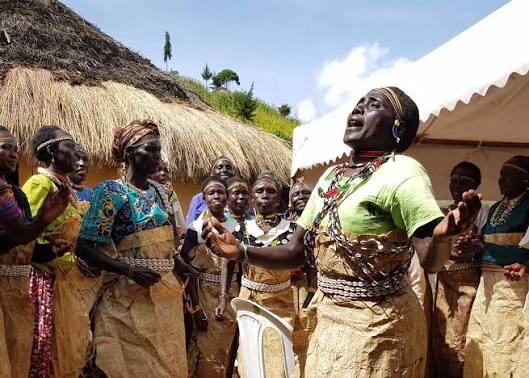
Nyinamwiru wept in a cave and Nyabagabo wept in a court — and Tooro, born between their tears, has never fully escaped either
By Mukama Phillip Kahigiriza
The Batooro have a saying: Obukama butandikire omu kurira tekulyaka — a kingdom founded on weeping never rejoices.
It is not a proverb about sadness. It is a warning about history. And in Tooro, history has a way of arriving on time.
To understand the Kingdom of Tooro, you cannot begin in 1822, when it was founded. You must go back much further — to a cave, a mutilated princess, and a curse that entered the bloodlines of every Babiito kingdom long before Tooro existed. The story begins with a woman named Nyinamwiru.
She was the daughter of King Bukuku of the Batembuzi dynasty, said to be the most beautiful woman in the ancient empire of Kitara. Her father loved her, but he feared something more than he loved her. His royal seers, the Barahuka, delivered a prophecy: your own grandson, born from Nyinamwiru, will overthrow you, kill you, and take your throne.
Bukuku resolved to kill fate itself. He locked Nyinamwiru away. He posted guards around her hut so that no man could come near her. But beauty, and apparently fate, found a way. In his panic, Bukuku ordered the unthinkable. His servants cut off both of Nyinamwiru’s breasts so she could never nurse a child. They gouged out one of her eyes to disfigure her. Then they threw her into the cold, dark cave networks that lie just outside what is today Fort Portal.
Alone, bleeding, mutilated by her own father, Nyinamwiru wept. And her weeping became a curse.
She spoke to the stones of the cave, to the blood on her chest, to the kingdom that had destroyed her. She said: because you have cut my body to keep power, your power will never have peace. Your rulers will die young. Your crowns will be too heavy — you will be forced to place them on the heads of children. Your palace will know no succession without blood.
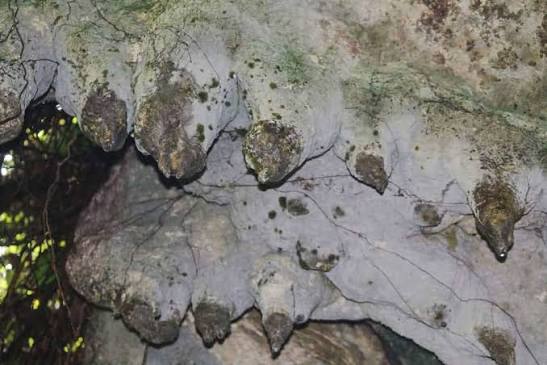
And then fate proved itself unmockable. Despite everything Bukuku had done, Nyinamwiru became pregnant by King Isaza, a great chief from beyond. She gave birth in secret inside that cave. She could not breastfeed her son, so she pressed her lips to the stalactites above her and squeezed the milky, calcium-rich water dripping from them into his mouth. White like milk, cold as stone — that was his first nourishment. Those caves are called Amabere Ga Nyinamwiru — the Breasts of Nyinamwiru — and tourists still visit them today, still watching the white stalactites drip.
That child was Ndahura, founder of the great Chwezi Empire. He grew up disguised as a potter’s son. When he was a man, he met his grandfather King Bukuku and killed him, exactly as the prophecy had foretold. The curse of Nyinamwiru entered the bloodline of Kitara from that day. Every Babiito kingdom that descended from Kitara — Bunyoro, Tooro, Busongora — inherited it.
So when Tooro was born in 1822, it arrived already carrying a thousand-year-old wound.
The second curse came from a mother’s love, not a father’s cruelty. Prince Kaboyo Omuhundwa Kasusu, son of the powerful King Kyebambe III of Bunyoro-Kitara, was caught stealing his father’s prized cattle. The King, unmoved by blood ties, invoked the ancient law: gouge out his eyes.
Kaboyo’s mother, Nyabagabo, the King’s favourite wife, ran barefoot to the court. She begged. She pleaded. Kyebambe refused. In tears that turned to fire, she cursed her husband and his throne: may your kingdom never be whole again. The land my son steps on will never be yours again.
That night, Kaboyo fled south across the River Muzizi and declared himself King Olimi I of a new kingdom — Tooro. The mother’s curse held. Bunyoro never recovered that land, and father and son became enemies locked in permanent war. But Kaboyo carried Nyinamwiru’s older curse south with him, embedded in his Babiito blood.
What followed was fifty years of fratricidal horror. The Babiito system held that any prince with enough strength and will could claim the throne — usually by eliminating the competition. Between 1822 and 1871, Tooro buried eleven kings while neighbouring Buganda buried only three. Olimi II Ruhundura poisoned his brother Kazana with his own hands. Nyaika killed his brother. The stones of Karuzika Palace, people said, turned black from royal blood. A throne that devours its own children cannot stand, and Tooro fell — first to Buganda, then to the British.
The Babiito responded to both curses with ritual. Every coronation in Tooro is, at its core, an attempt to break what Nyinamwiru and Nyabagabo set in motion.
In the ritual of Okusita Amagita — Stepping Over Blood — a spotless white cow is slaughtered at the palace gate on the eve of coronation. It represents a mother’s tears. The new king, barefoot, steps over its warm blood, vowing not to spill kin blood. He then steps onto a leopard skin, the Engo, totem of the Babiito, to show he has conquered his own ferocity.
The Sacred Fire, Orubingo Rwa Kazooba, has burned since Kintu. Carried south by Kaboyo when he fled Bunyoro, it is guarded by the Basiita clan in a small hut inside Karuzika. When a king dies, the fire dies with him, and the kingdom enters spiritual darkness until his successor re-lights it from the sun using a crystal. When Obote’s soldiers extinguished it in 1967, Tooro wandered in that darkness for 26 years — until King Oyo re-lit it in 1995.
The coronation itself, Empango, is not a celebration. It is a resurrection. For three days, the king-elect is locked inside the Akabukali hut and beaten with sacred reeds by elders. They beat the childhood out of him, the greed, the curse of Nyinamwiru. He must cry. Then at dawn, the royal drum Empuuga Ya Tooro — said to be made from the skin of a man and a leopard and believed to carry the voices of every dead king — is beaten. The new king must dance before it until he collapses. Only then does the drum accept him.
The most secret ritual targets Nyabagabo’s curse directly. At four in the morning, the new king goes alone to the source of the River Mpanga — the river that separates Tooro from Bunyoro — and bathes naked in its icy water while ritualists chant. He washes off Bunyoro. He washes off exile. He washes off the mother’s curse. King Kasagama refused this ritual after converting to Catholicism. Traditionalists believe that refusal cost his lineage dearly.
And indeed, the child kings came.
Kasagama, watching his sons position themselves to fight over his throne, is said to have whispered on his deathbed in 1928: let the throne go to children, not to greedy adults. His wish was granted — but it was also Nyinamwiru’s prophecy fulfilling itself on schedule.
George Rukidi III was crowned at five and died at forty-one. His son Patrick David Mathew Kaboyo Olimi III took the throne at nineteen, only for Obote to abolish the kingdoms in 1967 and burn Karuzika. Patrick died in exile in Kampala in 1969, aged twenty-four. A young king, dead young — exactly as decreed.
That left a three-year-old. In 1995, Oyo Nyimba Kabamba Iguru Rukidi IV was carried to the throne, the youngest reigning monarch in the world. An orphan king, raised by the kingdom itself. His father had died young, as fathers in this line tend to do. But Oyo reigned longer than any of them — until last week, when he died at thirty-four. That he survived to adulthood at all, say the elders, was the first whisper of hope that the ancient curse might be loosening its grip. That he still died young suggests otherwise.
Historians will frame all of this differently. Bad succession laws, colonial manipulation, Obote’s politics, medical realities — these are the explanations that documented history provides, and they are not wrong. King Oyo’s father died of causes medicine can name.
But in the villages around the Amabere caves, they will tell you that medicine only names what the curse already decided. Tooro sits on some of the richest soil in Uganda — endless tea plantations, copper at Kilembe, gold in the Rwenzori Mountains — yet its people remain poor. Rich land, poor people. The elders call that the final curse, the one Kaboyo’s ghost laid upon the politicians who dismantled tradition.
Today, Fort Portal speaks of the land curse too — that anyone who buys kingdom land illegally falls sick. And that the tensions between the Queen Mother and the Queen are simply Nyabagabo’s story, playing itself out again in modern dress.
Every king of Tooro still steps over blood, is beaten with reeds, bathes in a cold river before dawn, and dances before a drum until he falls. He is not being crowned. He is begging two thousand years of grief to let him live a little longer.
The kingdom has carried its inception story since inception — from Nyinamwiru’s cave to Nyabagabo’s tears. And that story still drips, white and slow, like milk from the stones.
Similar Posts by The Mt Kenya Times:
- Diaspora Times Global Oct 17 – Oct 23, 2026
- Is social media a blessing or a curse for university students?
- Light at last: How electricity is reshaping Nandi and Uasin Gishu
- The triple squeeze: how EPRA’s fuel price hike is reshaping the survival equation for the common mwananchi
- Zelenskyy accuses Trump of rewarding Putin as Pope pleads for peace from a hospital bed
About the Author