The Unguarded Barracks Of The African Continent Echoing The Silence Of Complicity
 The Mt Kenya Times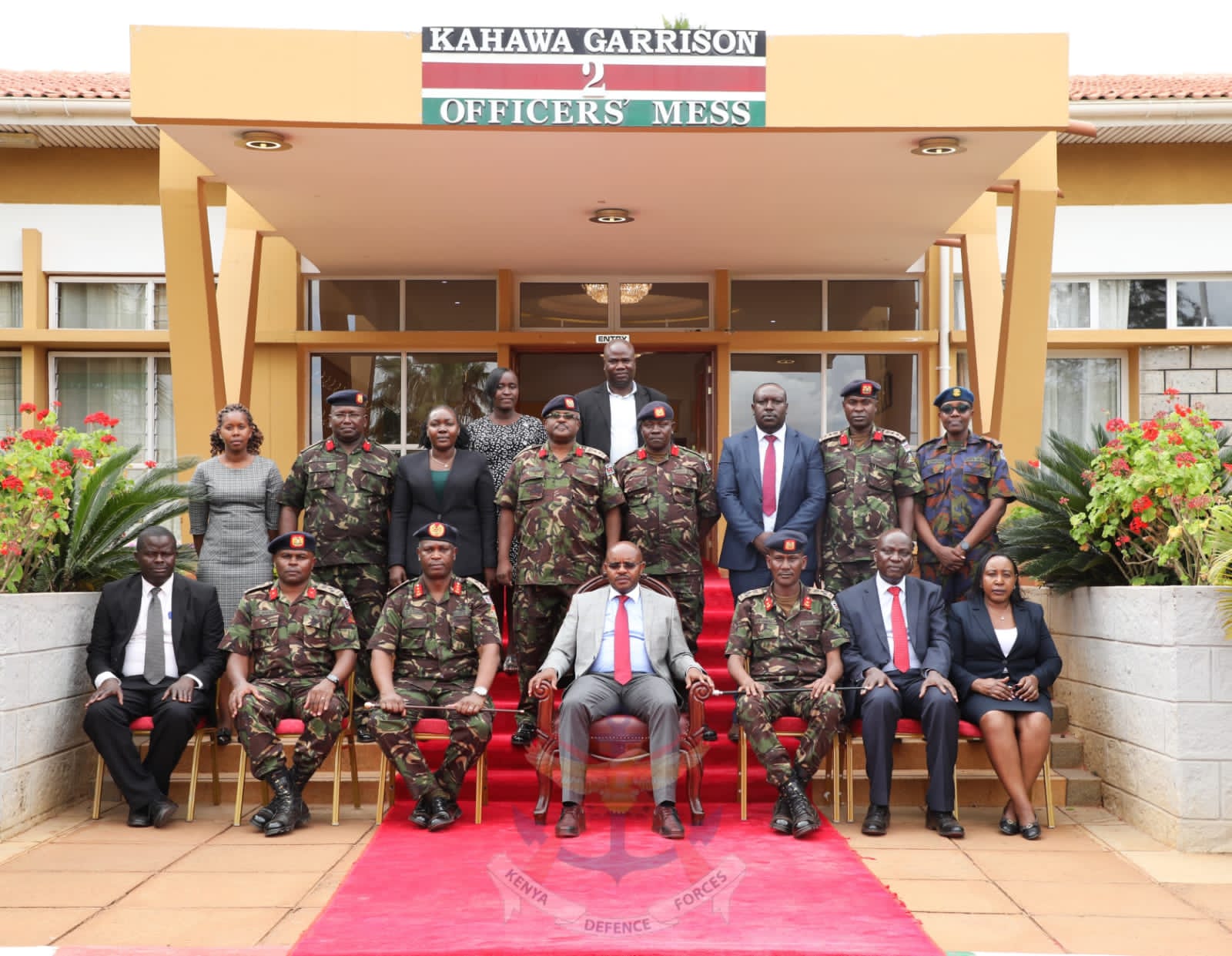
Kenya’s Kahawa Barracks
How African states are enslaving themselves to Western powers and why the UN Security Council remains unjust to Africa.
By: Midmark Onsongo
Worth Noting:
- The irony is suffocating. The UN Security Council was formed to prevent the very thing it now enables: the tyranny of a few over the many. Africa is home to 54 countries, more than any other continent, yet we are given fleeting glimpses of power, as if two years is enough to influence the world stage. The West doesn’t need to say it out loud, but their actions scream it: Africa is here to be managed, not to lead. But let us not absolve ourselves of guilt.
- Our leaders, those who have sworn to protect us, are complicit in this ongoing enslavement. We wave the flag of sovereignty while begging for aid from the very nations that have stripped us of dignity. We talk about independence while accepting Western military bases on our soil.
The echoes of a continent’s past seem to reverberate louder than the commands given to soldiers in fatigues. From Kenya’s Kahawa Barracks to Nigeria’s Maimalari Barracks, from South Africa’s Thaba Tshwane to Uganda’s Bombo Barracks, the stage is set for a play written not by the people who occupy these lands but by foreign powers who cast Africa as the eternal servant, the quiet observer, the silent bystander.
Have you ever wondered why Africa, with its wealth of resources and strategic significance, continues to bow to a world order that neither respects it nor acknowledges its full potential? Why, for all our contributions to global stability, is Africa still relegated to the outer rings of power, while the West feeds us breadcrumbs under the guise of diplomacy?
The United Nations, that hallowed institution designed to foster peace, justice, and cooperation, has betrayed its promises when it comes to Africa. The UN Security Council stands as the clearest symbol of this betrayal. There are five permanent members – the United States, China, Russia, France, and the United Kingdom – who hold the ultimate veto power, deciding the fate of global conflicts with a wave of their hands. And then there is Africa.
We, the so-called “non-permanent” members, are allowed to sit at the table for a measly two-year term, watching the big powers exercise their privileges. Like children in a room of adults, we are granted permission to speak, but never the authority to decide. Why not Africa, you ask? Why, in this allegedly democratic institution, are African countries treated as second-class members? Is it because our skin is darker? Is it because our lands are rich with resources they still covet? Is it because the West thrives on our disunity?
The irony is suffocating. The UN Security Council was formed to prevent the very thing it now enables: the tyranny of a few over the many. Africa is home to 54 countries, more than any other continent, yet we are given fleeting glimpses of power, as if two years is enough to influence the world stage. The West doesn’t need to say it out loud, but their actions scream it: Africa is here to be managed, not to lead. But let us not absolve ourselves of guilt.
Our leaders, those who have sworn to protect us, are complicit in this ongoing enslavement. We wave the flag of sovereignty while begging for aid from the very nations that have stripped us of dignity. We talk about independence while accepting Western military bases on our soil. Look around: the U.S. has over 29 military outposts in Africa, with Camp Lemonnier in Djibouti standing as the crown jewel of AFRICOM, their military command for the continent.
France, too, clings to its old colonies with a network of bases that stretch from Côte d’Ivoire to Chad. And yet, we allow them to call us free. The history of African subjugation is not just in the past, it is in the present. On October 14, 2021, the West showed its true face when it orchestrated the assassination of Mali’s interim President, Assimi Goïta, after he challenged their meddling in the Sahel.
This is the same West that funded Libyan rebels in 2011, leading to the toppling and brutal murder of Muammar Gaddafi, plunging Libya into chaos. It is no coincidence that, after Gaddafi’s death, terrorism flourished in the region. The West has a long history of using terrorism as a tool to destabilize Africa.
It was the CIA that funded the Mujahideen in Afghanistan, the predecessors of the Taliban, and it is the same strategy they are employing here. Just look at the rise of Boko Haram in Nigeria, Al-Shabaab in Somalia, and ISIS in Libya. The fingerprints of Western intervention are all over the blood-stained maps of Africa.
Yet, while the West destabilizes our governments, it also steps in as the “savior,” offering military aid and advisors to fight the very terrorism they helped create. It is a brilliant strategy – create a problem, then offer the solution, all while maintaining control. The hypocrisy is so thick, you could choke on it. They tell us they are helping us fight terrorism, but what they are really doing is ensuring that African states remain dependent on them for security. After all, if Africa became truly self-sufficient, where would the West get its cheap uranium, oil, and gold?
Even our economic enslavement is carefully orchestrated. The International Monetary Fund and the World Bank, two institutions dominated by Western powers, continue to keep Africa in a stranglehold of debt. In 2023, Africa’s total debt reached $696 billion.
The interest on these loans is like a chain around our necks, tightening with each passing year. And yet, our leaders continue to sign these agreements, knowing full well that the terms are designed to keep us poor. Who benefits from this cycle of poverty? Not Africa. No, the real beneficiaries are the multinational corporations that swoop in to exploit our resources once we have been weakened by debt.
And then there’s the irony of foreign aid. Western countries pat themselves on the back for donating billions to Africa, but this is nothing more than a euphemism for control. Aid is never free. It comes with strings attached – political influence, military presence, and access to our resources. In the end, we pay a far higher price than the money they give us. Have you noticed that the countries that receive the most aid are often the ones that suffer the most corruption, poverty, and instability? This is no coincidence.
Let’s not forget the complicity of our own leaders in this grand scheme of subjugation. The kleptocrats who run our governments are more than willing to sell out their people for a Swiss bank account and a villa in France. The West knows this, and they exploit it at every turn. They fund our elections, back our dictators, and turn a blind eye to human rights abuses as long as their interests are protected. And we, the people, suffer in silence, too afraid or too complacent to rise up. So here we stand, in a paradox of our own making. Africa is the richest continent on Earth in terms of resources, yet its people are among the poorest. We are home to some of the world’s fastest-growing economies, yet we remain shackled by debt. We are a continent of proud nations, yet we allow foreign powers to dictate our future. The question we must ask ourselves is simple: when will we wake up?
The time for polite diplomacy is over. Africa cannot afford to be the world’s doormat any longer. We must demand a permanent seat at the UN Security Council, not as a token, but as a right. We must reject the military presence of foreign powers on our soil and build our own security apparatus. We must tear down the systems of debt and aid that have kept us in chains for too long. The West will not give us freedom – we must take it.
And so, Africa, the question remains: Will we continue to sit in the barracks of our own making, or will we finally rise, break the chains, and take our place at the head of the global table? The answer is in our hands.
This article was scripted by;
MIDMARK ONSONGO, SGS
(Socio-Geographic Scholar)
Similar Posts by The Mt Kenya Times:
- Why James 3:1 prescribes the harshest judgment for teachers
- City stay perfect as late Cunha goal saves United
- Passaris joins walk for dignity: Nairobi representative backs campaign for incontinence support
- Diaspora Times Global Sep 19 – Sep 25, 2026
- Tibet’s glacial catastrophe: Behind Beijing’s wall of silence, a climate disaster reshapes a region
About the Author