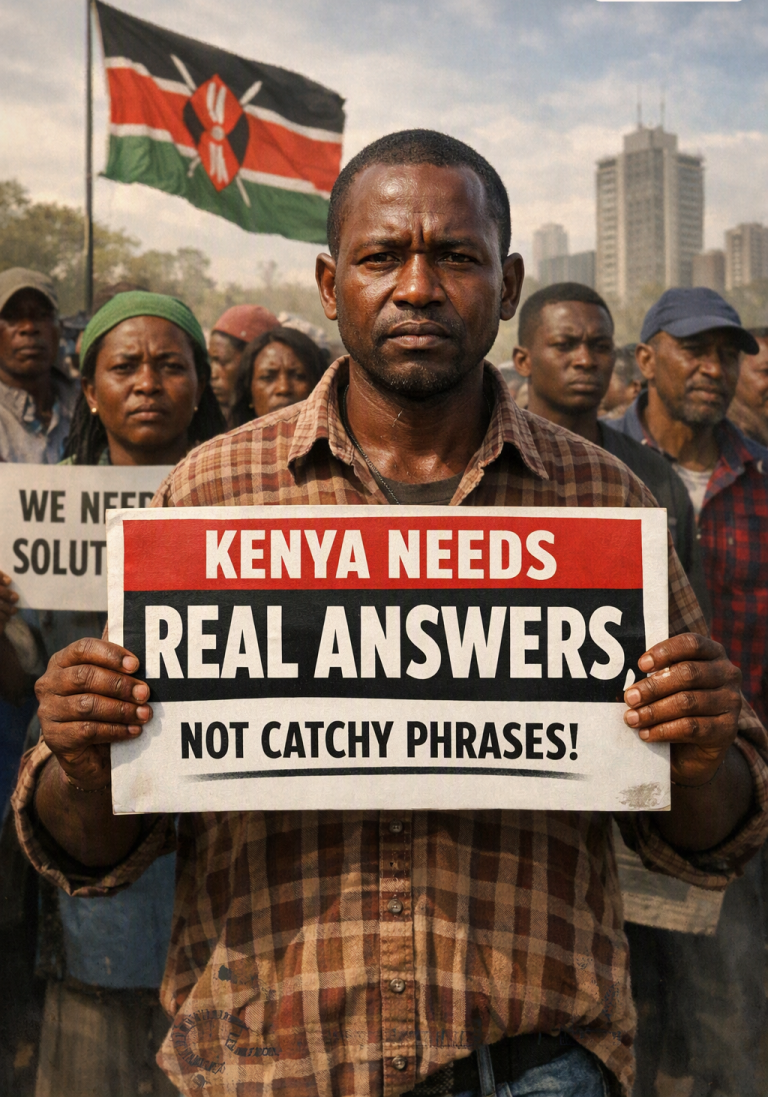

In a time when the rapid spread of information through social media reigns supreme, discerning truth from falsehood has become a critical challenge. Kenyans, like many others around the world, has prioritize speed over accuracy, sharing over reading and commenting over understanding, leading to the rampant sharing of disinformation without thorough verification.
This phenomenon came into focus on Monday, April 22, when a video began circulating widely across social media platforms, purportedly showing Kenya Army Commander Lieutenant General David Kimaiyo Tarus being sworn in as the new Chief of Defece Forces (CDF), as though it were a part of N54 breaking news broadcast. The text that accompanied the video read: ‘The successor to Francis Ogolla. New military leaders Lieutenant General David Kimaiyo Tarus.”
The video’s emergence, days after the tragic loss of Kenya’s Chief of Defence Forces, Francis Ogolla, in a helicopter crash on April 18, 2024.
A review of the Ministry of Defence and the Kenya Defence Forces’s social media handles indicates no such appointment has been made.
However, a Google reverse image search debunks the authenticity of the video as it indicates that the manipulated video clip was taken from an event on March 8, 2024, at State House Nairobi when Tarus was being promoted as commander of Kenya Defence Forces (KDF), which was live stream on the President’s Facebook page.
Following the dissemination of this manipulated video, several politicians took to their social media timelines to share it, either inadvertently or with malicious intent. Their actions elicited a range of reactions from netizens, with some blindly accepting the false narrative and others expressing skepticism and calling for verification.
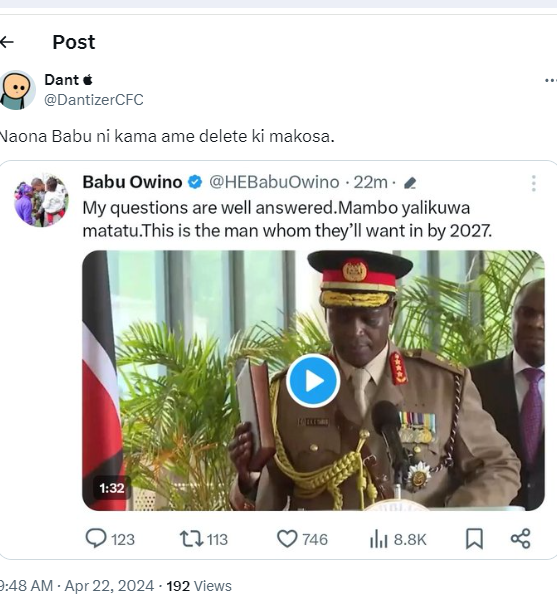
This incident serves as a reminder of the dangers posed by disinformation campaigns. Disinformation, defined as intentionally false information shared with the aim of misleading others, has emerged as a global threat. According to a report by World Economic Forum Global Risks Perception Survey 2023-2024, disinformation now tops the list of global risks, underscoring its far-reaching implications.
Combatting disinformation requires a concerted effort from various stakeholders, including governments, media organizations, civil societies and individual users. Fact-checking mechanisms, media literacy programs, and stringent regulations on the spread of false information are essential steps in mitigating the spread and impact of disinformation.
In conclusion, we must teach all of our citizens how to be researchers and scientists when it comes to consuming information. Most importantly, we must emphasize verification and validation over virality and velocity. In the end, the only way to truly begin to combat the spread of digital disinformation is to return to the days when we taught society to question what they read online.
Similar Posts by The Mt Kenya Times:
- Mt Kenya Times ePAPER October 17-18, 2026
- Ruto bets billions on Kerio Valley — with one eye on 2027
- Ruto’s health ministry kills Murang’a’s digital hospitals
- Kenya bets on Mount Kenya to drive a billion-shilling tourism revival
- Do you have a wealth vision? Or are you just working until you die?
About the Author