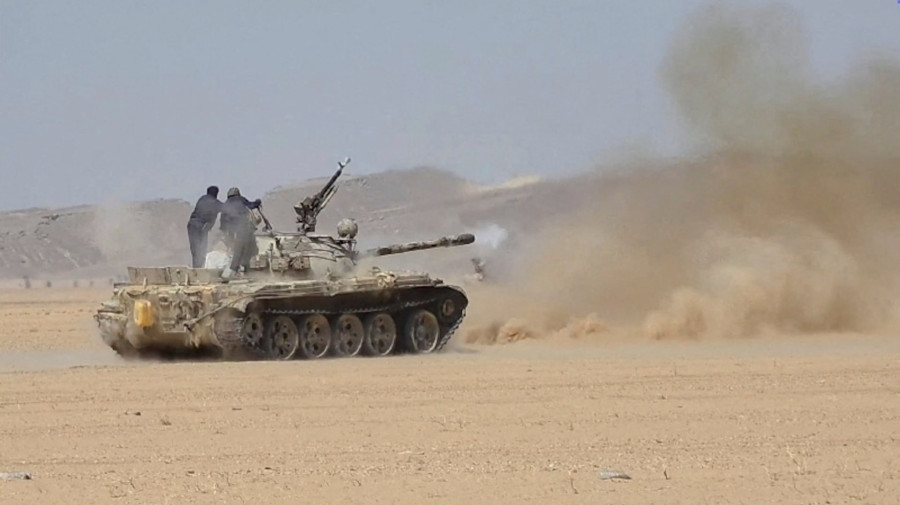
Houthi advance along Yemen's Red Sea coast
Yemen, the Red Sea and the new geopolitics of disruption are changing the price of peace
By Levis Wangamati
There was a time when a war in Yemen could be dismissed — at least by those far from the Middle East — as another distant conflict between forces whose names rarely survived beyond the evening news. That luxury is disappearing. The latest Houthi advance along Yemen’s Red Sea coast has brought the group closer to commanding one of the world’s most consequential maritime chokepoints, the Bab el-Mandeb Strait. With strategic territory and islands now caught in the struggle, the conflict is no longer merely about who governs Yemen. It is becoming a contest over who can influence the arteries through which the global economy breathes. The battlefield may be in Yemen, but the consequences could eventually reach every continent.
That is what makes this moment different from the countless regional conflicts that have filled the world’s newspapers over the past decade. The Bab el-Mandeb is not simply a narrow strip of water on a geography map between Yemen and Africa. It is a gateway connecting the Red Sea to the Gulf of Aden and the wider Indian Ocean, linking trade between Europe, Asia, the Middle East and Africa. When that gateway becomes unstable, the consequences do not stay in Yemen. Ships change routes, journeys grow longer, insurance becomes more expensive, fuel consumption rises and supply chains begin absorbing the additional cost. Somewhere down that chain is a consumer who may never have heard of Bab el-Mandeb but suddenly wonders why everything costs more.
The frightening part is that the world is now confronting more than one threatened maritime artery simultaneously. The Strait of Hormuz has already been drawn into the wider conflict involving Iran, while the latest Houthi gains create another pressure point at Bab el-Mandeb. These are among the strategic passages through which enormous quantities of energy and commercial goods move between continents. If instability spreads across both corridors, the consequences could reach well beyond military calculations and into the foundations of the global economy. A disruption in one place can be absorbed. A disruption in several places at once can become something far more dangerous — geopolitical tension converted into worldwide economic pressure.
Geography has always been one of the quietest forms of power. A country does not necessarily need the largest economy, the most advanced military or the biggest population to matter enormously to the world. Sometimes it only needs to sit beside the right piece of water. Yemen sits beside one of those pieces. Egypt controls the Suez Canal. Djibouti occupies the same Red Sea corridor. Saudi Arabia possesses enormous energy resources, while Iran sits beside Hormuz. Countries that international politics sometimes describes as regional players suddenly become custodians, gatekeepers or potential disruptors of global prosperity. Geography gives them leverage that money and military strength alone cannot easily manufacture.
Africa should understand this better than most. The Red Sea is not a distant wall separating African interests from Middle Eastern politics. The Horn of Africa sits directly beside one of the planet’s most important maritime corridors, and the movement of ships through those waters affects African economies in ways that remain largely invisible until prices begin rising. Djibouti, Somalia, Egypt, Ethiopia and countries across the wider region are connected to the security of these routes through trade, ports, energy and regional diplomacy. What happens on the Arabian side of the Red Sea can produce consequences on the African side. Africa is not watching this crisis from the balcony. Africa is sitting beside the stage.
Kenya, in particular, cannot afford to observe this crisis as though it belongs only to Washington, Riyadh, Tehran or Sana’a. The distance between Kenya and Yemen is geographical, not economic. Kenyan businesses depend on international shipping. Consumers depend on imported fuel, machinery and manufactured goods whose prices are shaped by transportation costs. Farmers are exposed to global prices for fuel and agricultural inputs. Transport operators feel the consequences whenever energy becomes more expensive. A crisis thousands of kilometres away can walk quietly into a Kenyan household without ever crossing the border. It can arrive through a shipping invoice, a fuel adjustment or the rising price of an imported product.
That is the cruel mathematics of modern geopolitics. A missile fired thousands of kilometres away can become an increase in transport costs in Nairobi. A damaged oil facility can become a more expensive litre of fuel in Nakuru. A threatened maritime passage can become a higher import bill for a small business in Mombasa. A geopolitical decision made inside a presidential palace can enter an African household through the price of food, transport or electricity. Ordinary people rarely get to vote on these decisions, yet they frequently pay the bill. The most powerful reminder of globalisation is not found in diplomatic conferences. It is found in the monthly household budget.
But beneath the calculations about oil, shipping and strategic territory lies the human tragedy that should never disappear from this story. Yemen has already endured years of conflict, displacement, hunger and destruction, and renewed fighting threatens to deepen that suffering. Thousands of civilians have reportedly been forced to flee areas affected by the latest offensive, once again demonstrating the familiar pattern of modern warfare: politicians calculate territory while civilians calculate how to survive. Homes are abandoned, families separated and communities uprooted long before diplomats begin discussing ceasefires. The people who suffer most are usually those with the least influence over how conflicts begin or how they end.
There is something deeply uncomfortable about an international system in which a shipping route attracts faster diplomatic attention than a starving population. Markets react instantly to threats against oil supplies. Stock exchanges respond to geopolitical uncertainty within minutes. Insurance companies calculate risk with extraordinary precision, and governments immediately begin assessing the economic consequences of disrupted trade. Yet human suffering often waits for a humanitarian appeal, a donor conference and another round of diplomatic meetings. The world has become remarkably efficient at protecting commerce and remarkably slow at protecting civilians. That contradiction should trouble every government that claims to believe in an international system built around human dignity.
The United States faces an especially difficult calculation. Washington must decide whether protecting Saudi Arabia and international shipping requires deeper military involvement or whether further intervention risks turning an already complicated conflict into something much larger. American military power can undoubtedly influence the battlefield, but military influence is not the same as political resolution. Every additional strike creates the possibility of retaliation, and every retaliation creates pressure for another response. The danger is that a chain of reactions can become a war that nobody originally intended to fight at its present scale. The most powerful country in the equation must therefore also be among the most restrained.
Saudi Arabia faces an equally complicated dilemma. The kingdom must protect its territory, energy infrastructure and economic interests while confronting an increasingly interconnected regional conflict. Attacks on energy infrastructure demonstrate how vulnerable even wealthy and heavily protected states can become when instability spreads across neighbouring theatres. Riyadh cannot build a wall around itself and expect the consequences of regional disorder to stop at the border. In the Middle East, geography has made isolation almost impossible, and the security of one country is increasingly bound to the calculations of its neighbours.
Iran, meanwhile, possesses something that conventional military analysis sometimes underestimates: strategic depth. Through relationships with armed groups across the region, Tehran can exert pressure without placing its own conventional forces directly into every confrontation. The Houthi position near Bab el-Mandeb therefore matters beyond Yemen itself — it potentially gives Iran and its allies another lever in a regional struggle already involving Hormuz, the Gulf and competing security arrangements. This does not mean every Houthi decision should be reduced to an Iranian command; the movement has its own political interests and calculations. It does mean that Yemen cannot be analysed in isolation from the broader regional balance of power.
Beneath these immediate calculations, a larger story is unfolding. The world is entering an era in which disruption itself has become a weapon. A country does not always have to destroy its opponent’s economy to weaken it. Sometimes it only needs to make the economy uncertain — make ships hesitate, make insurers nervous, make investors cautious, make governments worry about fuel and make businesses reconsider their supply chains. In such an environment, instability becomes an economic instrument and strategic geography becomes ammunition. The power to disrupt can become almost as consequential as the power to destroy.
This is why the current crisis should concern not only military planners but finance ministers, central bankers, business owners and ordinary households. The global economy has already spent years learning how fragile its supply chains can be. The pandemic exposed one vulnerability. The war in Ukraine exposed another. Disruption in the Red Sea demonstrated how quickly maritime routes can be destabilised by regional conflict. Now, pressure around several strategic waterways is forcing a far harsher question: how many important trade routes can global commerce afford to lose before the system itself begins to crack? There is no comforting answer.
The international community should resist treating Bab el-Mandeb merely as a security problem. Warships can protect vessels, but they cannot manufacture permanent political stability. Airstrikes can destroy weapons, but they cannot destroy the grievances that produce armed movements. Intelligence operations can disrupt networks, but they cannot substitute for a political settlement. Military deterrence can buy time, but only diplomacy can determine what happens when that time runs out. The objective should not simply be keeping ships moving for another month. It should be creating conditions in which ships no longer need military escorts simply to pass through international waters.
This is where the world’s emerging powers must demonstrate whether their growing influence means anything beyond another competition for geopolitical territory. India and China have enormous interests in the stability of Indian Ocean and Red Sea trade routes. African countries have an equally legitimate interest in ensuring the continent does not become a passive spectator to conflicts that directly affect its economic future. Gulf states possess financial and diplomatic influence. The United States retains enormous military power. Europe depends heavily on secure maritime commerce. All these actors have something to lose, and perhaps that shared vulnerability should finally become the foundation for serious diplomacy rather than another reason for strategic confrontation.
Africa must also learn a larger lesson. The continent cannot continue approaching international affairs only as a recipient of consequences. African governments need stronger maritime strategies, deeper regional cooperation and a more deliberate voice in the diplomacy surrounding the Red Sea and Indian Ocean. Kenya, with its position on the Indian Ocean and its dependence on maritime trade, has a legitimate strategic interest in what happens around these waterways. African countries cannot control every war that threatens their economies, but they can prepare more effectively for the consequences and demand a stronger place at the tables where international security decisions are made.
The greatest mistake would be to wait until the price of this crisis becomes impossible to ignore. By then, the world will once again ask how a conflict that seemed distant suddenly became everyone’s problem. The answer will be painfully familiar: the warning signs were visible, but the international community chose to measure urgency by economic inconvenience rather than human suffering. By the time fuel prices rise, shipping costs surge and governments announce emergency measures, the underlying political crisis will already be considerably harder to solve. Prevention is almost always cheaper than escalation, but governments repeatedly learn that lesson after the damage is done.
Yemen therefore deserves more than sympathy after the cameras leave. It deserves sustained diplomacy before another regional conflagration makes peace even more expensive. The Houthis must understand that controlling strategic territory cannot substitute for political legitimacy. Saudi Arabia and other regional powers must understand that military superiority cannot permanently settle political grievances. Iran must understand that regional influence carries responsibilities as well as advantages. And the United States, Israel and their allies must understand that military victories without sustainable political settlements can simply create the conditions for the next war. Every actor has a role in preventing Yemen from becoming another doorway into a wider catastrophe.
The world should also recognise that this crisis is testing something bigger than the security of one maritime corridor. It is testing whether the international system still possesses the imagination to prevent conflicts before they become global emergencies. For decades, powerful countries have built extraordinary military capabilities, sophisticated intelligence systems and enormous economic institutions. Yet none of that matters much if diplomacy arrives only after missiles have already been launched and civilians have already fled. The true measure of international power should not be how effectively nations respond to crises after they explode. It should be how effectively they prevent those crises from becoming explosions in the first place.
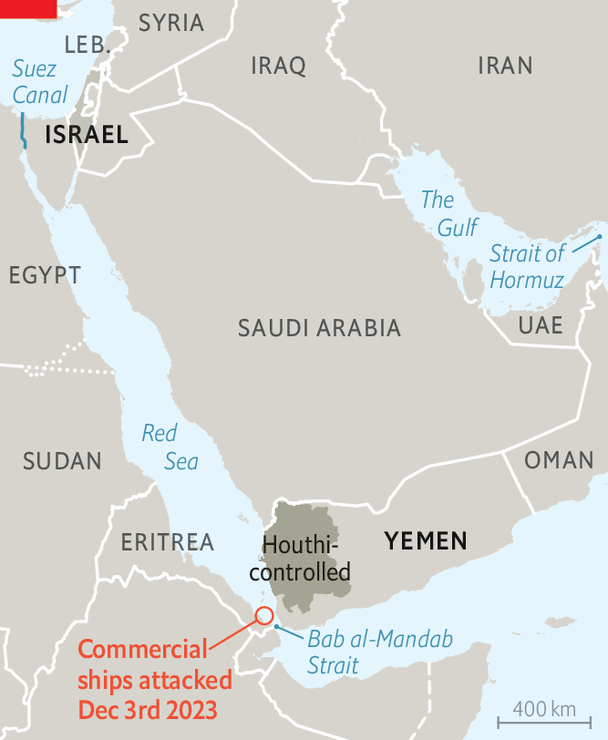 The Bab el-Mandeb is a narrow strait, but the consequences of losing its stability could be enormous. Yemen has become a reminder that the world’s prosperity rests on fragile geographical passages that most people never think about until something goes wrong. A conflict can begin in a desert town and end in a supermarket. It can start with a drone and finish with a fuel bill. It can be fought over territory but paid for by people who have never seen the battlefield. That is the paradox of an interconnected world: distance can obscure danger, but it can no longer protect anyone from the consequences.
The latest crisis in Yemen should not be treated as another headline destined to disappear when the next international emergency arrives. It is a warning about the direction in which global politics is moving — where waterways become bargaining chips, supply chains become pressure points and economic disruption becomes another instrument of war. The world is no longer simply fighting over land. Increasingly, it is fighting over access, movement, energy and the ability to keep commerce flowing. The world is running out of safe waters, and when the world’s waterways become battlefields, peace is no longer merely a moral ambition. It becomes an economic necessity.
Similar Posts by The Mt Kenya Times:
- Mt Kenya Times ePAPER September 14, 2026
- Diaspora Times Global Sep 12 – Sep 18, 2026
- When political words become weapons: Kenya must lower the temperature before it is too late
- Kenya’s youth are not asking for handouts — they are asking for opportunities
- Review of the novel Twilight in Delhi by Ahmed Ali
About the Author