Infrastructure that puts communities at the centre of Kenya’s transformation
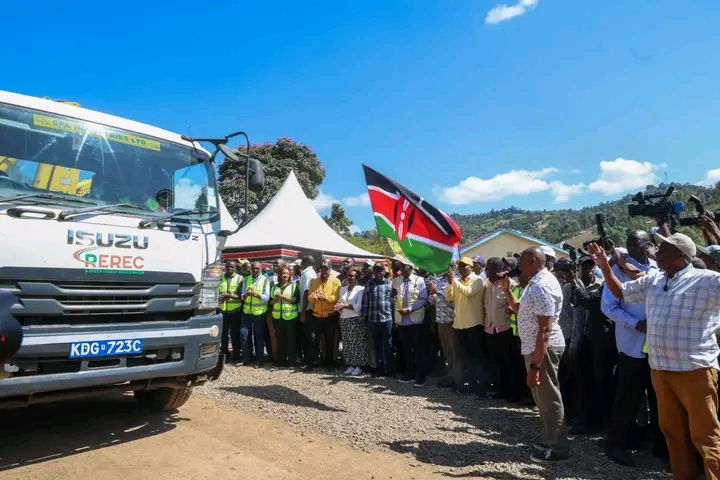
The Kokwet electrification project
The Kokwet electrification project and a new road in Kericho signal the kind of bottom-up development that ordinary Kenyans actually need
By James Kilonzo Bwire
Cabinet Secretary for Energy and Petroleum Opiyo Wandayi yesterday joined President William Ruto in Kipkelion West, Kericho County, for the launch of the Kokwet Last Mile Electrification Project and the construction of the Tegat-Kaplelit-Kokwet-Toroton Road — two projects under the Bottom Up Economic Transformation Agenda that offer a useful moment to reflect on what inclusive development should actually mean for Kenya.
Development should not be measured only by the number of projects announced or the value of resources committed. Its true measure lies in whether citizens experience better services, improved economic opportunities and greater confidence in their ability to participate in national progress. Infrastructure becomes meaningful when it responds to the practical needs of households, supports local institutions and removes barriers that have constrained communities for years.
The combined focus on electricity and roads matters because both influence almost every aspect of social and economic life. Electricity supports education, health, communication, enterprise and access to information. Roads connect people to markets, schools, hospitals, administrative centres and employment. When these priorities are addressed together, communities are far better placed to participate in the wider economy.
The Kokwet Last Mile Electrification Project is an important step in extending national development to households that have long lacked reliable power. In rural communities, electricity is closely tied to the quality of public services and the ability of families to improve their circumstances. Its absence affects learning, business operations, communication, safety and access to government services.
Electricity in the home improves the conditions in which children study and gives families greater access to information. It enables the use of digital devices, opens doors to online education, financial services and public platforms, and allows small enterprises to operate equipment, preserve goods, extend working hours and offer services that would otherwise be out of reach.
The benefits extend to public institutions as well. Schools need power to support modern teaching methods and information technology. Health facilities require dependable electricity to operate equipment and maintain essential supplies. Government offices increasingly rely on digital systems, making energy access fundamental to administration and public service delivery.
Rural electrification should therefore be understood as an investment in human development — not merely the extension of power lines. It creates conditions in which citizens can learn, work, communicate and access services more effectively. It gives communities a stronger foundation from which to pursue their own priorities and contribute to local economic growth.
Electricity access alone, however, cannot guarantee transformation. Communities also need support to use power productively — access to finance, training, markets, technology and business information. The broader objective must be to ensure that energy enables people to create value, improve household incomes and build sustainable enterprises.
Government agencies must therefore think carefully about how electrification programmes connect to local economic priorities. Agricultural processing, refrigeration, retail, repair services, digital work and small-scale manufacturing all depend on electricity that is dependable and affordable. Local development planning should help residents identify opportunities that improved energy access makes possible.
The road project linking Tegat, Kaplelit, Kokwet and Toroton is equally significant because mobility is central to development. Communities cannot fully benefit from schools, markets, health facilities or government programmes if those places remain difficult to reach. Poor roads inflate transport costs, delay the movement of goods and make it harder for residents to access essential services.
A reliable road improves the movement of agricultural produce from farms to markets, reduces the burden on traders and service providers operating in rural areas, and allows residents to reach health facilities and educational institutions more easily. In emergencies, better roads improve the speed and effectiveness of response.
Improved connectivity also influences where businesses choose to operate. Areas that are easier to access are more likely to attract traders, transport operators and investors. This strengthens local markets and reduces the economic isolation of rural settlements.
The value of a road, however, depends on the quality of construction and the rigour of maintenance. A road is not a development achievement simply because its construction has been launched. It must remain usable, safe and connected to other important routes. Without proper upkeep, the investment erodes and communities face the same transport difficulties as before.
Accountability is therefore essential. Public agencies, contractors and local leaders must ensure that projects are delivered to approved standards and within agreed timelines. Communities should receive clear information about the scope of works, the responsibilities of implementing agencies and the procedures for reporting problems. Transparency builds confidence and enables citizens to protect public resources.
Community involvement should extend well beyond a launch. Residents should be able to raise concerns about local conditions, monitor the progress of works and report defects after completion. Public participation is most effective when it is treated as a continuing responsibility, not a one-off formality.
The delivery of these projects also raises a broader question about equity in national development. Kenya has made progress in extending services across the country, but significant gaps remain between urban and rural communities and between well-connected areas and locations that have received little public investment. Those gaps affect education, health, business activity and the ability of citizens to participate in national life.
Equitable development requires deliberate action. It means directing public resources to communities that face barriers to opportunity and ensuring that national programmes do not consistently favour areas already well served. Infrastructure investment must respond to need as well as economic potential.
This is consistent with the stated purpose of the Bottom Up Economic Transformation Agenda. A development programme earns public support when it visibly improves the conditions experienced by ordinary citizens — in the quality of roads, the availability of electricity, the performance of schools and the ability of families to pursue economic opportunities.
The credibility of that agenda will ultimately depend on implementation. Citizens are not only interested in announcements. They want projects completed, services delivered and public investments maintained. They expect government agencies to explain delays, address challenges and demonstrate responsible use of public funds.
National and county governments share responsibility in this process. Infrastructure projects should align with county development plans and local economic priorities. Coordination helps ensure that roads connect to markets and public facilities, while electrification supports the activities communities are seeking to develop. Effective cooperation reduces duplication and makes better use of available resources.
Local leadership has a role that extends beyond attending launches. Leaders should support public participation, resolve disputes, help residents understand project objectives and identify productive opportunities that new infrastructure makes possible. Their responsibility is to monitor progress and demand quality delivery.
Infrastructure development must also account for environmental and social concerns. Road construction and electrification should minimise disruption to homes, farms, water sources and community facilities. Where residents are affected, the process must be conducted fairly, lawfully and with proper communication.
Public infrastructure is a long-term asset belonging to the people. Communities have a responsibility to protect roads, electricity equipment and public facilities. Government institutions, in turn, must provide the maintenance, oversight and enforcement required to safeguard those assets.
The projects in Kipkelion West demonstrate the importance of planning development around people. Electricity and roads are not separate technical undertakings with limited social meaning. They form part of a wider system that determines how communities learn, work, trade, access services and participate in national life.
Kenya’s development planning should therefore promote stronger coordination between energy, transport, education, health, agriculture and digital services. An electricity connection is more valuable when it powers a school, clinic or business. A road is more valuable when it links farmers to markets, patients to health facilities and learners to institutions. The impact of infrastructure increases when its elements reinforce one another.
The long-term test of these projects will be their effect on daily life. Households should receive dependable electricity, the road should remain in good condition and local economic activity should benefit from improved access. Those outcomes require continuous monitoring, adequate maintenance and genuine cooperation between government agencies and communities.
These projects should also prompt national attention to other underserved areas. Many communities across Kenya continue to face limited access to electricity, reliable roads and essential public services. Extending infrastructure to such areas is not only a development obligation — it is a means of strengthening national cohesion and giving citizens a more equal opportunity to improve their lives.
Kenya’s transformation will require more than policy statements and public ceremonies. It will require consistent implementation, responsible management of resources and a willingness to measure success by the lived experiences of citizens. Projects must be completed properly, services must remain affordable and communities must be included in decisions that affect them.
The Kokwet electrification project and the Tegat-Kaplelit-Kokwet-Toroton Road reflect a development approach that takes both social welfare and economic opportunity seriously. Their significance lies in the possibility of improving access to services, strengthening local enterprise and connecting rural communities more effectively to the national economy.
The responsibility now is to sustain that commitment — to implement with transparency, complete to required standards and support through proper maintenance. Communities must be empowered to use the new infrastructure productively. Government agencies must remain accountable for the quality and continuity of what they deliver.
Kenya’s transformation should ultimately be judged by whether citizens can live, learn and work with greater dignity and opportunity. Roads and electricity matter because they make that improvement possible. When infrastructure is planned around communities and delivered with fairness, accountability and consistency, it becomes a practical foundation for inclusive national development.
Similar Posts by The Mt Kenya Times:
- Diaspora Times Global Sep 12 – Sep 18, 2026
- When political words become weapons: Kenya must lower the temperature before it is too late
- Kenya’s youth are not asking for handouts — they are asking for opportunities
- Review of the novel Twilight in Delhi by Ahmed Ali
- Samchi Group CEO Muchemi named Africa’s most influential leader
About the Author