Toxic Trends in the Altering Ed-Tech field; Who is in control & Who is being controlled?
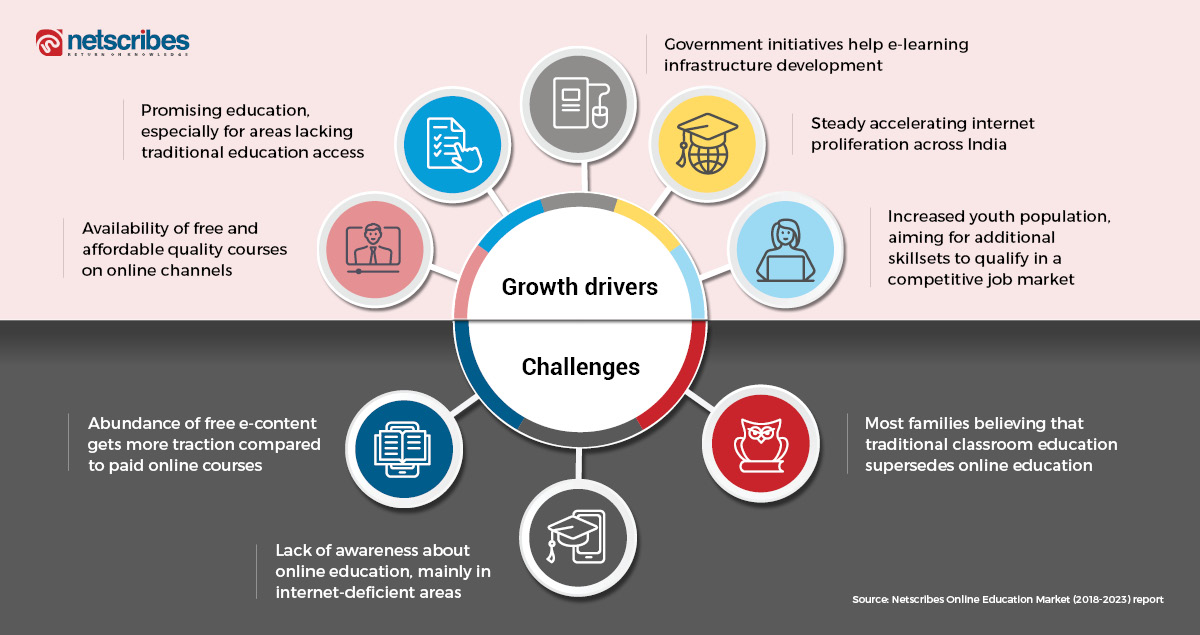
Indian online education market

By Aashiq S, – India
Worth Noting:
- “Technavio’s market research analyst predicts that the Indian online education market will grow at a CAGR of about 20% by 2020, which will be worth about 18 billion U.S. dollars. The number of users enrolling in online education may indeed touch 9.6 million users by 2021, from 1.6 million users in 2016.”(iimskills.com)
- This upwards trend isn’t just to be looked at as a mere coincidence, but a planned, ongoing and successful implementation of a business model. As much as the promoters claim about the benefits such as increased involvement, maximum retention, multi-tasking and management skills, the entire model only seems to be functioning at a pace which is aligned with the interests of corporate models only.
Trends are variant and versatile. They are in formed out of the frameworks of the prevalent and pragmatic perspectives in par with the past. The seemingly stable world has undergone a paradigmatic shift with the advent of the pandemic which declared that, many of the start-up natured ideas are here to stay. The Ed-tech field is one such that has grown out of proportions.
In this short perspective, a brief trigger to invite the reader’s focus onto the altering views, resultant of the excessive online coaching, career visualizations and choice-less binding created by the post-covid Ed-tech phenomenon, with special emphasis on the endangered reflective outlook, diminished critical thinking and sidelining of subjectivity is attempted.
The novel cultural phenomenon is observed to be in the pinnacle of an already predominant education based cast conscious society, dedicated for the near future. These observations are presented as a reflection of the contemporary mindset, which is gradually shifting towards an online based, capsuled learning format.
The major characteristics that tempts the onlooker refer at least some of these tendencies to be toxic are as follows. Apart from the widely known disadvantages of student-internet combination, the new model which demands cent percent association of the students to the online platforms deliver its perks only at the expense of serious long term consequences. This would include the framing of hive-minded groups instead of reflective and critical individuals who could collaborate and create. The novel Ed-tech phenomenon extends beyond the barriers of basic education, preparation for higher studies and securing a high paid position.
“Technavio’s market research analyst predicts that the Indian online education market will grow at a CAGR of about 20% by 2020, which will be worth about 18 billion U.S. dollars. The number of users enrolling in online education may indeed touch 9.6 million users by 2021, from 1.6 million users in 2016.”(iimskills.com)
This upwards trend isn’t just to be looked at as a mere coincidence, but a planned, ongoing and successful implementation of a business model. As much as the promoters claim about the benefits such as increased involvement, maximum retention, multi-tasking and management skills, the entire model only seems to be functioning at a pace which is aligned with the interests of corporate models only.
In reference to the hive mentality, these models are designed to create a vision that success is all about comparison and expensive outlook by manipulating to the trending social styles. They try to recreate these styles from time to time by introducing new products, fields and interests and marketing them to suit the timelines and preferences of the public.
In a way it runs so deep, it could be said that the overlapping trendsetters would control the very tastes of generations by setting the stage through the different apparatus such as media, entertainment, recreation, government, finance etc. The collaborations overshadow everywhere and has a hand in everything in the form of shares and bonds and as a result various firms in different labels work together like a cobweb. The role of the masses would be as a manipulative variable within certain controlled conditions, anticipated by the manipulators like prey.
The scope of Ed-tech bloom lies in the ever-present critical mindset towards the traditional Indian education system and the western oriented outlook rooted in the third world society. The Ed-tech industry presents themselves as an alternative to this scenario by offering doorways to a better life. They promise new models akin to the western systems, posing fundamental challenges to the learners, forcing them to commit to a financially oriented lifestyle which suits the surrounding environment created by themselves.
“You want a boring life? With schedules, meetings, emails, endless shifts that are gonna completely exhaust your life and then give you a month long holiday so you wanna glimpse of freedom?” asks Berlin from Money Heist. This is exactly the kind of fundamental challenge posed by these master manipulators to lure in a mechanical mass of youngsters who are convinced that they’re the benefactors of freedom. Yet those who share the mindset and is indeed passionate about the prescribed fields would find fulfilling while the majority only falls in the line due to a different sort of pressure disguised in the mask of freedom. The toxicity of models becomes all the more evident at the level where the single conflict of passion vs survival vs settled is posed.
The catch is the learners should develop the skills akin to several aspects that matters in their life but always ought to be conscious of falling into any single one of them which could become counterproductive to the rest.
References
https://www.thenewleam.com/2021/10/the-sickness-of-mcq-pattern-of-exams/
https://www.thenewleam.com/2021/12/the-tyranny-of-coaching-centres/
https://iimskills.com/the-future-of-online-education-in-india/
Money Heist Netflix Series
Similar Posts by The Mt Kenya Times:
- Diaspora Times Global Oct 24 – Oct 30, 2026
- America’s baby bust: U.S. birth rate hits record low as women choose later motherhood
- Literary Outreach Incubation Program Instills The Culture From Book Adaption To Spoken Words
- Why starting school too early is failing our children
- Who defines Africa’s destiny? The western lens, African compliance and the struggle for intellectual sovereignty
About the Author