UDA’s Vision For Kenya: A Promising Path Or Political Platitude?
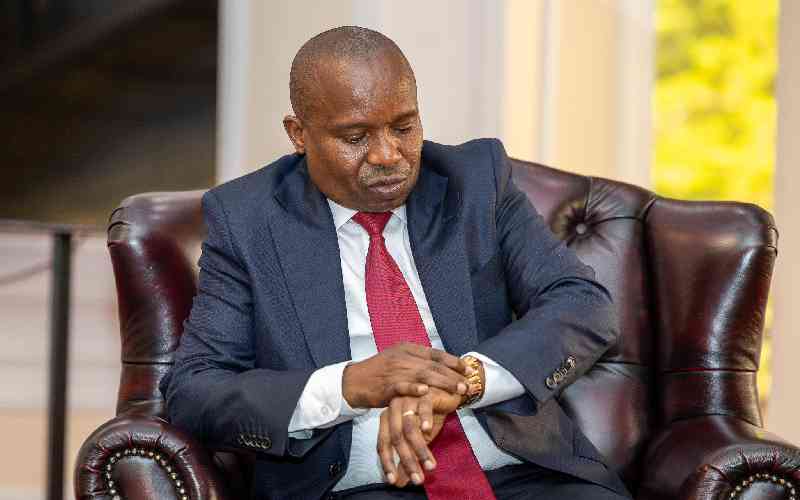
UDA Deputy Party Leader, Kithure Kindiki.

By: James Kilonzo Bwire
The United Democratic Alliance (UDA), Kenya’s ruling party, has unveiled an ambitious vision for the country’s future through its Deputy Party Leader, Kithure Kindiki. This vision, centered on the “Bottom-Up Economic Transformation Agenda” (BETA), represents a significant shift in Kenya’s approach to economic development and governance. While the party’s commitment to unity, national cohesion, and economic transformation is laudable, it’s crucial to critically examine whether these ideals can translate into tangible benefits for ordinary Kenyans.
UDA’s emphasis on BETA marks a departure from traditional top-down economic models. By focusing on key sectors such as agriculture, Micro, Small and Medium Enterprises (MSMEs), housing, healthcare, and the digital economy, the party appears to recognize the pressing needs of the majority of Kenyans. This grassroots-oriented strategy has the potential to address long-standing issues of income inequality and unemployment that have plagued the country for decades.
The party’s vision aligns closely with Kenya’s broader development goals, particularly Vision 2030, which aims to transform Kenya into a newly industrializing, middle-income country providing a high quality of life to all its citizens. UDA’s focus on the five key pillars of BETA – Agricultural Transformation and Inclusive Growth, MSME Economy, Housing and Settlement, Healthcare, and the Digital Superhighway and Creative Economy – demonstrates a comprehensive approach to development that could potentially drive significant economic growth.
However, the true test of UDA’s vision lies in its implementation. Kenya has a history of grand development plans that have fallen short of expectations, often due to corruption, mismanagement, and lack of political will. The party’s ability to navigate complex political and economic realities while maintaining its commitment to these ideals will be crucial. The Fourth Medium Term Plan (MTP IV) for 2023-2027, developed by the National Treasury and Economic Planning, serves as the blueprint for implementing BETA. With a projected cost of KSh. 15.3 trillion, the successful execution of this plan will require not only political commitment but also significant financial resources and effective governance.
The strong support for President William Ruto within the party structure presents both opportunities and challenges. While it may facilitate swift policy implementation, it also raises concerns about the concentration of power and the potential for autocratic tendencies. The party’s commitment to democratic principles and the rule of law, as outlined in its vision, must be consistently demonstrated in practice to allay these concerns.
UDA’s focus on digital innovation is particularly promising, given Kenya’s reputation as a tech hub in East Africa. The emphasis on the Digital Superhighway and Creative Economy could position the country for significant economic growth in the digital age. However, this will require substantial investments in infrastructure, education, and skills development to ensure that the benefits of digital transformation reach all segments of society.
The party’s commitment to addressing corruption and improving governance is crucial for the success of its vision. Kenya ranks 123rd out of 180 countries in the 2022 Corruption Perceptions Index, indicating that corruption remains a significant challenge. UDA’s ability to implement effective anti-corruption measures and improve government transparency will be critical in building public trust and attracting both domestic and foreign investment.
UDA’s vision also emphasizes the importance of environmental sustainability and climate action. Initiatives such as the Jaza Miti Campaign, which aims to plant 15 billion trees by 2032, demonstrate a commitment to addressing environmental challenges. However, balancing economic development with environmental conservation will require careful planning and execution.
The party’s focus on youth empowerment and job creation is particularly relevant given Kenya’s large youth population. With a youth bulge of 48% (people aged 15-29 as a percentage of the adult population) as of 2019, addressing youth unemployment and providing opportunities for skills development will be crucial for social stability and economic growth.
UDA’s commitment to regional integration and trade, particularly through the implementation of the African Continental Free Trade Area (AfCFTA) agreement, could open up new opportunities for Kenyan businesses and contribute to economic growth. However, realizing these benefits will require significant improvements in infrastructure, trade facilitation, and regulatory harmonization.
As Kenya moves forward under UDA’s leadership, it is imperative that the party’s actions match its rhetoric. The success of UDA’s vision will depend on its ability to maintain political stability, effectively combat corruption, and create an enabling environment for both local and foreign investment. While the party’s stated objectives are laudable, Kenyans should remain vigilant and hold their leaders accountable for delivering on these promises.
Ultimately, the true measure of UDA’s vision will be its impact on the lives of ordinary Kenyans. Improvements in job creation, access to healthcare, affordable housing, and overall quality of life will be the key indicators of success. As the party works to implement its ambitious agenda, it must ensure that the benefits of economic growth are equitably distributed and that no segment of society is left behind.
In conclusion, UDA’s vision for Kenya presents a comprehensive and ambitious roadmap for the country’s development. While it offers hope for a more prosperous and inclusive future, its success will depend on effective implementation, sustained political will, and the active participation of all Kenyans. As the country moves forward, it is essential that citizens remain engaged, holding their leaders accountable and contributing to the realization of this vision for a better Kenya.
James Kilonzo Bwire is a Media and Communication Practitioner.
Similar Posts by The Mt Kenya Times:
- Mt Kenya Times ePAPER October 26, 2026
- Sakaja challenges Kamukunji police over Eastleigh suspect bail
- Muturi demands binding livestreaming rules for 2027 polls to prevent repeat of 2022 chaos
- NTSA calls for road safety to be declared a national disaster after 24 die in Mtito Andei crash
- Ruku turns on Waiguru over deputy president ambitions: ‘That seat is not being contested for’
About the Author