Uhuru Kenyatta’s Cautionary Tale: A Reality Check On Ruto’s Reign
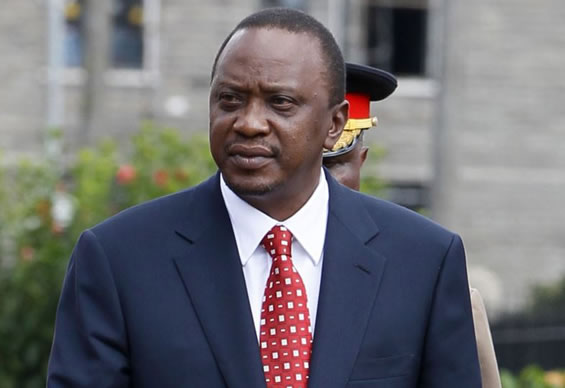
Former President Uhuru Kenyatta

By: Midmark Onsongo
Worth Noting:
- Tongue twisters abound as Ruto’s allies take jabs at Gachagua, questioning his loyalty and intentions: “Can he keep his house in order, or will he lose his grip on the mountain?” In the age-old dance of Kenyan politics, this seems like déjà vu all over again—a clash not unlike that of Kenyatta and Ruto during the latter part of their Jubilee reign. With every public spat and absence at key state functions, Gachagua’s rift with Ruto becomes a ticking time bomb.
- Not even the sharpest Kiswahili idioms can mask the mounting discord—”Vita vya panzi furaha ya kunguru” (When grasshoppers fight, it’s the crow that rejoices)—a fitting analogy as rivals in the political arena circle, waiting to capitalize on the chaos.
William Ruto’s ascent to Kenya’s highest office was a masterclass in political maneuvering, but beneath the veneer of a dynamic leader lies a presidency marred by contentious decisions, personal rivalries, and a growing sense of déjà vu for his predecessor, Uhuru Kenyatta. The irony is palpable—Kenyatta’s former deputy, once viewed as the underdog, now seems to be treading a path eerily reminiscent of his old boss. This unfolding drama is not just political theater; it’s a cautionary tale that Kenyatta likely never envisioned would play out so soon.
Ruto, dubbed the “Hustler-in-Chief,” built his campaign on the promise of uniting a divided nation and empowering the ordinary Kenyan. Yet, just two years into his presidency, the very essence of this pledge appears to be unravelling. With Rigathi Gachagua, his Deputy President, sidelined in favor of other regional power players, the cracks in the Kenya Kwanza alliance are glaring. Gachagua’s ambition to secure the Mt. Kenya vote has not only distanced him from Ruto but also painted him as a leader who, like Ruto during the Jubilee years, is too eager to campaign for the next election rather than focus on governing.
Tongue twisters abound as Ruto’s allies take jabs at Gachagua, questioning his loyalty and intentions: “Can he keep his house in order, or will he lose his grip on the mountain?” In the age-old dance of Kenyan politics, this seems like déjà vu all over again—a clash not unlike that of Kenyatta and Ruto during the latter part of their Jubilee reign. With every public spat and absence at key state functions, Gachagua’s rift with Ruto becomes a ticking time bomb. Not even the sharpest Kiswahili idioms can mask the mounting discord—”Vita vya panzi furaha ya kunguru” (When grasshoppers fight, it’s the crow that rejoices)—a fitting analogy as rivals in the political arena circle, waiting to capitalize on the chaos.
Ruto’s management style, reminiscent of a chess grandmaster who plots moves with the cool confidence of a tactician, is beginning to show its flaws. His frequent travel, which critics say borders on neglect of domestic affairs, has led some to accuse him of being disconnected from the very grassroots he vowed to uplift. “If the king travels too often, who minds the kingdom?”—a rhetorical query that echoes through the corridors of power as citizens grapple with economic hardships and unfulfilled promises.
But it’s not just the friction with Gachagua that signals trouble. The president’s public flirtations with Raila Odinga’s ODM, despite years of bitter rivalry, signal a potential political realignment ahead of the 2027 elections. This move has bewildered both allies and adversaries alike. To many, it feels like a betrayal of the very Hustler narrative that propelled him to power. Ruto’s apparent willingness to forge alliances with old foes while sidelining close allies like Gachagua paints a picture of a leader who is willing to burn bridges as quickly as he builds them. As political pundits often quip, “You can’t dance on two wedding days at once” — Ruto’s balancing act could very well see him stumbling at the altar of public opinion.
Meanwhile, Kenyatta, observing from the shadows, must find this unfolding saga bitterly ironic. The very deputy he once chastised for early campaigning is now mirroring those same mistakes in his leadership of the country. Gachagua’s current plight echoes Ruto’s own past grievances when he felt marginalized in the Jubilee administration. The lesson here is as sharp as it is simple: power dynamics shift, but political treachery is a tale as old as time. Kenyatta’s silence may speak volumes, a reminder that in the realm of power, today’s kingmaker can easily become tomorrow’s scapegoat.
The stakes are high as the nation watches Ruto navigate his presidency amidst economic turbulence, high inflation, and a debt crisis that continues to burden the common mwananchi. The president’s economic policies, while ambitious, are facing the litmus test of public approval, and so far, the reviews are mixed at best. “When the cow stops giving milk, you change the pasture, not the cow”—a local proverb that seems increasingly relevant as Ruto’s administration grapples with the harsh realities of governance. Furthermore, whispers of discontent from within his administration, accusations of sidelining certain regions, and a rising tide of criticism over unmet promises have fueled the narrative that Ruto’s governance is a mirror image of his predecessor’s, only with a different cast.
The former president’s critique goes beyond mere words; it’s a subtle, yet stinging reminder that leadership is not just about power, but also about listening—a rare quality in today’s political cacophony. Uhuru’s call for calm and dialogue strikes a chord in a country grappling with economic hardship, rising living costs, and a growing sense of disillusionment with the government. His message is not just a critique of Ruto, but a broader plea for the political class to reconnect with the realities of ordinary Kenyans. Uhuru’s relationship with Ruto can be likened to a dance that lost its rhythm; once harmonious, it now stumbles awkwardly under the spotlight of public scrutiny. Ruto’s bold, almost brash style of leadership, where the ends seem to justify the means, clashes violently with Uhuru’s tempered call for patience and reflection. It’s a political pas de deux where both partners are out of sync, stepping on each other’s toes in a public display of discord.
The tension is not just personal; it reflects the broader socio-political landscape of Kenya today. Ruto, once the kingmaker in Uhuru’s government, is now the king himself, but his throne is precarious, beset by public discontent and a turbulent economy. Uhuru’s criticism isn’t merely about taxes or policies—it’s about the soul of leadership. It’s about the narrative that power is a public trust, not a private playground, a tenet Ruto’s administration seems to increasingly sidestep. Ruto’s insistence on pushing his agenda, often at the expense of public consensus, reveals a leadership style that prioritizes speed over substance. His refusal to yield to public pressure on the Finance Bill, coupled with his dismissive attitude towards peaceful protests, paints him as a leader at odds with his people. This, in stark contrast to Uhuru’s more conciliatory tone, underscores the philosophical divide between the two: one sees leadership as command, the other as conversation.
The struggle between Uhuru and Ruto is not just a political rivalry; it’s a contest of visions for Kenya’s future. Ruto’s push for rapid change and economic restructuring might resonate with some, but it also alienates those who feel unheard in his race to reform. Uhuru’s call for dialogue and understanding, meanwhile, appeals to a nostalgic view of governance where leaders, at least in theory, answer to the people. In this clash, the stakes are high. The tongue twists tighter with every headline: Ruto rattles, Uhuru reflects, Kenya writhes. It’s a battle that goes beyond personal grievances, touching on the fundamental question of what kind of leadership Kenya needs in these trying times. Uhuru’s reality check on Ruto is not just a critique; it’s a cautionary tale of the dangers of disconnect between the rulers and the ruled.
The rhetoric is rich with alliteration and irony: a former president preaching patience to a leader in a hurry, a call for listening from a voice once accused of silence. The contradictions swirl like a rhetorical rollercoaster, each turn sharper than the last. Ruto’s administration faces a reality where power without purpose becomes perilous, and Uhuru’s reminders echo like ghostly guides from a governance gone by. As Kenya watches this unfolding saga, the question lingers: will Ruto’s relentless pace propel the country forward, or drive it into deeper division? And will Uhuru’s appeals for dialogue and restraint resonate in a political climate increasingly defined by speed over strategy? In this dance of discord, only time will tell whose steps will ultimately shape the nation’s path.
For now, the stage is set, the actors are in motion, and the plot thickens. Uhuru’s reality about Ruto’s behavior is a reflection of the broader crossroads Kenya faces—a nation pulled between the impulse to act swiftly and the wisdom to pause and listen. The tongue twisters continue, the stylistic devices dance, and the narrative unfolds: a story of power, politics, and the ever-evolving reality of Kenyan leadership. Uhuru’s reality about Ruto’s behavior is one marked by sharp observations and cautious criticisms, especially in the wake of rising tensions fueled by anti-tax protests and controversial policies. Uhuru, speaking from the sidelines, does not mince words—he urges the current leadership to “listen to the people” instead of bulldozing through dissent. It’s a call steeped in irony, as Uhuru himself was often accused of selective hearing during his tenure. Yet, in the game of politics, yesterday’s silence can become today’s sermon.
Ruto’s approach is akin to a runaway train, speeding through reforms and directives, often with little regard for the cautious brakes of public sentiment. His unapologetic stance on the Finance Bill 2024, which has sparked outrage due to perceived burdensome taxes, is a case in point. Labeling protests as “treasonous,” Ruto dismisses the very essence of democracy that Uhuru now champions from his perch of former power. It’s a jarring tongue twister of tyranny trying to taste the fruits of transformation: Ruto rushes, Uhuru urges, reality twists, and truth tortures the nation. Ruto’s mantra is simple: get things done, no matter the cost. His public appearances brim with charisma and a dash of defiance, painting him as a leader unbothered by the whispers of discontent. But behind the scenes, the former allies’ rivalry is as palpable as a Shakespearean tragedy—each move, a strategic thrust in the long duel of Kenyan political drama. Ruto’s recent clashes with his own deputy, Rigathi Gachagua, who oddly sought reconciliation with the Kenyattas, further highlight a brewing storm within the corridors of power(
The former president’s critique goes beyond mere words; it’s a subtle, yet stinging reminder that leadership is not just about power, but also about listening—a rare quality in today’s political cacophony. Uhuru’s call for calm and dialogue strikes a chord in a country grappling with economic hardship, rising living costs, and a growing sense of disillusionment with the government. His message is not just a critique of Ruto, but a broader plea for the political class to reconnect with the realities of ordinary Kenyans.
Uhuru’s relationship with Ruto can be likened to a dance that lost its rhythm; once harmonious, it now stumbles awkwardly under the spotlight of public scrutiny. Ruto’s bold, almost brash style of leadership, where the ends seem to justify the means, clashes violently with Uhuru’s tempered call for patience and reflection. It’s a political pas de deux where both partners are out of sync, stepping on each other’s toes in a public display of discord.
This article was scripted by;
MIDMARK ONSONGO
(Sustainable economist, Geopolitics strategizer)
Similar Posts by The Mt Kenya Times:
- Mourinho’s warning: No sacred cows at Real Madrid
- Mt Kenya Times ePAPER October 20, 2026
- Ruto rallies Kalenjin elders in Rift Valley unity push
- Sonko bid to nullify impeachment judgments fast-tracked in court
- Arrest the sponsors, not just the foot soldiers, Kalonzo tells police
About the Author