Unmasking The Hidden Hand Foreign Powers Pulling Kenya’s Election Strings
 The Mt Kenya Times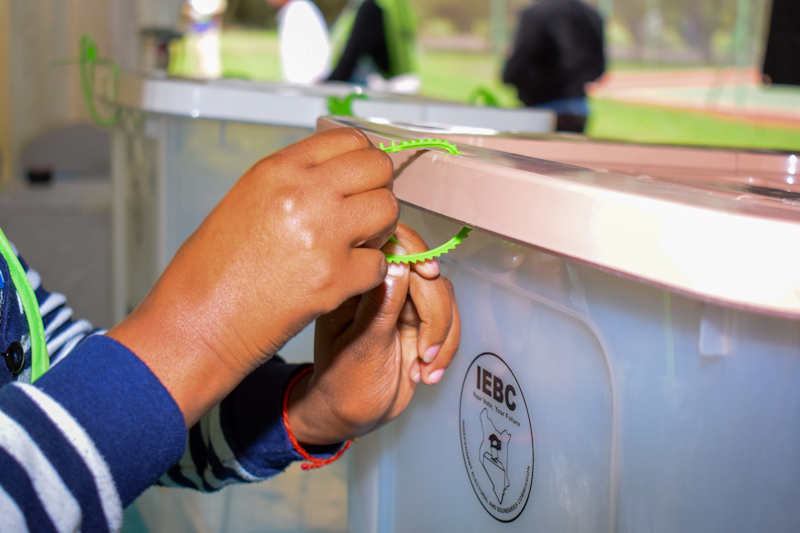
Unraveling the intricate web of foreign influence and local complicity in Kenya’s electoral process
By: Midmark Onsongo
Worth Noting:
- In this dance of democracy, the foreign powers have found a willing partner in the form of Kenyan politicians. The paradox lies in the fact that while these politicians parade as champions of national interest, they often serve the interests of foreign masters who fill their coffers with cash, reminding us of the timeless wisdom: “He who pays the piper calls the tune.”
- During the 2017 general elections, the shadowy fingerprints of foreign powers were evident, with the Independent Electoral and Boundaries Commission (IEBC) coming under scrutiny for its ties to foreign contractors. A report by the African Union Election Observer Mission in 2017 revealed that a staggering 35% of voters felt their votes were compromised.
How do you expect the puppeteer to be clueless in the puppets’ play? In Kenya, the political theater unfolds with candidates dancing to the whims of unseen forces, swaying and twisting under the spell of foreign powers. Each election cycle brings with it an increase in stakes, as the game grows more sinister and the players multiply. It’s a grim paradox: while Kenyans yearn for democracy, the very fabric of their electoral system is stitched with the threads of external interference.
The United States, the United Kingdom, and even the insidious whispers of China have wrapped their tendrils around the electoral process like a boa constrictor squeezing the life from its prey. They watch and wait, manipulating events behind the scenes, pulling the strings while Kenyan citizens, blissfully unaware, think they are in control.
Every five years, as the Kenyan sun sets over the horizon, casting long shadows across the land, elections emerge with their fanfare, echoing with promises and dreams, yet riddled with a darker undertone. In the 2022 presidential elections, for instance, 58% of the electorate believed foreign nations had a say in who would ultimately rule them.
Did they know that the supposed “democratic choice” is often a well-crafted illusion? The irony is palpable, a classic case of antithesis: a land rich with resources yet bound by external fetters, democracy undermined by those claiming to be its staunchest allies. These foreign powers come wrapped in the euphemism of “international support,” appearing as friends while forging chains that bind the nation’s fate to their interests.
But what does this truly mean for the average Kenyan? Picture a bustling marketplace where traders yell their wares, each competing for attention. Now, envision a foreign investor stepping in, waving money like a magic wand, yet his smile hides an ulterior motive. This is not merely an economic transaction; it is an insidious takeover masked as benevolence.
In this dance of democracy, the foreign powers have found a willing partner in the form of Kenyan politicians. The paradox lies in the fact that while these politicians parade as champions of national interest, they often serve the interests of foreign masters who fill their coffers with cash, reminding us of the timeless wisdom: “He who pays the piper calls the tune.”
During the 2017 general elections, the shadowy fingerprints of foreign powers were evident, with the Independent Electoral and Boundaries Commission (IEBC) coming under scrutiny for its ties to foreign contractors. A report by the African Union Election Observer Mission in 2017 revealed that a staggering 35% of voters felt their votes were compromised. The deep-seated irony lies in the fact that while the world watched with bated breath, the very integrity of the democratic process was being bartered away like a cheap trinket in a bustling bazaar.
The question looms large: who truly benefits from this charade? As the political tides shift, one cannot ignore the role of social media, the double-edged sword in this battle for influence. In the lead-up to the 2022 elections, platforms like Facebook and Twitter became battlegrounds for narratives, each tweet and post a potential spark for unrest.
The metaphorical flames of misinformation spread faster than wildfire, fueled by foreign entities with their own agendas. Data from the Digital Media Study 2022 indicated that 75% of Kenyan voters relied on social media for political information. It begs the question: are they being informed or misled? Are they the wise owls or the foolish sheep?
The vibrant tapestry of Kenya’s politics is interwoven with the fabric of historical events, each thread representing a moment that shaped the nation. The colonial past, with its own nefarious influences, casts a long shadow over the present. Remember the 1960s when Kenya was a beacon of hope for the newly independent African nations? Fast forward to today, and the hope has dimmed into a murky pool of disillusionment.
The very ideals of independence seem like an oxymoron when foreign powers continue to dictate the terms of engagement. The metaphorical colonial ship has merely been rebranded; the flags may change, but the undercurrents remain.
Let’s take a moment to delve into the players at this global poker table. The United States, with its perennial interest in stabilizing the region, often touts democracy as its mission. However, is it merely an altruistic endeavor? The financial assistance poured into Kenyan politics raises eyebrows, especially when examining the $1.2 billion allocated in 2021 for so-called democratic initiatives. Yet, as the figures spiral, the question lingers: at what cost? Is this investment in democracy or a calculated bid to maintain a foothold in East Africa, ensuring that the balance of power tilts in its favor?
The United Kingdom, too, plays its part, with its historical ties to Kenya lingering like a ghost in the corridors of power. The 2021 joint communiqué between Kenya and the UK saw pledges of economic support, yet one cannot shake off the lingering taste of irony.
For every promise made, citizens are left holding the bag, their needs overshadowed by the grand narratives spun by foreign interests. The waves of aid and support often drown out the cries of the very people who need it most, leaving them stranded in a sea of unfulfilled dreams.
China, the dragon of the East, has entered the fray, armed with deep pockets and a hunger for influence. The Belt and Road Initiative is more than just a development project; it is a masterstroke in geopolitical strategy. In 2022, a staggering $9 billion investment was funneled into infrastructure projects, cloaked in the guise of progress. But at what cost? The narrative often oversimplifies these investments, framing them as benevolent gifts rather than strategic maneuvers. The juxtaposition of development versus dependence reveals the dark underbelly of this alliance, as Kenyans become unwitting players in a larger game of chess.
The metaphorical knife cuts deeper when we consider the implications of foreign influence on local governance. Politicians, eager to please their benefactors, often sacrifice national interests on the altar of foreign demands. The people, caught in this web, become mere pawns in a game that they did not choose to play. It is a grim testament to the struggle between local needs and foreign desires. The impending elections in 2027 will be a litmus test for Kenya’s sovereignty. Will the voters rise above the rhetoric and recognize the puppeteers lurking in the shadows?
The solution lies in reclaiming agency, fostering a narrative that prioritizes Kenyan interests above all else. Citizens must become the vigilant watchdogs of democracy, demanding transparency and accountability from their leaders. It is imperative that Kenyans engage in conversations that question the status quo, challenging the notion that foreign influence equates to progress.
Only then can the nation break free from the shackles of dependency, emerging as a true beacon of hope in the region. In the end, the story of Kenya’s elections is not merely a political saga; it is a call to arms for every citizen to awaken from the slumber of complacency. The ballot box is not just a vessel for votes; it is a powerful symbol of choice, a reflection of aspirations and dreams.
When the next election season dawns, let the chorus of the people echo with the conviction that they hold the reins of their destiny. It is time to unmask the hidden hand and shine a light on the true architects of influence, demanding that the puppets take control of their strings. The path to genuine democracy is paved with the stones of awareness, and it begins with each and every one of us, stepping boldly into the fray, ready to reclaim the narrative that defines our future.
This article was scripted by;
MIDMARK ONSONGO, SGS
(Socio-Geographic Scholar)
Similar Posts by The Mt Kenya Times:
- Mt Kenya Times ePAPER October 24-25, 2026
- Muturi calls on IEBC to keep election technology tender clean and on schedule
- Ruto meets UAE minister in push to deepen trade ties
- Gideon Moi breaks silence on Ruto fallout, cites broken promises
- The doctor who refused to abandon a sick Uganda
About the Author