Why President Ruto Must Not Walk Kenya The South Africa’s Guptas Path

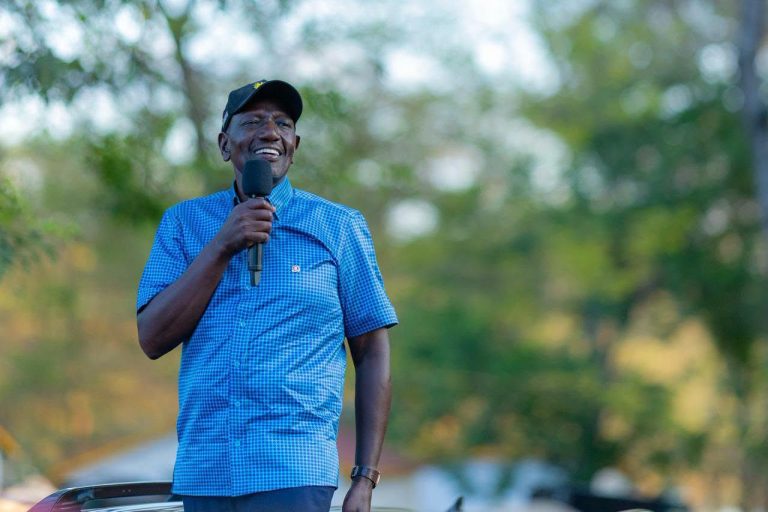
President William Ruto

Kenya Is Inder Siege Under The Public Private Partnership( PPP) Secretive Deals. Any PPP Must Be Transparent For Accountability, Quality, Corporate Governance, Human Rights And Public Participation. Transparency in PPPs include; Why pursue PPP, Bidding process, Procurement process, PPP contract information, PPP reviews and benchmarking
By Ndung’u Wainaina
Worth Noting:
- This is crux of matters. Few months after the Guptas bought the mine, a tectonic corruption scandal erupted.
- A government official testified at the Zondo Commission of inquiry into State capture that the Guptas had offered him the position of Finance Minister. It turns out that the three brothers had effectively seized control of the State instruments in one of the most audacious and lucrative scams of the century.
- This momentous scandal drew on their close ties to President Jacob Zuma and the help of leading international firms like KPMG, McKinsey, and SAP. The Guptas drained the National Treasury a whopping US $7 billion. Disgraced Zuma was forced to resign.
 Under the disguise of highly secretive Public Private Partnership (PPP) arrangement, the Adani Group has secured KENTRACO deal and almost getting JKIA. Kenyans have overwhelmingly rejected this shadowy deals.
But the uncountable power barons are pushing on contemptuously. There is a devastating lesson down south.
In December 2015, the three Gupta brothers namely Ajay, Atul, and Rajesh bought the Optimum Coal in South Africa.
Click here to connect with us on WhatsApp
This is in addition to their emerging business empire they were building across the country with interests in uranium deposits, media outlets, computer companies, and arms suppliers.
The story is told that when the brothers were in a magnanimous mood, they would dole out fistfuls of cash to miners. As they did so, they cut corners ferociously.
Mine workers health insurance and pensions were slashed. Mining broken machines were repaired with old parts from other machines. Workers safety regulations were flouted.
And the journey to south of the mining company began in earnest.
But that is not the main story.
This is crux of matters. Few months after the Guptas bought the mine, a tectonic corruption scandal erupted.
A government official testified at the Zondo Commission of inquiry into State capture that the Guptas had offered him the position of Finance Minister. It turns out that the three brothers had effectively seized control of the State instruments in one of the most audacious and lucrative scams of the century.
This momentous scandal drew on their close ties to President Jacob Zuma and the help of leading international firms like KPMG, McKinsey, and SAP. The Guptas drained the National Treasury a whopping US $7 billion. Disgraced Zuma was forced to resign.
McKinsey offered an extraordinary public apology for its role in the scandal. The Guptas fled to Dubai. The mine, which the brothers had obtained in a corrupt deal brokered and financed by the government crashed into bankruptcy and with it the mine and significantly South Africa’s economy were devastatingly ruined.
The Guptas had pulled off a horrible array of disastrous backroom deals, rigged contracts, and wholesale plunder of national funds and resources.
South Africa was sent almost into economic abyss by a coup d’état managed with briberies not bullet.
This is how an entire country fall to foreign economic hitmen without a single shot being fired but just because of local greedy, corrupt and devious top politicians, civil bureaucrats and security honchos.
The Guptas had immigrated to South Africa from a backwater in India, but the skills they learned there proved indispensable in an age of globalized corruption.
Many ANC top leadership were hungry for self-enrichment, believing it was their “time to eat,”. In the Guptas, they found the perfect enablers of their greed.
The Guptas were experts in gray markets of Nepal and Singapore. Why the Guptas moved from Singapore to South Africa remains a mystery.
The Guptas were welcomed into South Africa’s inner circle of business and political elites. They enjoyed hobnobbing with the elites. The Guptas found way and befriended the man who would be most responsible for wrecking the South Africa;Jacob Zuma.
Zuma became notorious for his unchecked and opportunistic philandering. And he relied on handouts of cash from shady businessmen to keep himself afloat.
By the time the Guptas had met him, in 2002, Zuma was Deputy President of South Africa.
The South Africa State Capture Commission’s blockbuster report in 2022 focused on how Zuma’s state appointments were made to various public offices and expressed strong views on the system of political patronage employment.
Zuma also lived beyond his means, writing dud cheques and refusing to pay his taxes. Strapped for cash, he received interest-free loans from Schabir Shaik, a South African Indian businessman, who engineered an annual bribe for Zuma from a French arms company. This was to later become his waterloo.
In 2005, Shaik was found guilty of having a corrupt relationship with Zuma and was sentenced to 15 years in prison.
Zuma, facing corruption charges of his own, was forced out of office.
The Guptas, who were canny investors, had begun playing the long game from the moment they met Zuma. They put his son Duduzane on their payroll in 2003, and continued to promote him even after Zuma’s fall.
The Guptas insisted that Duduzane was employed on his own merits. The Guptas’ loyalty to Zuma wound up paying massive dividends.
From the moment Zuma was elected president, the Guptas began to plunder the South African government on an unprecedented scale.
State capture goes far beyond paying off greedy officials; it’s about distorting government policy for personal gain. The economy, meanwhile, remains devastated by all the plunder and corruption
What lessons can the people of Kenya learn from South Africa’s Guptas bitter experience of state capture? Whilst it highlights the importance of Constitutional and parliamentary checks and balances, and the need to clarify the powers between politicians and public servants, it demonstrates that these checks and balances and even the best-in-class public finance management system are not sufficient to prevent corruption.
What more needs to be done to reduce the scope for corruption and state capture?
The evidence before the South Africa Zondo Commission demonstrates that the state capturers were able to: appoint willing collaborators in all kinds of key positions; hobble the law enforcement agencies, even making some of them complicit in corruption; weaken parliamentary oversight; and capture parts of the independent media.
The priority is to fix the political governance and accountability system, even as the country makes technical improvements to the accountability system. Public procurement process must be highly transparent, information must be fully disclosed, and every detail verifiable. At the same time, there is a need to rebuild state capability while putting in place a permanent punitive deterrence mechanism.
Writer is Transitional Justice and Human Security Fellow @NdunguWainaina
Similar Posts by The Mt Kenya Times:
- Mt Kenya Times ePAPER October 26, 2026
- Sakaja challenges Kamukunji police over Eastleigh suspect bail
- Muturi demands binding livestreaming rules for 2027 polls to prevent repeat of 2022 chaos
- NTSA calls for road safety to be declared a national disaster after 24 die in Mtito Andei crash
- Ruku turns on Waiguru over deputy president ambitions: ‘That seat is not being contested for’
About the Author