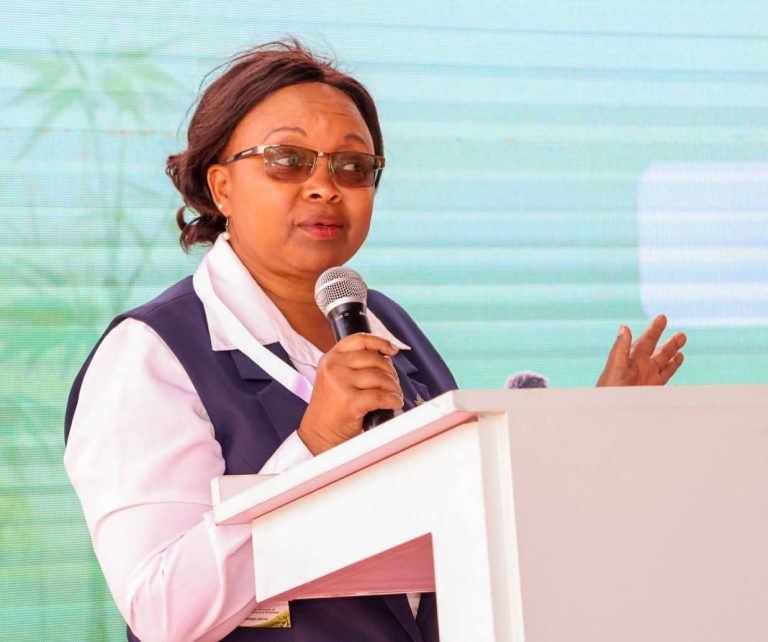
Catherine Twongyeirwe

By: Catherine Twongyeirwe
On June 14th, 2022, government unveiled Uganda’s 2022/2023 budget. This was at the budget speech ceremony that was held at the Kololo Independence grounds in Kampala.
Following the budget reading, members under the Inclusive Green Economy Network-East Africa (IGEN-EA) assessed the budget to determine whether it will promote green economic growth, which the Ugandan government is aspiring to attain by 2030/2031 as indicated in the Uganda Green Growth Development Strategy (UGGDS).
IGEN-EA is a network of private sector and civil society leaders from Uganda and East Africa that are working in the small-scale agriculture, fisheries, tourism, clean energy and sustainable forestry sectors whose mission is to promote economic development and investment that creates thriving livelihoods for all Ugandans, remains resilient to climate change, protects human rights, and conserves the environment.
Through the UGGDS, the Ugandan government identified agriculture, tourism, renewable energy and sustainable forestry among others as the most viable and priority sectors for promoting green growth.
However, the 2022/2023 budget allocations to the above-mentioned green priority sectors do not show government’s commitment to strengthening the sectors to realise green jobs and economic development while pursuing a low carbon pathway.
IGEN-EA’s aforementioned analysis of Uganda’s 2022/2023 budget found that though the Ugandan government increased budget allocations for votes such as agriculture, the budget will not promote inclusive green growth.
Votes such as security (22.3% of the budget), infrastructural development (13.4% of the budget) and others were prioritised over agriculture which received only 4.5% of the budget and tourism, which was allocated only 0.6% of the budget.
While investment in security and roads infrastructure is important, such investments are not beneficial to Ugandans as security in the oil and other regions is used to harass Ugandans and limit scrutiny as well as accountability.
Moreover, Uganda’s debts have been accrued to among others build oil roads, an oil refinery and huge hydropower dams that are producing inaccessible and unaffordable power for the majority of Ugandans, thereby undermining green economic growth
Below is a further discussion of the budget.
- Limited allocations to the climate change and natural resources programme: The importance of the environment, natural resources (ENR), land and climate change programme for the survival of Uganda’s major green economic activities cannot be over-emphasized. If the Ugandan government is to ensure that over 70% of its population thrives, it must invest in the ENR, land and climate change programme.
Unfortunately, the allocations made to the programme cannot promote environmental conservation, climate change mitigation and green jobs. Per the 2022/2023 budget, the proposed budget for the ENR, land and climate change programme is Shs. 628.14 billion. This constitutes only 2% of the budget.
This amount of money is supposed to be shared by 11 ministries, agencies and departments (MDAs) such as the Office of the Prime Minister, Ministry of Water and Environment, National Forestry Authority (NFA), NEMA and others. The money is too little to enable the MDAs to promote environmental conservation and good land administration.
- NEMA and NFA grossly under-funded: NEMA and NFA are set to receive meagre allocations. NFA was allocated Shs. 24 billion. NEMA fared even worse, with an allocation of Shs. 18.94billion. Beleaguered by meagre allocations, the agencies cannot conserve for generations. Corruption will also be encouraged, contributing to the increased forest, wetland and other losses at a time when Uganda should be doing everything it can to conserve the environment for climate change mitigation.
- Limited allocations for the agriculture sector: Furthermore, with more households having slid into farming due to the COVID-19 pandemic, robust budget allocations were needed for the agricultural sector. However, only 1.449 trillion was allocated to the agro-industrialisation programme. This represents 4.5% of the budget and falls below the 10% commitments that the government made under the Malabo Declaration. Moreover, the Shs. 1.059 trillion that was allocated to the Parish Development Model (PDM) will not be sufficient for farmers, who are largely targeted under the PDM.
- Petroleum investments: Related to the above, the government also intends to invest Shs. 7 billion in the petroleum industry in 2022/2023. Investing money in a sector that contributes the most to climate change and risks Uganda suffering stranded assets due to the global just energy transition at the expense of clean energy is unwise.
- Failure to invest more in tourism despite the COVID-19 shocks that the sector suffered is also a challenge. Only 0.6% of the budget was allocated to the sector.
In a conclusion, Government ought to allocate adequate resources to the green economic priority sectors of agriculture, tourism, renewable energy and sustainable forestry. This wasn’t done in the 2022/2023 budget.
Instead, the country’s meagre resources were spread out across various sectors, some of which such as petroleum development will undermine green growth. The Ugandan government ought to walk the talk on promoting green growth by allocating more resources to the priority green economic activities as identified in the UGGDS.
Catherine Twongyeirwe, IGEN-EA member
Similar Posts by The Mt Kenya Times:
- Mt Kenya Times ePAPER October 27, 2026
- Sifuna draws hope from Serbia and Brazil as Kenya’s 2027 race heats up
- Uhuru calls for unity as he marks 65th birthday
- Kenya establishes international crimes division: Justice delayed, but will it be delivered?
- World marathon champion Jepchirchir suspended in fresh blow to Kenya’s clean sport drive
About the Author