With Hunger and Inequality Rising, CGIAR Doubles Down on Food System Transformation

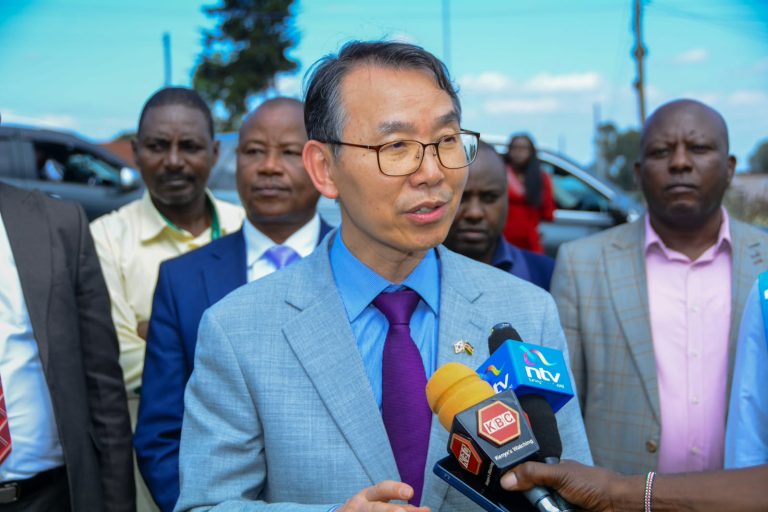
In picture, Ismahane Elouafi, CGIAR Executive Managing Director, alongside Sandra Milach, CGIAR Chief Scientist during the launch of CGIAR’S 2025–2030 Research Portfolio at the inaugural CGIAR Science Week in Nairobi.
By Aoma Keziah,

As the world continues to face escalating agricultural challenges, hunger, and rising inequality, the urgency to transform food systems has never been higher. In response to these interconnected global challenges, CGIAR has launched its 2025–2030 Research Portfolio at the inaugural CGIAR Science Week in Nairobi.
This Portfolio, serves as a strategic blueprint for deploying CGIAR’s pioneering, partner-led science to transform the food, land, and water systems that sustain global food security and planetary health. It’s designed not just to adapt to today’s pressing needs but to actively shape a more resilient, equitable, and sustainable future.
“Today, I proudly introduce the first-ever research portfolio encapsulating all our Centers’ Research: eight science programs, one scaling program and four accelerators. But it is more than a set of programs and accelerators. It is a unified platform designed for impact. It reflects our renewed commitment to not only improving productivity but also nutritionsecurity, livelihoods, climate resilience, environmental sustainability, gender and social equity,” said Ismahane Elouafi, CGIAR Executive Managing Director
This launch, is also a direct response to global calls for action by world leaders, science experts, and farmers on the frontline of today’s agricultural crises. Anchored in frameworks such as the United Nations Sustainable Development Goals, the 2025 Paris agreement, and the Global Biodiversity Framework, the Research Portfolio reflects the reality that today’s food systems can no longer deliver nutrition, equity, or sustainability for our growing populations. With smallholder farmers in the Global South the hardest hit, the Research Portfolio aims to equip them with the tools, knowledge, and resilience they need to thrive.
“50 years ago, we turned to science for solutions. The CGIAR centers were created to help farmers produce food, and together with our partners, have since saved millions of lives in Africa and Asia. However, the world is different now. We are facing climate change, biodiversity loss and new conflicts. Once again, we will need to build capabilities to be able to address these new problems. Today, we must develop research that can truly address these issues, ”said Sandra Milach, CGIAR Chief Scientist.
With a global workforce of over 10,000 staff across 80+ countries and a wide network of partnerships, CGIAR is uniquely positioned to coordinate a global response powered by Pioneering agricultural science. This research is established around Science programs focused on critical needs, a Scaling for Impact Program to ensure innovation is widely adopted, and accelerators to boost both research and technology adoption.
Combined, these components aggregate expertise and partnerships around high-priority targets to collectively deliver scalable solutions that tackle the most pressing global agricultural challenges.
A key strength for it, is collaborative design developed alongside key stakeholders such as national agricultural research institutions and the farmers themselves. Through global “Listening Sessions” and consultations with governments, regional bodies, national research institutions, and local farming communities, CGIAR ensures the portfolio reflects real-world needs and responds to priorities at national, regional, and global levels.
The design also builds on analysis of CGIAR’s cutting-edge innovations and technologies that factor in current discourse on global agricultural needs and challenges from shifting diets and demographics to climate volatility and geopolitical shocks. The result is a forward-looking research and innovation agenda that integrates science, policy, and partnerships to achieve lasting impact
Additionally, it will benefit food, land and water systems across low and middle-income countries (LMICs) by accelerating agricultural productivity growth, leading to better-functioning markets, strengthened livelihoods and new job and income opportunities for workers in the agrifood system, especially women, building on a solid foundation of existing work while expanding into emerging areas of science with potential for impact, to lift hundreds of millions of people out of hunger and poverty while supporting low-income producers and consumers for the decades to come.
Similar Posts by Aoma Keziah:
- Nationwide Youth Business Drive Enters Last Lap With New Nyota Trainings
- Green Light From Washington Sets G42 On Fast Track to Build Region’s Most Powerful AI Network
- Safina Eyes Kariobangi North Seat in Intensified Push Before Poll Day
- KEBS Opens Talks With Manufacturers On New Standards Levy Order 2025
- Kenya, Uganda And South Sudan Chart Way Forward On East Africa Rail Corridor
About the Author

 The Mt Kenya Times