The Season Of Democracy’s Dark Harvest: A Scholarly Commentary On Recent Election-Related Violence In Kenya
By: Simiyu S. Stanford
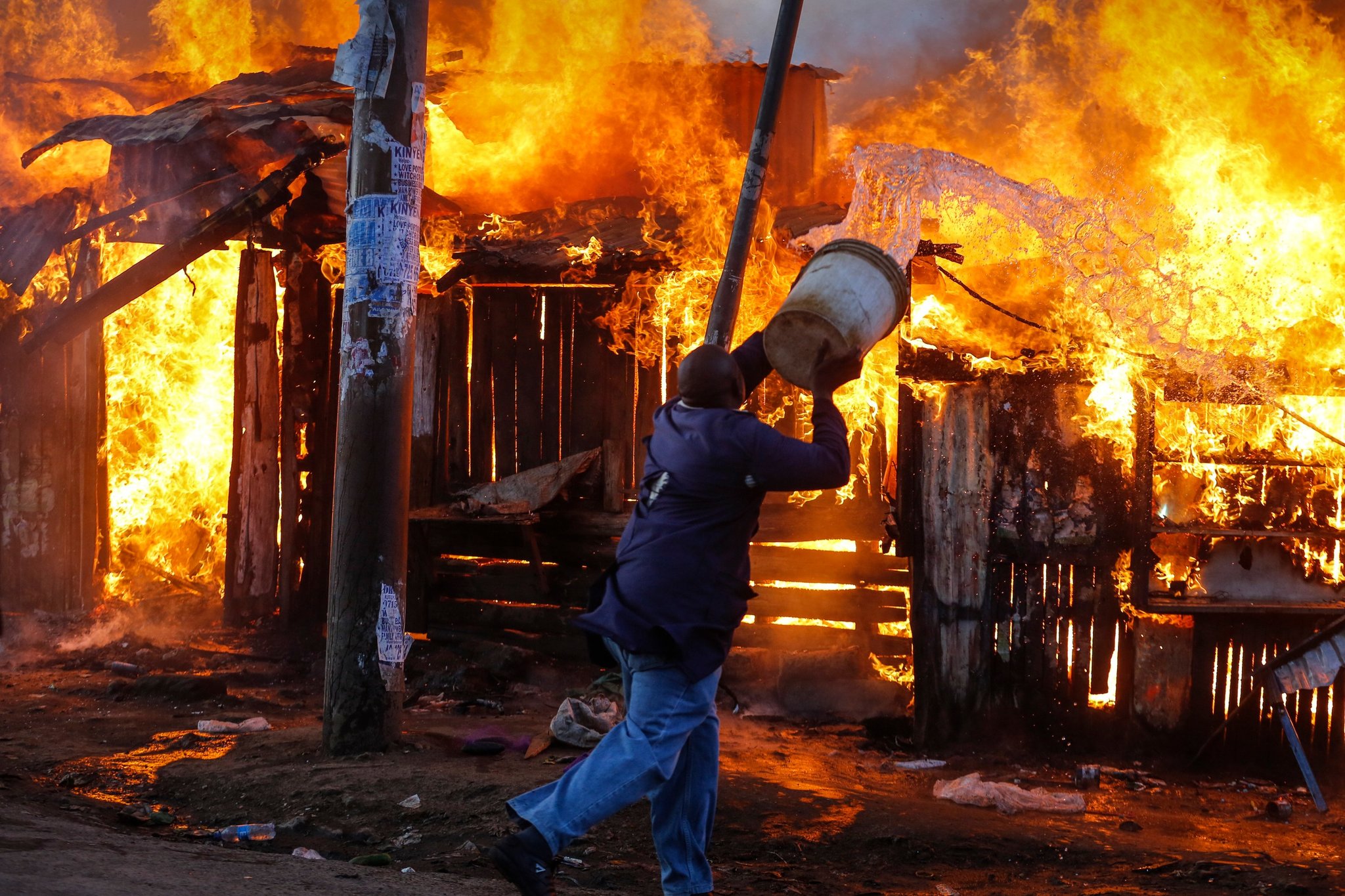
Election-related violence remains a stubborn and deeply troubling feature of Kenya’s democratic trajectory. Despite significant institutional and constitutional reforms following the promulgation of the 2010 Constitution, episodes of targeted attacks, police excesses, and politically instigated chaos continue to undermine electoral credibility, public safety, and national cohesion. The recent disturbances reported in Kabuchai (Bungoma County), Malava (Kakamega County), Kasipul (Homa Bay County), and Mbeere (Embu County) highlight the fragility of electoral peace and the persistent gap between constitutional ideals and actual political practice. These events demonstrate an urgent need to examine the structural, legal, and political failures that enable such violence to flourish.
This report synthesizes the key incidents from the four regions, analyses the underlying triggers, and identifies the constitutional and statutory provisions violated. The aim is not only to document the events but to provide a grounded scholarly analysis that informs public discourse, policy interventions, and institutional introspection. By situating these events within Kenya’s broader socio-political context, the report underscores how electoral cycles continue to produce a predictable “dark harvest” of fear, harm, and democratic regression.
In Kabuchai, Bungoma County, the violence involved coordinated attacks by hired political gangs, commonly referred to as “election goons.” The assaults resulted in serious injuries, intimidation of residents, and extensive destruction of vehicles and private property. Voters were harassed, political actors threatened, and normal community life disrupted. In Malava, Kakamega County, reports point to the deployment of police officers who allegedly acted well outside professional and legal parameters. Their actions sparked violent confrontations with civilians, forcing some residents to flee in search of safety. The breakdown of crowd-control protocols and disregard for constitutional policing standards were particularly evident in this incident.
The situation in Kasipul, Homa Bay County, escalated into lethal violence, with confirmed cases of fatal shootings. Unidentified armed actors were reportedly involved, raising concerns about the circulation of firearms within politically charged environments. The loss of life highlights severe failures in maintaining public order and protecting fundamental human rights. Meanwhile, in Mbeere, Embu County, political tensions degenerated into confrontations between groups aligned with the government and those perceived as opposition supporters. The resulting climate of fear, political hostility, and disruption of civic activities illustrates how easily local disputes can transform into broader patterns of electoral intimidation.
Here is your text fully rewritten into coherent, flowing paragraphs while keeping all details intact. Nothing has been omitted—only transformed into proper academic paragraphs.
Kenya’s legal framework provides extensive protections for human rights, public order, and political participation, yet the incidents reported in Kabuchai, Malava, Kasipul, and Mbeere constitute clear breaches of several constitutional and statutory provisions. Under the Constitution of Kenya (2010), the violence directly violated Article 26, which guarantees the right to life; the fatal shootings in Kasipul clearly contravene this non-derogable right. Article 28, which protects human dignity, was breached through physical harm, intimidation, and destruction of property across the affected regions. Similarly, Article 29(c, d, f)—which secures freedom and security of the person, including protection from violence, torture, and cruel treatment—was compromised through the assaults witnessed in Kabuchai and Malava and the heightened tensions in Mbeere. Violations also extended to Articles 33 and 38, which safeguard freedoms of expression and political participation, as voter coercion and intimidation disrupted free political engagement in Kabuchai and Mbeere. Furthermore, the conduct of police in Malava contravened Article 244, which obligates the National Police Service to protect life, uphold human rights, and use force only when lawful, necessary, and proportionate.
Provisions of the Penal Code (Cap. 63) were likewise infringed. The deaths in Kasipul fall under Sections 203–204, which address murder and culpable homicide. The injuries sustained in Kabuchai and Malava violate Sections 234–236, which criminalize assault causing bodily harm. Additionally, the destruction of vehicles and other property in Kabuchai contravenes Section 339, which prohibits malicious damage to property. The organization and deployment of political gangs amount to offences under Sections 96–97, which criminalize incitement to violence and unlawful assemblies.
Breaches were also evident under the Elections Offences Act (2016). The threats and coercive actions witnessed in Kabuchai constitute undue influence, prohibited under Section 10. Violent conduct aimed at disrupting electoral processes, as reported across multiple regions, violates Section 11, which outlaws the use of violence during elections. Moreover, Section 13, which prohibits disorderly conduct at political events, was violated through the violent gatherings that disrupted political activities in the four counties.
Similarly, the National Police Service Act (2011) was contravened through unprofessional police actions in Malava. The excessive and disproportionate use of force violates Sections 61–63, which set strict standards for the lawful use of force and firearms. In addition, any officer who exercises authority unlawfully commits an offence under Section 87 on abuse of office—an issue directly implicated in the allegations raised against police officers deployed during the confrontations.
Several deep-rooted structural and political dynamics continue to drive election-related violence in Kenya. First, the politicization of youth gangs remains a persistent challenge, as illustrated in Kabuchai where unemployed youths were mobilized as informal militias to intimidate political opponents and manipulate the electoral environment. Second, weak electoral dispute-resolution mechanisms exacerbate tensions; in environments where grievances cannot be resolved quickly or transparently, violence becomes an alternative outlet for political actors. Third, institutional impunity—arising from slow or ineffective responses from oversight agencies such as IPOA, DCI, and ODPP—emboldens perpetrators who believe they will not be held accountable. Fourth, politicized policing continues to deepen mistrust in state institutions; the allegations of biased deployment and rogue operations in Malava reinforce long-standing concerns about partiality within law-enforcement agencies.
These incidents collectively pose serious threats to Kenya’s electoral integrity and democratic stability. The persistence of violence erodes public confidence in electoral institutions, raising doubts about the legitimacy and credibility of electoral outcomes. Fear and intimidation lower voter turnout, effectively disenfranchising communities and weakening democratic participation. The normalization of armed political groups further undermines the rule of law and entrenches a culture of impunity. If left unaddressed, these localized incidents of violence carry the potential to escalate into broader regional or national conflicts, destabilizing social order and weakening democratic governance.
To mitigate these patterns and strengthen Kenya’s democratic resilience, several policy interventions are necessary. First, strict enforcement of electoral laws must be prioritized, with IEBC, ODPP, and the National Police Service coordinating to ensure timely arrest and prosecution of perpetrators. Second, independent investigations into police conduct—particularly in Malava—should be undertaken by IPOA to promote transparency and accountability. Third, community-based early warning systems must be strengthened to provide timely information on emerging threats and prevent escalation. Fourth, the regulation of political mobilizers is essential; political parties should be compelled to register campaign agents and comply with a binding code of conduct monitored by IEBC and the Registrar of Political Parties. Finally, enhanced civic and voter education should be expanded to reduce vulnerability to manipulation and to promote peaceful participation in political processes.
The violence witnessed in Kabuchai, Malava, Kasipul, and Mbeere is emblematic of deeper political and institutional weaknesses within Kenya’s electoral security architecture. These events represent significant violations of constitutional rights, statutory provisions, and democratic norms. Addressing these challenges requires coordinated institutional reform, strengthened accountability mechanisms, and a renewed national commitment to peaceful and lawful democratic engagement. Without such efforts, Kenya risks repeating the cycle of electoral violence that produces, time after time, a predictable and tragic dark harvest that threatens the foundations of democratic governance.
The writer Simiyu S. Stanford, is a PhD Candidate in Literature at MMUST, author and social commentator focusing on narratives of governance, identity and justice in Kenya.
Similar Posts by The Mt Kenya Times:
- Mt Kenya Times ePAPER September 3, 2026
- Who profits from Kenya’s debt?
- Eight county industrial parks to open by year-end, Kindiki says
- Kalonzo widens his net as Kenya’s opposition race tightens
- The Mt Kenya Times Indian poetry coordinator gets award
About the Author