The empty thrones: Kenya’s political cults and the cost of blind devotion
 The Mt Kenya Times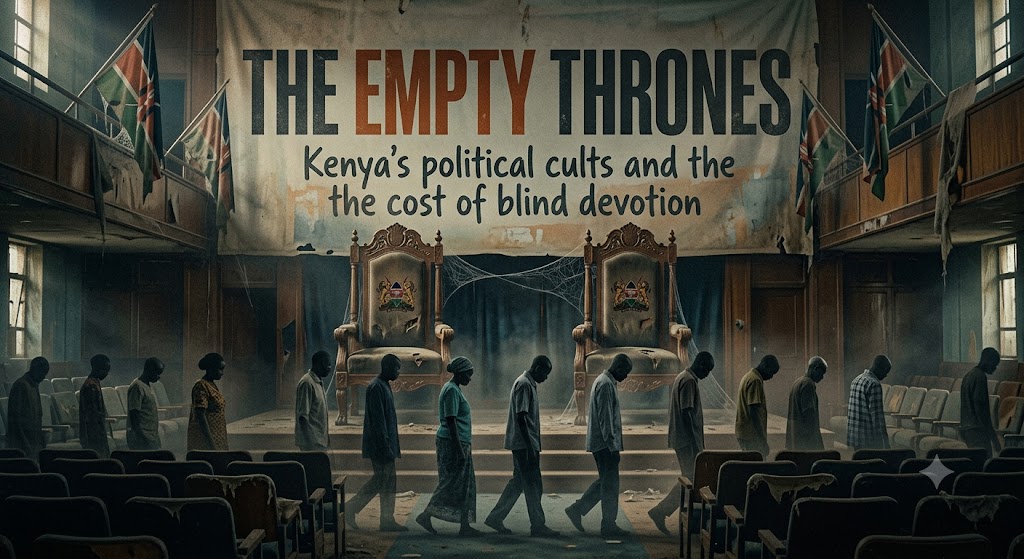
By Jerameel Kevins Owuor Odhiambo
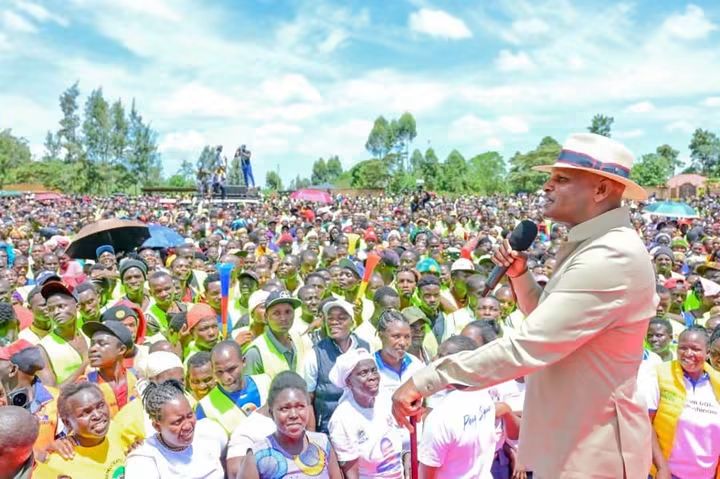
It is a norm that in political rallies that thousands chant a single name as if it were scripture, waving placards like holy banners while their leader, draped in party colors, promises heaven on earth yet again. This is not ancient ritual but modern Kenyan politics, where loyalty borders on worship. Recent election cycles have laid bare the pattern: politicians ascend not primarily on policy blueprints but on ethnic arithmetic and messianic auras. According to data from the Independent Electoral and Boundaries Commission, voter turnout often hinges less on manifestos than on perceived tribal strongholds, with incidents of violence and intimidation spiking around anointed figures. Transparency International’s reports consistently rank Kenya’s governance challenges high, citing grand corruption cases involving billions of shillings siphoned from public coffers, yet many implicated leaders retain fervent followings. These are not mere supporters; they are disciples, heads nodding in unison, brains seemingly disengaged from scrutiny.
Kenyan politics has long thrived on personality cults that eclipse institutions. From the independence era’s founding fathers to today’s dynasties and newcomers, leaders cultivate images of infallible redeemers. A cabinet secretary might defend a scandal-plagued project by invoking “development records,” while followers on social media and streets amplify the defense with ferocity, dismissing evidence as opposition sabotage. This dynamic isn’t unique to one side of the aisle. Across the political spectrum, from Azimio to Kenya Kwanza echoes, the script repeats: criticize the leader, and you attack the tribe, the region, the very hope of the people. Economists at the Kenya Institute for Public Policy Research and Analysis have noted how such polarization stalls reforms, with public debt servicing consuming over 40% of the national budget amid persistent youth unemployment hovering near 35% for those under 24. Nevertheless, rallies swell, hymns of praise drown out questions about value for money in infrastructure megaprojects that sometimes deliver half-built shells or inflated costs.
As an unyielding voice for a Kenya that could be prosperous, just, and forward-looking one aches at this spectacle. Imagine the potential if that same energy funneled into demanding audited accounts rather than defending the indefensible. The activist heart burns seeing university graduates, sharp minds honed in lecture halls, reduced to online warriors hurling insults at anyone questioning their “baba” or “hustler” savior. It is not hatred of leaders that fuels this yearning, but love for the land: the fertile soils of the Rift that should feed millions without food imports, the tech-savvy youth in Konza who could rival Silicon Valley if governance matched ambition, the coastal potentials stifled by neglect. Kenya deserves better than recycled promises wrapped in cultic fervor.
Objectively, the phenomenon has roots deep in history and sociology. Colonial legacies left fragmented identities, which post-independence leaders exploited through patronage networks. Multiparty democracy, ushered in the 1990s amid bloody clashes, did not erase these. Instead, it layered competitive tribalism atop weak institutions. A balanced lens reveals nuances: some politicians deliver tangible wins. Devolution under the 2010 Constitution has channeled resources to counties, birthing hospitals, roads, and markets in previously marginalized areas. Leaders like those who spearheaded digital innovations Huduma centers, mobile money integrations have modernized service delivery, earning genuine gratitude. Followers are not mindless automatons; many are pragmatic survivors in a harsh economy. In informal settlements or arid northern expanses, a politician’s bursary or harambee contribution feels like salvation. Loyalty becomes currency in a system where state services falter. Devil’s advocate whispers: perhaps the “cult” is rational choice under uncertainty. When formal accountability mechanisms courts, audits, parliament move glacially or selectively, personal allegiance to a strongman offers perceived protection and access. Critics from afar, comfortable in stable democracies, underestimate how poverty and information asymmetry breed such bonds.
Even so this defense crumbles under sustained analysis. Cultic followership exacts a steep price. It infantilizes citizens, turning them into cheerleaders rather than co-authors of national destiny. When a governor faces graft allegations involving ghost projects, yet supporters storm courts in his defense, development stalls. Independent reports, including those from the Auditor General, routinely flag billions in irregular expenditures, yet electoral victories follow. Sentiment from ordinary Kenyans, captured in street interviews and civil society briefs, echoes the frustration: “They eat, we clap,” one market vendor lamented during a recent fuel price hike. Intellectuals and diaspora voices amplify this Ngũgĩ wa Thiong’o’s enduring critiques of power’s betrayal, or economists like David Ndii highlighting how elite capture perpetuates inequality. Even within parties, dissenting voices whisper of sycophancy’s dangers, only to be sidelined as traitors.
The activist in me refuses numbness. Kenya’s youth bulge over 75% under 35 holds explosive promise, yet too many channel vigor into defending yesterday’s men instead of forging tomorrow. Picture a different script: followers interrogating budgets line by line, demanding performance contracts from leaders, leveraging social media for evidence-based advocacy rather than tribal echo chambers. This yearning isn’t utopian; precedents exist. Civil society campaigns that birthed the 2010 Constitution showed what informed, persistent citizenry achieves. Grassroots movements against police brutality or for electoral reforms demonstrate brains overriding blind loyalty. Politicians, too, face incentives: those who pivot toward transparency and results, like certain county executives delivering measurable health or education metrics, quietly earn respect beyond chants.
Balance demands acknowledging systemic complicity. Media, sometimes partisan, amplifies spectacle over substance. Economic desperation makes patronage appealing. Foreign influences and campaign financing muddy waters further. A devil’s advocate might argue that in Africa’s complex democracies, charismatic leadership stabilizes fractured societies, preventing worse chaos seen elsewhere. True enough, Kenya has avoided full-scale civil war despite tensions. Yet stability bought with cults is brittle. It breeds mediocrity, where competence yields to connection. Heads bow, brains idle, and the republic limps.
For the soul aching for Kenya’s ascent, the path forward glimmers in education and empowerment. Civic curricula fostering critical thinking, coupled with digital literacy to pierce propaganda, could dismantle the spell. Leaders must model vulnerability admitting failures, debating ideas openly rather than god-like posturing. Followers, in turn, might evolve from devotees to demanding partners. The banger of rallies could transform into sustained pressure for anti-corruption enforcement, merit-based appointments, and equitable resource sharing.
Kenya stands at a crossroads. The cultic allure of politicians with heads but seemingly absent brains persists because we allow it. But within that same populace lies untapped genius: innovators, farmers, teachers, entrepreneurs dreaming beyond the next election cycle. The yearning burns fierce not for vengeance, but renaissance. Let the chants evolve into questions. Let loyalty mature into accountability. Only then will the empty thrones fill with genuine servants, and Kenya claim its rightful place as the continent’s beacon. The soil is rich, the people resilient; the missing ingredient is collective awakening. In that hope, the activist presses on, voice hoarse but unbowed.
The writer is a social commentator
Similar Posts by The Mt Kenya Times:
- Mt Kenya Times ePAPER October 12, 2026
- Gachagua’s party storms Kikuyu from afar as 2027 countdown begins
- Counties caught: The KSh100B payroll scandal Kenya can no longer hide
- CS Ogamba: tree planting could generate carbon credit millions to fund education
- Farouk Kibet calls for unity and development as leaders rally behind Ruto’s 2027 re-election bid
About the Author