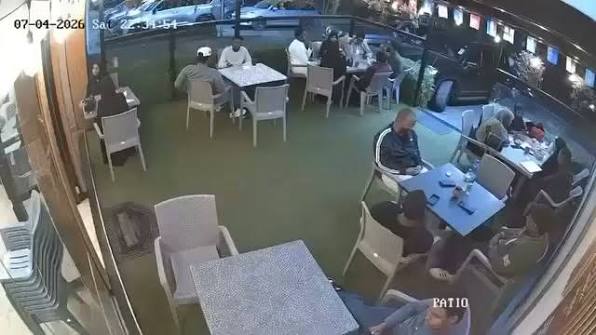
Armed gangs robbing patrons at a Westlands
From nightclubs in Westlands to a Kisii political convoy, hired gangs are now striking with near impunity — and Kenyans want to know who is paying them
By MKT Reporter
Armed gangs have struck at least four times in the past ten days across three counties, attacking a political convoy in Kisii, blocking Thika Superhighway, robbing patrons at a Westlands restaurant, and reviving fears sparked by a June raid on a Nairobi cathedral, in a pattern of violence that has outpaced the government’s promised crackdown.
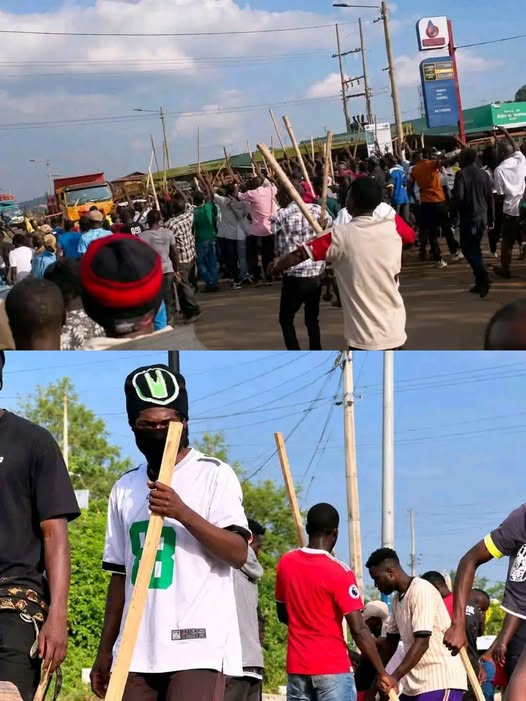
The most serious of the recent incidents occurred on Friday, July 3, at Keumbu on the Kisii–Keroka road, where a group of youths armed with clubs and stones blocked the convoy of the Linda Mwananchi political movement as it travelled to a rally in Keroka. Several vehicles were damaged, including that of former Chief Justice David Maraga, now a presidential aspirant with the United Green Movement Party, whose windscreen was smashed. A number of supporters were injured and treated in hospitals in Kisii and Nyamira.
Witnesses and video footage circulated online showed uniformed police officers standing near the attackers without intervening, prompting Nairobi Senator Edwin Sifuna to say he had personally seen officers among those throwing stones and had forwarded footage to Inspector-General of Police Douglas Kanja for investigation. “Sisi tunataka siasa ambazo watu wanapata fursa ya kueneza sera zao bila kuumizwa,” Sifuna said, addressing mourners in Bungoma, meaning that Kenyans deserve the chance to campaign without being hurt.
Maraga, addressing the disruption, questioned why political meetings were being met with hired gangs rather than security officers. “If we continue like this, we will not have an election in 2027,” he said, calling for an end to a culture in which government is seen using goons instead of security officers.
Former Deputy President Rigathi Gachagua, now leader of the Democracy for the Citizens Party, issued the most sweeping account of the trend in a statement yesterday, describing the country as having descended into “the new Haiti” and accusing President Ruto of assembling “his tribesmen” to recruit and deploy rogue police officers alongside criminal gangs to form what he called a state-sponsored militia. Gachagua listed Mwiki, Kariobangi, Witima, Ol Kalou, Kisii, Thika Road and Keumbu, along with recent incidents at Nairobi nightclubs and hotels, as evidence of a coordinated pattern, and said Kenya’s police deployment to Haiti had in fact served as “a benchmarking mission” for cooperating with, rather than confronting, criminal gangs.
He further alleged that police officers in Kisii had been instructed to work with the goons who disrupted the Linda Mwananchi convoy, and claimed that officers implicated in the earlier Witima church attack had since been promoted rather than prosecuted. Gachagua also alleged that a squad of hired goons had been lodged in a three-star hotel in Ol Kalou ahead of the July 16 by-election, awaiting instructions to disrupt the vote, and said one victim of an earlier attack in the constituency was in intensive care. He accused Inspector-General Kanja of failing to control the service, saying plainclothes officers were being deployed to protect gangs while uniformed officers were told to “keep off.”
None of Gachagua’s specific allegations linking the President, the Inspector-General or named security officials to the attacks have been independently verified, and neither State House nor the National Police Service had responded to the claims by the time of publication. The government has previously rejected similar accusations from Gachagua as politically motivated.
The Directorate of Criminal Investigations has since arrested seven suspects in connection with the Keumbu attack, and detectives working with officers from Keumbu police station have summoned Nyaribari Chache MP Zaheer Jhanda over the incident. Kanja directed the Internal Affairs Unit to fast-track an assessment of the police response. Police spokesman Michael Muchiri said the unit would examine whether there had been “operational shortcomings” and recommend appropriate action.
The Keumbu attack came two days after a similar disruption in Thika, where suspected goons blocked the Thika Superhighway at Pangani on the morning of Friday, July 3, following a demolition exercise, causing a major traffic snarl-up that stranded hundreds of motorists for hours. Some of the group were reported to be carrying machetes, and several motorists said they were robbed during the disruption before armed police officers moved in and cleared the barricades.
Separately, four armed men riding two motorcycles robbed patrons at a restaurant along General Mathenge Road in Westlands on the night of Thursday, July 2, making off with seven mobile phones and a laptop in a raid that lasted under a minute. Nairobi police boss Issa Mohamud said most such crimes were being committed by gangs operating on motorcycles, and that police were working to address the trend.
The incidents follow a widely condemned attack on ACK All Saints Cathedral in Nairobi on June 12, when a group of men on motorcycles twice stormed the church during a public forum on the national budget organised by civil society groups, robbing and assaulting attendees before being dispersed by police. One suspect arrested at the scene told Citizen TV he had been recruited a day earlier and paid KSh 2,000 to take part, and separately claimed the operation had been planned with the involvement of plainclothes police officers. The Anglican Archbishop of Kenya, the Most Rev. Jackson Ole Sapit, said CCTV footage had clearly captured the attackers’ faces and motorbike registration numbers, and asked why police had failed to make further arrests. “Who owns the goons in Kenya who attack in broad daylight and are not arrested?” Sapit asked.
The National Council of Churches of Kenya described the cathedral raid as state-sponsored and said a suspect in custody had named a government official as having ordered it, a claim that has not been tested in court and that no public official has been charged over. Interior Cabinet Secretary Kipchumba Murkomen confirmed one arrest at the time and said detectives were analysing CCTV footage to identify further suspects, adding that “those people will be taken to court and held to account.”
A similar attack on a church service at Witima ACK in Nyeri County in January, during an event attended by former Deputy President Rigathi Gachagua, followed the same pattern of masked attackers on motorcycles operating with apparent impunity.

President William Ruto, in mid-June, directed Murkomen to launch a nationwide crackdown on organised gangs and on those financing them, and accused unnamed politicians of sponsoring youth groups to disrupt political meetings and cause disorder. The Interior Ministry has separately warned that anyone found sponsoring violence would be held accountable “regardless of political affiliation,” while the Independent Electoral and Boundaries Commission has warned it could disqualify candidates found to be behind political violence ahead of the 2027 General Election.
Kisii County Woman Representative Doris Donya, speaking during a church fundraiser in Bonchari constituency, condemned the recruitment of young people into political violence and called for restraint from politicians and firmer action from security agencies. “As a leader, no one can allow violence to take place because the people involved in violence are our children,” she said. Donya said politicians were exploiting unemployed youth by paying them to attack rivals, exposing them to injury and arrest. “Those our children are being given money so that they do violent things. Please stop it,” she said, adding that her own constituency office had previously been attacked but that the experience had not shifted her opposition to violence of any kind.
Taken together, the incidents point to a widening gap between the government’s public commitments to end political violence and the reality on the ground, where hired groups continue to operate against political rallies, places of worship and ordinary residents with little apparent deterrent. Investigations into each attack remain open, and no senior official has yet been charged in connection with any of them.
Similar Posts by The Mt Kenya Times:
- When comradeship saves a life
- Not every struggling student is lazy
- Laikipia University: A natural haven for learning
- Why you should not milk a Kenyan buffalo
- Beyond the scars: The grief, fear and hope of living after breast cancer
About the Author