Mandela’s most magnanimous act: Inviting the man who sent him to prison to lunch
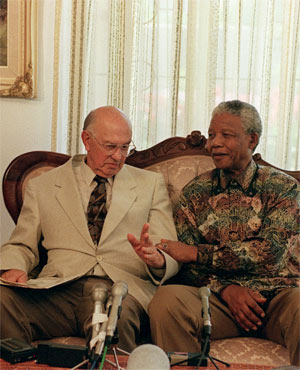
Twenty-seven years behind bars, yet Nelson Mandela sat Percy Yutar at his presidential table — and in doing so, delivered the most powerful lesson in leadership that modern politics has yet to learn
By Ashford Kimani
Some men leave prison seeking revenge. Nelson Mandela left prison and invited one of the men responsible for putting him there to his dining table. It was not weakness. It was a devastating demonstration of the difference between possessing power and having the character to use it wisely.
There is something deeply uncomfortable about the story of Mandela and Percy Yutar. It forces us to confront a question that many political leaders would rather sidestep: what do you do when the person who helped destroy the best years of your life suddenly finds himself entirely at your mercy?
You could humiliate him. You could make him answer publicly for his past. You could remind him, in front of television cameras, that you lost 27 years of your life partly because he stood on the opposite side of the courtroom. You could ensure that his name became permanently synonymous with the injustice he helped administer.
Or you could invite him to lunch.
In 1995, Mandela did precisely that.
His guest was Yutar, the former prosecutor in the 1963 Rivonia Trial — the judicial proceeding that sent Mandela and several other anti-apartheid activists to prison for life. Yutar had represented the apartheid state against men whose political struggle would eventually transform South Africa. He had sought severe punishment for the accused at a time when the death penalty remained a very real and frightening possibility.
Mandela received a life sentence and spent 27 years behind bars.
Twenty-seven years. Sit with that for a moment before rushing to celebrate the lunch. Twenty-seven birthdays missed. Twenty-seven years of family life interrupted. Twenty-seven years in which the world changed, history moved and civilisations shifted — while one of its most consequential political figures remained confined behind prison walls. His children grew up without him. His mother died. His marriage to Winnie Mandela endured extraordinary and almost unbearable pressures. The world did not wait.
And yet, when he finally became president, Mandela did something that should embarrass many of today’s occupants of presidential palaces across the globe.
He invited his former prosecutor to lunch.
When journalists identified Yutar as the man who had prosecuted him, Mandela did not erupt in anger. He calmly corrected the reporter’s suggestion that Yutar had personally sent him to the gallows, then quietly observed that the matter belonged to the past. The meal was even arranged to accommodate Yutar’s Jewish religious requirements. This was not merely a meeting between two former courtroom adversaries. It was a deliberate, thoughtful demonstration of consideration towards someone who had once served a system that denied millions of South Africans their basic humanity.
Yutar was reportedly astonished. He reportedly wondered aloud in what other country a head of government would invite to lunch the man who had prosecuted him thirty years earlier.
That question ought to have embarrassed the entire political establishment.
Mandela had emerged from prison without developing the appetite for vengeance that has consumed so many people who have suffered considerably less. He possessed the presidency, the moral authority of the liberation struggle and the deep affection of millions. He could have used all three to settle personal scores. Instead, he used the occasion to demonstrate something far more powerful — that the presidency was bigger than his personal grievances, and that he was bigger than the system that had tried to break him.
But let us not turn this encounter into a simplistic fairy tale, because it is far richer and more complicated than that.
Yutar was not necessarily a repentant man genuinely seeking forgiveness. Years later, he advanced the controversial argument that his prosecution had somehow helped save Mandela and his co-accused from execution by securing life sentences rather than death. That interpretation was vigorously challenged by people associated with the defence, who regarded it as a self-serving attempt to rewrite history and claim credit for an outcome that was ultimately determined by the court. Mandela’s generosity at the lunch table did not automatically absolve Yutar of his historical role, nor did a presidential meal transform the apartheid judicial system into an instrument of justice.
Forgiveness must never be confused with historical amnesia.
Mandela understood something that many contemporary leaders have spectacularly failed to grasp: you can forgive an individual without sanitising the injustice of the system he served. You can extend a hand without surrendering the truth. You can refuse revenge without abandoning accountability. These are not contradictions. In Mandela’s hands, they were the very foundations of statecraft.
Sadly, our politics has produced an alarming number of leaders who understand power only as an instrument of punishment.
When political administrations change, the language of revenge tends to follow almost immediately. Opponents are threatened with investigations. Former allies become enemies. Public institutions risk being converted into weapons in personal political battles. The new occupant of power often behaves as though the country has been handed over as private property — to be used, distributed and withheld according to personal preference.
In Kenya, where political competition is frequently and intensely personalised, Mandela’s example deserves far more than a passing nod of admiration.
How many of our leaders can sit across a table from someone who opposed them, humiliated them or contributed to their political suffering without turning the encounter into a theatrical demonstration of superiority? How many can genuinely distinguish between the legitimate demands of justice and the selfish appetite for revenge? More importantly, how many understand that winning an election is not remotely the same thing as earning the moral authority to govern?
Mandela’s greatness was not that he forgot what had happened to him. He could hardly forget — and no reasonable person would have expected him to. His greatness was that he refused to allow the men who prosecuted him to determine the kind of leader he would become. They had stolen 27 years of his life. He was not about to let them steal his character as well.
There is another uncomfortable lesson here that tends to be overlooked. Forgiveness is often demanded of victims by people who have never personally experienced the injustice in question. It is easy to preach reconciliation when someone else has paid the price. Mandela’s decision was entirely his own, arrived at through his own moral reasoning on his own terms. It should never be invoked to pressure other victims of injustice into silence, or used as a convenient excuse to shield perpetrators from accountability.
His was a personal act of magnanimity. It was not a blanket pardon for apartheid.
And perhaps that is precisely what makes the lunch so remarkable. Mandela did not stage a grand speech about forgiveness. He did not issue a presidential decree proclaiming himself magnanimous. He simply invited Yutar, attended to his religious needs and allowed the world to witness an encounter that quietly challenged every conventional idea about power, memory and human dignity.
There is a difference between a powerful man who demands respect and a great man who commands it without asking.
Mandela had every reason to hate Yutar. He had every reason to refuse him an audience. He had every reason to ensure that history would remember their respective roles with the starkest possible contrast. Instead, he sat Yutar at his table. And the question worth asking is not whether Yutar deserved the invitation. The question is whether Mandela needed to prove anything to him at all.
He did not.
The man who had once stood in court seeking Nelson Mandela’s punishment was now sitting in the home of the president of a democratic South Africa, enjoying a meal prepared with genuine consideration for his faith. That was not a victory in a courtroom. It was a victory of character — quiet, complete and unrepeatable.
Mandela had lost 27 years to prison, but he refused to surrender a single additional day to bitterness.
And here is the question that should haunt every leader who confuses power with greatness: if you cannot sit down with yesterday’s adversary without plotting tomorrow’s revenge, what exactly have you conquered?
Mandela conquered apartheid’s prison walls. More remarkably still, he refused to allow those walls to become the boundaries of his heart.
Ashford Kimani is a teacher of English and Literature who writes on education and social affairs.
Similar Posts by The Mt Kenya Times:
- Diaspora Times Global Oct 31 – Nov 6, 2026
- US approves $2.1 billion Patriot missile sale to Ukraine, but Zelenskyy warns delivery could take years
- French protests spread nationwide as tear gas and Halloween costumes fill the streets
- Netanyahu loses his majority: Israel’s election throws the Middle East into fresh uncertainty
- Ghost students, real money: How Kenyan nationals became entangled in America’s $130 million student aid fraud investigation
About the Author