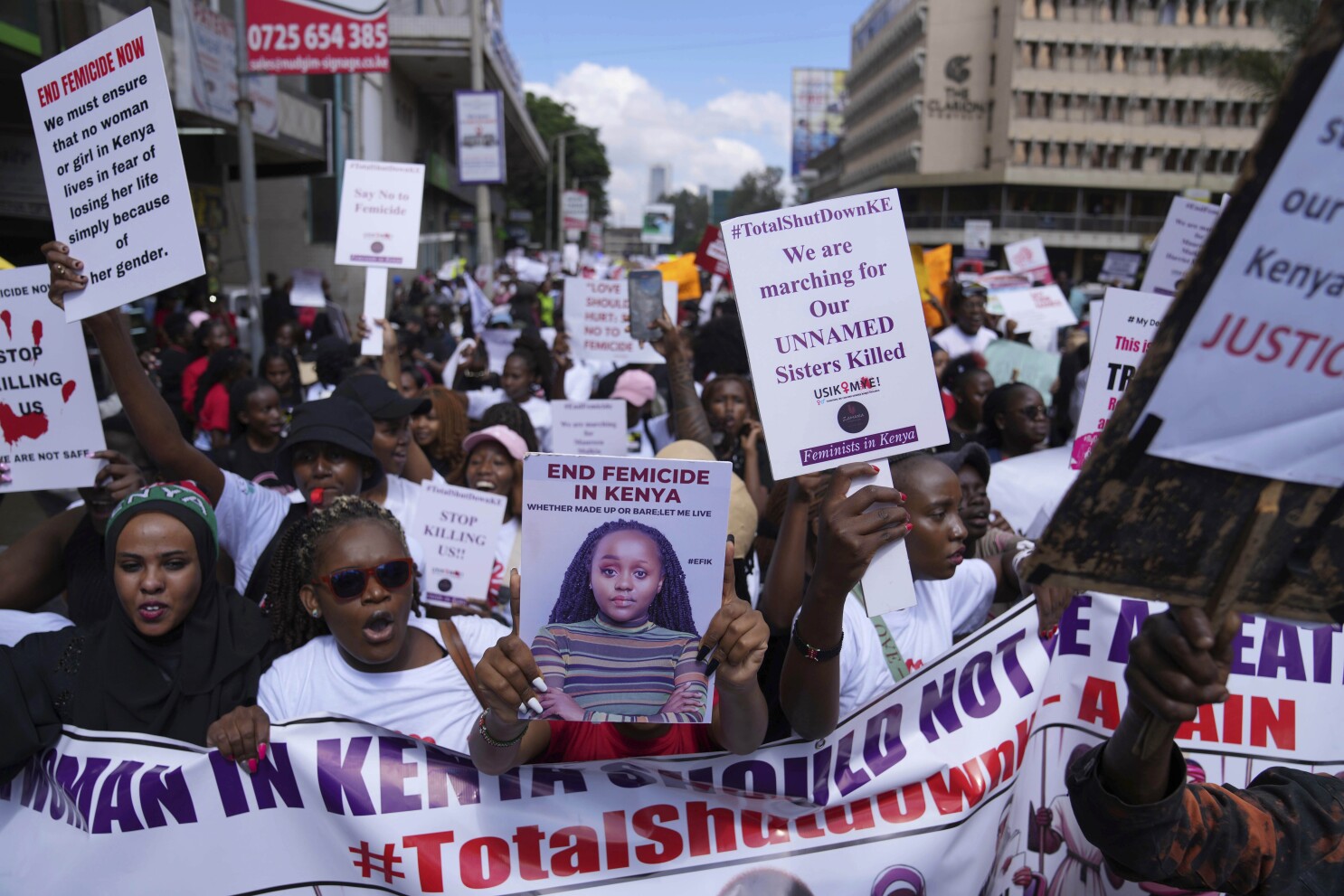
Thousands, mostly women protesters march against the runaway cases of femicide, in downtown Nairobi, Kenya Saturday, Jan. 27, 2024. Thousands of people marched in cities and towns in Kenya during protests Saturday over the recent slayings of more than a dozen women. The anti-femicide demonstration was the largest event ever held in the country against sexual and gender-based violence. (AP Photo/Brian Inganga)

By: Brian George
The alarming rise in femicide cases across Kenya has sent shockwaves throughout the nation, sparking grief, anger, and calls for urgent action. Femicide, the killing of women and girls due to their gender, has become a grim reality in Kenyan society, with an increasing number of women falling victim to senseless acts of violence. This crisis demands immediate and collective efforts to address the root causes and ensure the safety and dignity of women in the country.
Recent reports from rights organizations and media outlets paint a harrowing picture. Women have been brutally killed by partners, family members, or strangers in circumstances that often stem from disputes, jealousy, or outright misogyny. For instance, incidents where women are attacked for rejecting romantic advances or escaping abusive relationships highlight the deep-seated issues of entitlement and toxic masculinity within society. These tragedies have left families shattered and communities grappling with a pervasive sense of insecurity.
The growing prevalence of femicide exposes the gaps in Kenya’s response to gender-based violence (GBV). While the country has progressive laws such as the Protection Against Domestic Violence Act and the Sexual Offences Act, enforcement remains weak. Many victims and their families face systemic hurdles in seeking justice, from unresponsive police officers to prolonged court processes. This lack of accountability emboldens perpetrators and discourages survivors from speaking out.
Cultural attitudes also play a significant role in perpetuating this crisis. Patriarchal norms and victim-blaming rhetoric often shift responsibility onto women, discouraging them from reporting abuse. Many women fear stigma, retaliation, or societal judgment, leaving them trapped in dangerous situations. These attitudes, coupled with economic dependency and limited access to support systems, make it difficult for women to escape abusive environments.
Ending femicide in Kenya requires a comprehensive approach that tackles its root causes while supporting survivors and holding perpetrators accountable. First and foremost, there is an urgent need to strengthen law enforcement and the judiciary. Police officers and judicial staff should be trained to handle GBV cases with sensitivity and urgency, ensuring swift investigations and convictions. This will send a clear message that violence against women will not be tolerated.
Public awareness campaigns must also take center stage. Civil society organizations, media outlets, and local leaders should work together to challenge harmful gender norms and promote respect for women’s rights. Community programs aimed at educating men and boys about healthy relationships, consent, and the importance of gender equality can help break the cycle of violence.
Support systems for survivors and at-risk women must also be expanded. This includes increasing the availability of safe shelters, counseling services, and economic empowerment programs for women. Access to education and financial independence are crucial in enabling women to leave abusive relationships and rebuild their lives.
In addition, it is essential to address the societal issues that contribute to femicide, such as unemployment, substance abuse, and mental health challenges. Providing resources for mental health support and creating job opportunities can help mitigate some of the factors that fuel domestic and intimate partner violence.
Kenya cannot afford to turn a blind eye to the femicide epidemic. Every life lost represents a failure to protect the country’s women and girls. Ending femicide is not just about justice; it is about preserving the fabric of society and ensuring a future where women can live without fear.
The time to act is now. By coming together as a nation—through policy reforms, community efforts, and cultural change—Kenya can put an end to femicide and build a society that values and safeguards the lives of its women.
Similar Posts by The Mt Kenya Times:
- A passport or a laptop: How young Kenyans are finding work beyond home
- Why schools lose parents — and how words can win them back
- Her pen is your lifeline
- Kampala’s last cathedral
- Xadicha Sulaymonova was the First Uzbek Female Legal Scholar
About the Author