Advancing The Sustainable Future: The UN’s Path To Global Well-Being
 The Mt Kenya Times
Exploring the Origins, Structure, and Vision Behind the United Nations’ Sustainable Development Goals
By: Midmark Onsongo
Worth Noting:
- This report first popularized the term “sustainable development” and established it as a guiding principle for global policy. Chaired by former Norwegian Prime Minister Gro Harlem Brundtland, the commission highlighted the need for an integrated approach to development that considers economic, social, and environmental dimensions.
- Building on the ideas set forth in the Brundtland Report, the 1992 Earth Summit in Rio de Janeiro marked a significant turning point. Officially known as the United Nations Conference on Environment and Development, the Earth Summit brought together world leaders to discuss sustainable development, resulting in influential frameworks like Agenda 21 and the Rio Declaration.
Sustainable development is an approach to growth and human development that aims to meet the needs of the present without compromising the ability of future generations to meet their own needs. The aim is to have a society where living conditions and resources meet human needs without undermining planetary integrity.
This concept emerged in the 20th century, driven by a growing awareness of how unchecked development impacts the environment, society, and economy. It encompasses three primary pillars—economic growth, social inclusion, and environmental protection—which collectively aim to foster a balanced approach to development.
Sustainable development seeks not only to address immediate human needs but also to consider long-term global impacts, preserving resources and opportunities for future generations. In this light, the Sustainable Development Goals (SDGs), drafted by the United Nations (UN), were established as a comprehensive and structured framework to guide global development efforts.
These goals, adopted by all 193 UN member states in 2015, are an urgent call to action to end poverty, protect the environment, and ensure that all people enjoy peace and prosperity by 2030. As a successor to the Millennium Development Goals (MDGs), the SDGs build upon the successes and address the shortcomings of previous international development efforts, setting a bold new agenda for the world.
The Historical Roots of the Sustainable Development Goals
The UN’s journey toward the SDGs has a rich history that dates back several decades. In 1987, the Brundtland Report, formally titled Our Common Future, was published by the World Commission on Environment and Development.
This report first popularized the term “sustainable development” and established it as a guiding principle for global policy. Chaired by former Norwegian Prime Minister Gro Harlem Brundtland, the commission highlighted the need for an integrated approach to development that considers economic, social, and environmental dimensions.
Building on the ideas set forth in the Brundtland Report, the 1992 Earth Summit in Rio de Janeiro marked a significant turning point. Officially known as the United Nations Conference on Environment and Development, the Earth Summit brought together world leaders to discuss sustainable development, resulting in influential frameworks like Agenda 21 and the Rio Declaration.
These agreements established a foundation for international cooperation on sustainable development, emphasizing issues such as climate change, biodiversity, and the interdependence of ecological and economic systems. The turn of the millennium brought the next milestone: the Millennium Development Goals (MDGs), launched in 2000.
These eight goals aimed to address global poverty, health, and education challenges by 2015. While the MDGs led to significant progress in reducing poverty and improving access to basic services, they were criticized for being too narrow in focus and lacking an environmental dimension.
The limitations of the MDGs paved the way for the development of a more comprehensive and inclusive agenda: the Sustainable Development Goals.
The Formation and Numbering of the Sustainable Development Goals
The process of drafting the SDGs was highly inclusive and collaborative, involving consultations with governments, civil society organizations, and experts worldwide. In 2012, at the Rio+20 conference (marking the 20th anniversary of the Earth Summit), UN member states agreed to develop a set of “universal goals” to succeed the MDGs. This decision initiated a three-year process of negotiation and consultation, culminating in the adoption of the 17 Sustainable Development Goals at the United Nations Sustainable Development Summit in September 2015.
Each of the 17 SDGs addresses specific global challenges, ranging from poverty and hunger to climate change and environmental conservation. They are deliberately numbered in a way that reflects their interconnectedness while emphasizing the importance of each issue. For example, Goal 1—End Poverty in All Its Forms Everywhere—serves as the foundation of sustainable development, while Goal 13—Take Urgent Action to Combat Climate Change and Its Impacts—underscores the critical importance of addressing environmental concerns in development efforts.
The numbering of the SDGs follows a logical sequence that builds from basic needs (poverty, hunger, and health) to social issues (education, gender equality, and reduced inequalities), environmental protection, and global partnerships. This order reflects the belief that progress on foundational issues will create the conditions needed to address broader and more complex challenges, promoting a holistic approach to global well-being. The interconnected nature of the goals is also central to their design, as progress in one area often supports progress in others. For instance, improving access to quality education (Goal 4) can reduce poverty (Goal 1) and promote gender equality (Goal 5).
Defining the Sustainable Development Goals and Their Importance
The Sustainable Development Goals are defined as a set of universal targets designed to create a more sustainable, inclusive, and equitable world by 2030. These goals are ambitious yet achievable, representing a shared vision for humanity’s future.
Unlike the MDGs, which were primarily directed at developing countries, the SDGs are universal, applying to all nations regardless of their level of development. This universality underscores the idea that sustainable development is a shared responsibility, requiring collaborative efforts across borders and sectors.
The SDGs are also more comprehensive, covering a wide range of issues that reflect the complexities of today’s global landscape, from economic inequality to climate change and sustainable urbanization. Each goal has specific targets and indicators to measure progress. For instance, Goal 2—End Hunger, Achieve Food Security, and Promote Sustainable Agriculture—includes targets to end malnutrition, double agricultural productivity, and ensure sustainable food production systems.
The indicators for this goal range from the prevalence of malnutrition to the proportion of agricultural land under sustainable practices. These targets and indicators provide a measurable framework for tracking progress, helping nations and organizations understand where they stand and what actions are needed to achieve the goals.
List of Sustainable Development Goals
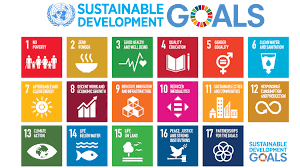
The United Nations’ Sustainable Development Goals (SDGs) are as follows:
- No Poverty – Ending poverty in all forms. 2. Zero Hunger – Achieving food security and improved nutrition. 3.Good Health and Well-being – Ensuring healthy lives and promoting well-being. 4.Quality Education – Providing inclusive and equitable education. 5.Gender Equality – Empowering all women and girls. 6.Clean Water and Sanitation – Ensuring water and sanitation for all. 7.Affordable and Clean Energy – Promoting sustainable energy for all. 8.Decent Work and Economic Growth – Fostering economic growth and decent work.9. Industry, Innovation, and Infrastructure – Building resilient infrastructure.10. Reduced Inequality – Reducing inequalities within and among countries. 11.Sustainable Cities and Communities – Making cities inclusive and sustainable.12. Responsible Consumption and Production – Ensuring sustainable consumption.13. Climate Action – Taking action to combat climate change. 14.Life Below Water – Conserving oceans, seas, and marine resources. 15.Life on Land – Protecting ecosystems and biodiversity. 16.Peace, Justice, and Strong Institutions – Promoting peaceful societies and justice. 17.Partnerships for the Goals – Strengthening global partnerships for sustainable development.
Sustainable Development Goals: The Basis for Global Interconnected Progress
These SDGs are not isolated; they interconnect in addressing complex, overlapping issues. For example, Goal 1 (No Poverty) is closely linked with Goal 2 (Zero Hunger) and Goal 3 (Good Health and Well-being), as eradicating poverty supports access to food and healthcare. Goal 5 (Gender Equality) intersects with Goal 4 (Quality Education), as equitable education promotes empowerment, while Goal 13 (Climate Action) impacts both Goal 14 (Life Below Water) and Goal 15 (Life on Land), addressing environmental threats across ecosystems.
I proudly share this knowledge as a true reflection of Dr. Agnes Wamuyu Wamai’s work and insights in her lectures. Her dedication to sustainable development, passion for global goals, and deep understanding of interconnected social, economic, and environmental issues have deeply influenced my approach to the topic. Dr. Agnes Wamai’s commitment to shaping informed, socially responsible students is evident in every lecture. I am grateful for the opportunity to honor her expertise and to contribute to spreading awareness on sustainable development.
This article was scripted by;
MIDMARK ONSONGO,SGS
(Socio-Geographic Scholar)
Similar Posts by The Mt Kenya Times:
- Mt Kenya Times ePAPER October 27, 2026
- Sifuna draws hope from Serbia and Brazil as Kenya’s 2027 race heats up
- Uhuru calls for unity as he marks 65th birthday
- Kenya establishes international crimes division: Justice delayed, but will it be delivered?
- World marathon champion Jepchirchir suspended in fresh blow to Kenya’s clean sport drive
About the Author