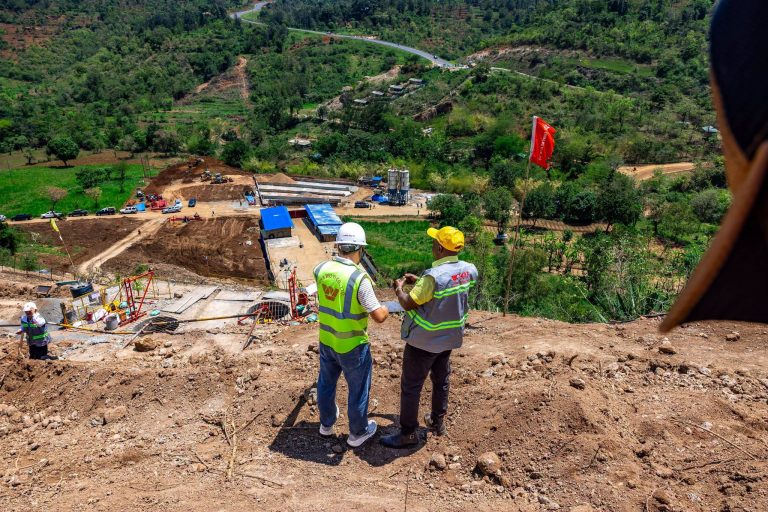
Australia Funds KSH 287 Million Land Restoration Initiative In Kenya
 The Mt Kenya Times
Dr. Jane Njuguna, Director of the Kenya Forestry Research Institute (KEFRI), issuing her address
By: Cynthia Masibo
Worth Noting:
- Njuguna emphasized the importance of local participation in ensuring the long-term success of land restoration efforts. “Sustainable regreening must start at the grassroots level. By equipping communities with the right skills and support, we can make meaningful progress in reversing environmental degradation,” she said.
- The involvement of multiple institutions highlights the project’s commitment to leveraging expertise across different sectors. KEFRI will lead research efforts on best practices for land restoration, while World Vision will focus on community engagement and implementation. CIFOR-ICRAF will provide scientific insights, and the University of Nairobi and the United Nations University will contribute research and policy guidance.
A new Australian Government-funded research initiative aimed at restoring degraded landscapes in Kenya was launched today, marking a significant step in the country’s efforts to combat land degradation and boost climate resilience. The project, unveiled by Dr. Jane Njuguna, Director of the Kenya Forestry Research Institute (KEFRI), in Nairobi, comes with an AUD 3.5 million (KSH 287 million) commitment.
The initiative, supported by the Australian Centre for International Agricultural Research (ACIAR), brings together key organizations, including World Vision Australia, World Vision Kenya, KEFRI, the Center for International Forestry Research (CIFOR-ICRAF), the University of Nairobi, and the United Nations University. The collaborative effort seeks to enhance community-driven regreening initiatives and accelerate the restoration of Kenya’s degraded landscapes.
At the heart of the initiative is a focus on empowering local communities with knowledge, resources, and tools to implement sustainable land management practices. Farmers and community groups will receive training on effective restoration techniques, enabling them to play a direct role in reviving degraded areas.
Dr. Njuguna emphasized the importance of local participation in ensuring the long-term success of land restoration efforts. “Sustainable regreening must start at the grassroots level. By equipping communities with the right skills and support, we can make meaningful progress in reversing environmental degradation,” she said.
The involvement of multiple institutions highlights the project’s commitment to leveraging expertise across different sectors. KEFRI will lead research efforts on best practices for land restoration, while World Vision will focus on community engagement and implementation. CIFOR-ICRAF will provide scientific insights, and the University of Nairobi and the United Nations University will contribute research and policy guidance.
Speaking at the launch, World Vision Kenya’s National Director, Lilian Dodzo, underscored the significance of cross-sector collaboration. “By working together, we can develop scalable solutions that not only restore land but also enhance livelihoods and food security,” she noted.
The initiative aligns with the Kenyan government’s ambitious target of restoring 10.6 million hectares of degraded land and increasing tree cover to 32% by 2032. These goals are part of broader climate adaptation and environmental sustainability strategies aimed at addressing deforestation, soil erosion, and biodiversity loss.
Kenya’s efforts are also in line with the African Forest Landscape Restoration Initiative (AFR100), which seeks to restore 100 million hectares of land across the continent by 2030. The Australian-funded project is expected to contribute significantly to these restoration commitments by providing tested and adaptable solutions for land rehabilitation.
Beyond restoring landscapes, the project aims to enhance climate resilience by developing innovative adaptation strategies. Given the increasing threat of climate change, including erratic rainfall patterns and prolonged droughts, the initiative will explore ways to strengthen ecosystems and ensure long-term agricultural productivity.
Experts involved in the initiative stress that restoring degraded land can have a direct impact on food security by improving soil health, increasing water retention, and enhancing agricultural yields. “Healthy land leads to healthy crops, which translates to improved food availability for communities,” said Dr. Njuguna.
As the project takes off, stakeholders remain optimistic about its potential to drive large-scale regreening in Kenya. The success of community-led restoration models could serve as a blueprint for similar initiatives across Africa, reinforcing the continent’s commitment to sustainable environmental management.
With funding from Australia and the expertise of leading research and development organizations, the initiative is poised to make a lasting impact on Kenya’s landscape, ensuring that future generations inherit a greener and more resilient environment.
Similar Posts by The Mt Kenya Times:
- Mt Kenya Times ePAPER October 23, 2026
- Ruto’s parting COMESA call: Remove the barriers, honour the commitments
- Direct hospital access to KEMSA cuts drug delays, says PS
- Africa can’t wait: Continent seeks $1 trillion for climate adaptation
- Ruto passes the baton as Africa’s trade bloc faces a fragmenting world
About the Author