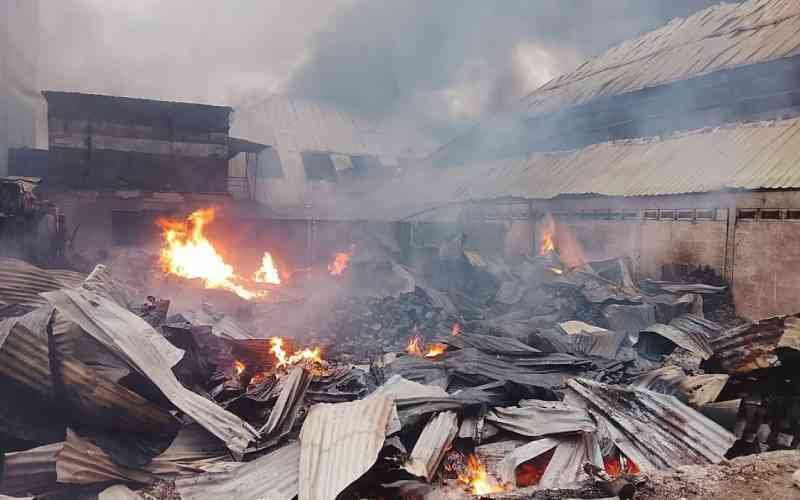
Fire raging down Gikomba Market stalls / courtesy
Kenya’s largest open-air market has suffered yet another devastating fire — and the question of why it keeps happening demands more than another inquiry
By MKT Reporter
A fire tore through sections of Gikomba Market in the early hours of yesterday morning, destroying business premises, consuming goods worth millions of shillings and deepening the anguish of traders who have lost everything to flames more than once.
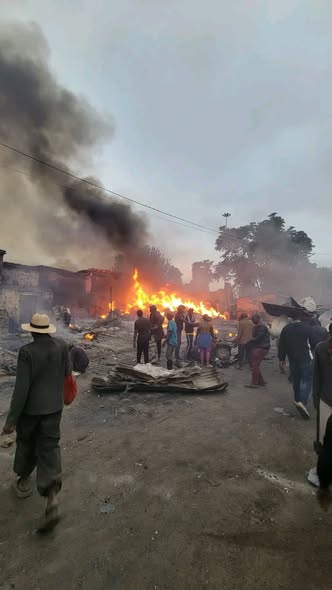
The Kenya Red Cross confirmed that the blaze was reported at approximately 4:00 a.m., triggering the deployment of response teams alongside a multi-agency emergency unit. Fire brigade crews spent the better part of the morning battling the inferno and working to prevent it from spreading further into the densely packed stalls that define East Africa’s largest second-hand clothing market. No casualties had been confirmed at the time of reporting, though the full extent of the damage was yet to be formally established.
Videos that circulated on social media showed walls of flame and thick columns of smoke rising above the market as traders scrambled to salvage whatever they could. The images were harrowing — but they were also, to anyone who has followed Gikomba’s history, painfully familiar.
This was not an aberration. It was a pattern.
Gikomba has burned repeatedly over the decades. Major fires struck the market in 2019, 2021, 2022 and 2023, each time razing stalls, destroying livelihoods and generating the same cycle of shock, official condemnation and promises of reform that have yet to produce any structural change. The market, which sprawls across the low-lying banks of the Nairobi River in the city’s Eastlands, houses an estimated 10,000 to 15,000 traders and draws buyers from across Kenya and the wider region. It is not simply a trading hub; it is a primary economic lifeline for hundreds of thousands of low-income families. When it burns, entire households burn with it.
The human cost is rarely captured adequately in damage assessments. Behind every figure cited in the aftermath — stalls destroyed, goods lost, shillings written off — are individuals who borrowed money to stock their businesses, women who rose before dawn to lay out their wares, young men who invested their first savings into a plot at Gikomba because it represented the most accessible rung on the economic ladder available to them. Many of those affected on Sunday had no insurance. Most had no savings buffer to absorb the loss. For them, a fire at Gikomba is not a setback from which recovery is a matter of weeks. It can be a financial catastrophe from which recovery takes years — or never fully comes at all.
The structural vulnerabilities at Gikomba are not difficult to identify. The market is a labyrinthine mass of wooden frames, corrugated iron stalls and tarpaulin overhangs packed so tightly together that fire, once ignited, has every advantage. Electrical cabling — much of it informal and poorly maintained — runs through sections of the market in ways that would not pass any safety inspection. Water access for firefighting is consistently inadequate, and narrow alleyways mean that emergency vehicles struggle to reach the heart of the market before a blaze has already taken hold. The density of combustible materials within the stalls — bales of second-hand clothing, synthetic fabrics, plastic packaging — ensures that once a fire takes root, it spreads with terrifying speed.
Each of these factors has been documented in post-incident assessments going back years. None has been systematically resolved. That is not an oversight. It is a policy failure, and it deserves to be named as such.
The question of cause is one that investigators will return to in the coming days. Previous fires at Gikomba have been attributed to electrical faults, arson and accidental ignition, though definitive findings have not always been made public. What is consistent across every incident is that the market’s physical conditions — its density, its materials, its infrastructure deficits — ensure that whatever the spark, the outcome is catastrophic. Addressing only the ignition source without addressing the environment in which fires spread is the equivalent of treating the symptom while leaving the disease untouched.
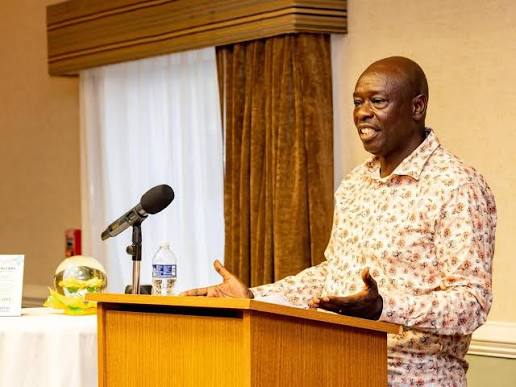
Deputy President Kithure Kindiki has previously directed relevant agencies to investigate the recurring fires at Gikomba and the nearby Toi Market, calling for comprehensive long-term solutions. “The government has instructed relevant agencies to investigate the cause of the frequent inferno in the markets within Nairobi City County, including Gikomba and Toi Market, and provide comprehensive long-term solutions to avoid recurrence,” he said. The directive was welcomed at the time. Its tangible results, however, have not been communicated to the public in any form that ordinary traders can point to.
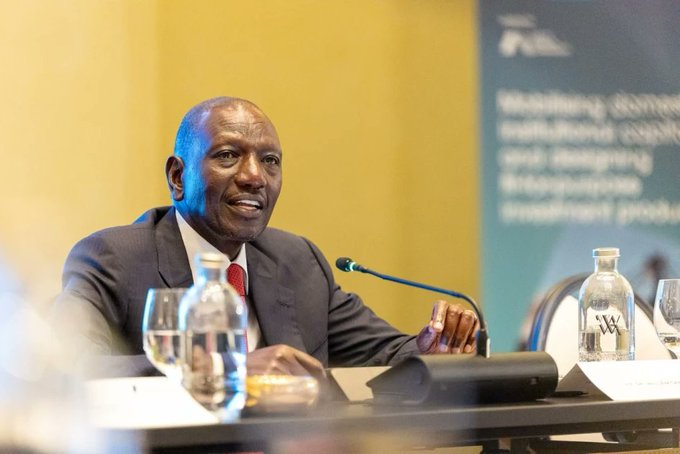
In February, President William Ruto made a commitment that raised expectations significantly. Speaking at State House during the signing of a collaboration agreement between the national government and Nairobi City County, he announced plans to build a Sh5 billion modern market at Gikomba as part of a wider programme to construct 20 upgraded trading facilities across the capital — 12 by the national government and eight by the county. “I was in Gikomba, and we are now designing a modern national market. I have given my undertaking that we are going to build a Ksh5 billion modern market in Gikomba,” the President said, adding that the project would strengthen Nairobi’s standing as a competitive commercial centre.
It was, on paper, exactly the kind of intervention Gikomba has needed for years. A purpose-built facility with proper electrical infrastructure, firebreaks, water access, emergency lanes and regulated stall allocations would fundamentally alter the risk profile of a market that currently operates as an open invitation to disaster. A modern, planned market would also bring with it the legal frameworks for enforcing safety compliance — something that is structurally impossible in a market that has grown organically and informally over decades.
The question, as always with such announcements, is timeline and delivery. Kenya has a well-documented history of infrastructure pledges that move slowly from announcement to groundbreaking, and more slowly still from groundbreaking to completion. The traders of Gikomba have heard reassuring words before. What they have not yet seen is the machinery of government move with the urgency that the scale and frequency of these disasters demands.
Traders who spoke in the aftermath of Sunday’s fire were not hostile to the idea of a new market. They were simply exhausted. Many of those who lost goods on Sunday had also lost goods in previous fires. Some had rebuilt two or three times. A few had lost everything, borrowed to restart, and lost everything again. Their resilience is remarkable — but it is not infinite, and it should not be treated as a resource to be drawn upon indefinitely in place of institutional action.
Nairobi County has regulatory authority over market infrastructure and is required by law to enforce safety standards within its boundaries. The national government controls the budgetary commitments needed to accelerate the Gikomba redevelopment. Both levels of government have the mandate and, in the current political moment, the stated intention to act. What Sunday’s fire underscores, with brutal clarity, is that intention without urgency is indistinguishable from inaction.
The broader context cannot be ignored either. Gikomba sits at the intersection of Kenya’s informal economy and its urban poverty. The market is not simply a place where clothes are sold; it is where economic participation is possible for people who have been excluded from the formal economy. It is where a woman from Mathare or a young man from Korogocho can find a foothold. Burning it down repeatedly — even inadvertently, even through negligence rather than malice — is an assault on that fragile foothold. It is a fire that burns not only merchandise but opportunity.
Gikomba is not simply a market. It is an economic institution that underpins the informal sector at the base of Kenya’s urban economy, and it deserves the same seriousness of purpose that the government brings to flagship infrastructure projects — not periodic condolences and another round of investigations, but a funded, time-bound plan with clear accountability, public milestones and enforceable deadlines.
Until that plan is delivered and the new market rises from the current ruins, the traders of Gikomba will continue to sleep uneasily — knowing that the next fire is not a question of if, but when.
Similar Posts by The Mt Kenya Times:
- Peter Mwathi: A proven leader with a record of service in Limuru
- Mt Kenya Times ePAPER September 22, 2026
- Ruto offers Kenya as test case on African risk
- Gachagua demands fuel deal accountability, accuses Ruto of deception
- Azimio is dead. Long live the Ukombozi Alliance
About the Author