Azimio Coalition Ousts Senior Leaders Amid Political Realignment

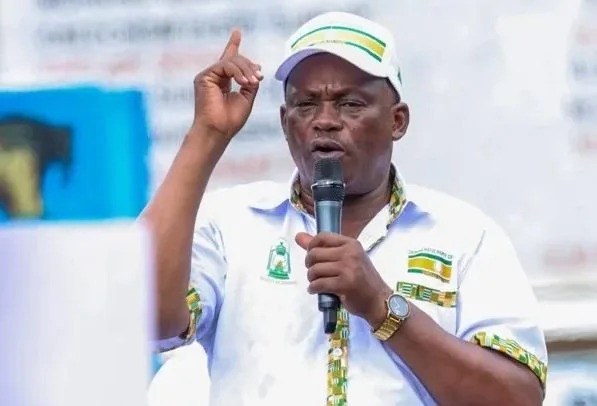
Stephen Kalonzo Musyoka addressing the public in Meru on Sunday. Photo/Courtesy.
By MKT Correspondent
In a dramatic shake-up, the Azimio La Umoja One Kenya Coalition Party yesterday announced the removal of several high-profile leaders from its Coalition Council and National Coalition Executive Council, signaling a significant realignment within the coalition.
The decision followed a joint meeting of the Coalition Council and the National Coalition Executive Council, where the party cited appointments to public office and alignment with competing political coalitions as grounds for the dismissals.
Among those who have ceased to be members of the Azimio Coalition Council are prominent political figures Ali Hassan Joho, Sabina Chege, Abdi Noor Omar Farah, and Junet Mohammed.
The reshuffle in the National Coalition Executive Council is even more extensive, affecting Wycliffe Ambetsa Oparanya, Adan Keynan Wehliye, David Pkosing, Mishi Mboko, Abdul Haji, Junet Mohamed, James Opiyo Wandayi, Isabella Wangechi Githinji, Caroline Wanjiru Karugu, and Solomon Kuria.
The coalition indicated that replacements for the ousted officials would be announced shortly as part of the expanded party structure.
In addition to the council changes, the meeting terminated Junet Mohamed’s appointment as Leader of the Azimio Coalition Parliamentary Group in the National Assembly. He has been replaced by Caroli Omondi, who assumes the position with immediate effect.
Party leader H.E. Stephen Kalanzo Musyoka, EGH, SC, in his statement, emphasized that the moves were intended to strengthen the coalition’s unity and streamline its leadership ahead of ongoing political contests.
Political analysts view the shake-up as a strategic effort by Azimio to consolidate influence in key regions and address internal divisions that have surfaced in recent months. The removal of high-profile leaders like Joho and Chege is expected to spark discussions about the coalition’s direction and alliances as Kenya approaches critical political milestones.
The coalition, which has faced competition from rival political formations, appears determined to reposition itself with fresh leadership, signaling that loyalty to the party and adherence to its directives will be critical in the coming months.
Observers note that the realignment may have ripple effects across the political landscape, particularly in constituencies where the ousted leaders have considerable influence. How this will affect voter sentiment and coalition negotiations remains to be seen.
Similar Posts by The Mt Kenya Times:
- Mt Kenya Times ePAPER October 24-25, 2026
- Muturi calls on IEBC to keep election technology tender clean and on schedule
- Ruto meets UAE minister in push to deepen trade ties
- Gideon Moi breaks silence on Ruto fallout, cites broken promises
- The doctor who refused to abandon a sick Uganda
About the Author