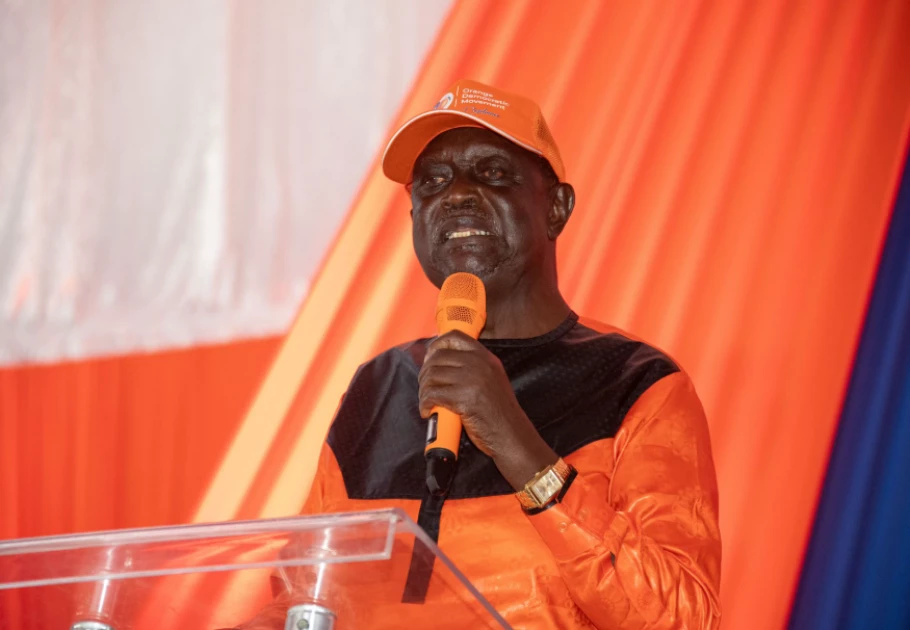
ODM leader Oburu Oginga
By MKT Reporter
ODM leader Oburu Oginga has moved to quash speculation that the ODM-UDA pact has expired, insisting the agreement is a long-term arrangement anchored in the National Dialogue Committee (NADCO) report whose provisions cannot be implemented within a single year. Speaking at his Strathmore Lavington offices in Nairobi during a dedication ceremony, Oginga described critics of his leadership as “self-seekers” who do not have the party’s interests at heart. “Senator Sifuna said yesterday that the agreement ended on Saturday 7th. I want to tell him he suffers from memory issues… the agreement between our party and UDA was signed way after the broad-based government had been formed,” he said, adding that the pact was designed to endure beyond short-term political cycles.
The NADCO report, adopted by Parliament in early 2024, was the product of months of multiparty negotiations aimed at easing political tensions and charting a reform path. It outlined sweeping constitutional, legislative, and administrative reforms across five key areas: electoral reforms, public finance transparency, inclusivity in governance, security sector accountability, and legislative adjustments to close governance gaps. Majority Leader Kimani Ichung’wah, who co-chaired the committee, described the report as “a blueprint for stabilizing Kenya’s democracy and ensuring no citizen feels excluded from the national conversation.” Government Spokesman Isaac Mwaura reinforced this view, stating: “There have been claims that the NADCO report is not being implemented. I want to reaffirm that the government is committed to delivering on its recommendations through a structured and time-bound framework.”
Oburu emphasized that the ODM-UDA pact was tied to this reform agenda, making it impossible to conclude within a year. “The issues covered under the ODM-UDA agreement, including the NADCO report, are extensive and require time to implement,” he said. Acting Secretary General Catherine Omanyo urged members to remain patient, noting: “This is not about short-term gains. It is about reshaping Kenya’s governance for generations.” Nairobi Governor Johnson Sakaja added: “We must give dialogue a chance. The NADCO report is our roadmap to stability.”
The NADCO report’s provisions are far-reaching. Electoral reforms seek to strengthen the independence of the IEBC, while public finance reforms aim to enhance transparency in resource allocation. Inclusivity measures propose broadening representation in government, particularly for marginalized groups. Security sector reforms are designed to improve accountability, and legislative changes address governance gaps that have long undermined public trust. Dr. Agnes Zani, a member of the committee, compared the process to international precedents: “Other democracies have implemented such reforms at critical junctures. The United Kingdom’s Good Friday Agreement in 1998 is a reminder that sustained multiparty talks can deliver lasting peace.”
The political tensions surrounding the pact were heightened by Nairobi Senator Edwin Sifuna’s remarks that the agreement had lapsed. Legislator TJ Kajwang warned against “reckless pronouncements that weaken the party’s credibility.” Senator Hamida Kibwana added: “We must remember that reforms of this magnitude cannot be rushed. They require patience and political goodwill.” Oburu urged members to “hold their horses” and avoid fueling divisions, stressing that the pact was signed after the formation of the broad-based government and remains in force.
Beyond the political wrangling, the implications for Kenya are profound. Analysts note that the NADCO report represents the most ambitious reform blueprint since the 2010 Constitution. Its success depends on bipartisan cooperation and sustained political will. Failure to implement could reignite tensions that the dialogue process sought to defuse. For ordinary Kenyans, the stakes are high. Rising fuel costs, unemployment, and governance challenges underscore the urgency of reforms. As one supporter at the event remarked: “We cannot afford another cycle of political instability. NADCO must succeed.”
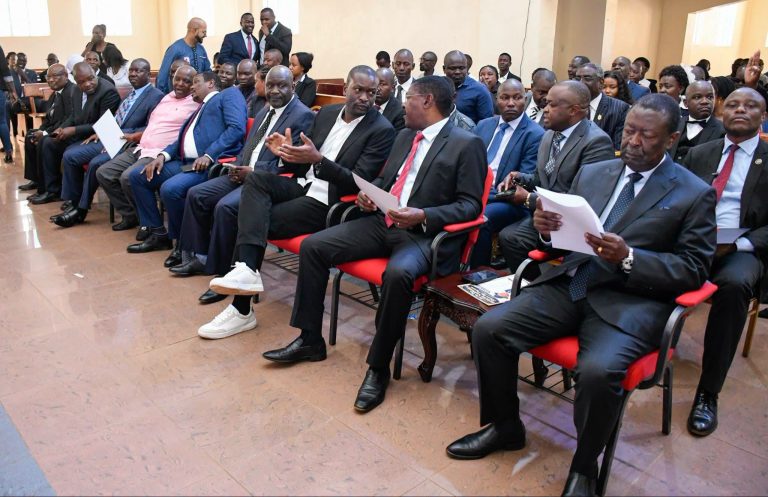
The event was attended by Acting Secretary General Catherine Omanyo, Nairobi Governor Johnson Sakaja, legislators TJ Kajwang, Sen. Hamida Kibwana, Peter Orero, James Nyikal, Joshua Orony, and Peters Owino. ODM Executive Director Oduor Ong’wen, Finance and Administration Director Joshua Kawino, and Oginga’s Chief of Staff Michael Agwanda were also present, alongside other party officials and supporters. Their presence underscored the weight of the occasion and the party’s commitment to the pact.
The NADCO report’s implementation is being pursued through three pathways: administrative, legislative, and constitutional reforms. Administrative measures include strengthening institutions and improving service delivery. Legislative reforms involve passing new laws to enshrine transparency and accountability. Constitutional reforms, the most complex, may require referenda to secure public approval. Government insiders acknowledge the challenges but insist progress is being made. “We are not rushing this process. We are building a foundation that will last,” said one senior official.
Oburu’s remarks highlight the delicate balance ODM must strike between internal cohesion and external partnerships. While some members remain skeptical of the pact with UDA, the leadership insists it is necessary to achieve the reforms envisioned in the NADCO report. The broader question is whether Kenya’s political class can sustain the dialogue long enough to deliver tangible results. History offers cautionary tales of reform processes derailed by partisan interests, but the NADCO framework is designed to mitigate such risks by embedding accountability mechanisms.
For Kenya, navigating this crisis requires protecting citizens abroad, securing a stable energy supply, and maintaining planned diplomatic alliances. While the physical battles of political contestation may seem distant, the economic and humanitarian stakes remain immediate and dire. The NADCO report is not merely a document; it is a test of Kenya’s ability to translate dialogue into lasting reform. Oburu Oginga’s dismissal of Sifuna’s claims reflects ODM’s determination to stay the course. Whether the reforms succeed will depend on patience, unity, and the political courage to see them through.
In Kenya’s fragile democracy, the true measure of leadership is not how quickly promises are made, but how faithfully they are delivered. The ODM-UDA pact, anchored in the NADCO report, is more than a political arrangement—it is a test of Kenya’s resilience and its capacity to build a future beyond partisan divides. The battles may be distant, but the consequences are immediate. The nation cannot afford to falter.
Similar Posts by The Mt Kenya Times:
- Tax relief for Kenyans: Will more money in our pockets make life easier?
- Poisoned bottle: Are we drinking ourselves into early graves?
- How Kenya and South Africa constitutionalized concentration while preaching the gospel of the disadvantaged
- Discipline begins at home
- Onana escapes serious injury in three-car crash
About the Author