Beyond disability: The leaders who refused to be defined by barriers
 The Mt Kenya Times
Niko Fiti Project, Ability Beyond Disability | Apdk
By Mr. Fredrick Kipchumba Chelimo PWD
Email: fkipchelimo@yahoo.com
“The story of disabled success has never been a story about one solitary disabled person overcoming limitations; We are often as strong as our friends and our family make us, only as strong as our community” Alice Wong
There are moments in the life of a democracy when society must stop asking whether certain citizens are capable of leadership and begin asking whether society itself has done enough to remove the barriers that prevent capable citizens from leading. For persons with disabilities, that moment has arrived. Across the world, across Africa and increasingly in Kenya, men and women who were once expected to remain on the margins have entered the political arena, occupied positions of influence and demonstrated a truth that should no longer be controversial: disability does not diminish leadership capacity and productivity of one.
The story of political inclusion is, in many ways, the story of human courage. Few examples are more powerful than that of Franklin D. Roosevelt, who led the United States through the Great Depression and the Second World War while living with paralysis after contracting polio. His presidency remains one of the defining political leadership stories of the twentieth century. His disability did not prevent him from carrying the responsibilities of the world’s most powerful elected office. Rather, history remembers the decisions he made, the institutions he built and the confidence with which he led a nation through extraordinary adversity.
In more recent times, Senator Tammy Duckworth of the United States has become another powerful symbol of what is possible. A combat veteran who lost both legs during military service, Duckworth went on to become a member of the U.S. House of Representatives and later a United States senator. Her political career has included sustained advocacy on veterans’ affairs, accessibility and disability rights. Her story matters because she was not elected simply to represent people with disabilities; she was elected to represent citizens. Her disability is part of her story, but it does not define the totality of her leadership.
That distinction is important for Kenya. The United Nations Convention on the Rights of Persons with Disabilities makes the principle explicit. Article 29 requires States to guarantee persons with disabilities political rights and the opportunity to enjoy them on an equal basis with others, including the right to participate in political and public life and to stand for election. The principle is not charity. It is equality.
Africa has its own impressive examples. South Africa’s Wilma Newhoudt-Druchen became the country’s first deaf woman Member of Parliament and used her position to advance the rights of deaf people and persons with disabilities. Her long parliamentary career demonstrates that disability-inclusive politics is not merely about putting a representative inside Parliament; it is about changing Parliament itself. South Africa’s Parliament has acknowledged both the presence of persons with disabilities in its legislatures and the continuing practical barriers that representatives have had to overcome.
Across the continent, disability-inclusive political representation has developed in different ways. Research has found that African countries including Kenya, Uganda, Rwanda, Zimbabwe and Egypt have constitutionally recognised forms of representation for persons with disabilities, making parts of Africa unexpectedly important laboratories for disability-inclusive democracy. The struggle, however, is not finished. The same literature shows that legal recognition does not automatically translate into equal political opportunity. Accessibility, campaign financing, party structures, stigma and attitudes about competence can still become formidable barriers. Kenya’s experience illustrates both the progress and the unfinished work.
The country has produced distinguished political leaders with disabilities who have refused to accept the idea that disability should determine the limits of their ambition. Hon. Timothy Wanyonyi, the long-serving Westlands Member of Parliament, has combined legal training, parliamentary service and disability advocacy. Parliament records that he has served as an MP since 2013 and has also led the Kenya Paraplegic Organization. His career is particularly instructive because his political identity extends far beyond disability. He has demonstrated that a person with a disability can build a sustained constituency and compete in mainstream politics on the basis of service and political credibility.
Then there is Senator Crystal Asige, whose story perhaps captures the new generation of disability-inclusive leadership most vividly. After losing her sight to glaucoma, she became an award-winning musician, advocate, accessibility expert and eventually a nominated Senator. Parliament describes her as a disability-rights advocate and inclusive-mobility practitioner, while recognising her legislative work and five Bills. She was also named a TIME100 Next honoree. Her example is particularly powerful because she has transformed personal adversity into public purpose without allowing disability to become the boundary of her identity.
Her message is worth listening to. Disability may create barriers, but society often creates even greater ones. An inaccessible building, a campaign venue without ramps, information unavailable in an accessible format, the absence of sign-language interpretation or a political culture that equates physical limitation with intellectual limitation can turn an ordinary challenge into an extraordinary obstacle. Yet the achievements of Kenyan leaders with disabilities show that these barriers are not evidence of incapacity.
The 2022 General Election provided further evidence. The National Council for Persons with Disabilities reported that approximately 600 candidates with disabilities contested different positions, with seven winning elective seats, including Tim Wanyonyi and Martin Wanyonyi as Members of Parliament, Rose Museo as Makueni Woman Representative and several MCAs. These numbers may still be disappointingly small, but they carry an important message: PWD candidates are not merely asking for space; they are already proving themselves capable of winning and governing.
Mr. Reuben Kigame’s presidential ambition made an even bolder statement. The blind Kenyan musician, teacher and disability-rights advocate sought the presidency in 2022 and challenged the electoral system after his candidacy was rejected. His struggle became a national conversation about whether Kenya’s electoral machinery was genuinely prepared to accommodate candidates with disabilities. Whatever one’s political preferences, the significance of his attempt is difficult to dismiss. He dared to enter a space in which many people had assumed that a blind Kenyan could never realistically compete.
That courage is precisely what should inform the political conversation around Hon. Regina Chumba. Her aspiration to become Uasin Gishu Woman Representative should not be presented to voters as a request for sympathy. It should be presented as a demand for an opportunity to compete. She should be judged by the same standards applied to every other aspirant: competence, integrity, vision, experience, accessibility of her agenda, understanding of the electorate and capacity to deliver. But voters should also recognise what her lived experience can contribute.
A woman who has had to overcome barriers understands exclusion differently. She knows that dignity is not a slogan. She understands why an inaccessible public office can deny a citizen a service, why an inaccessible school can destroy a child’s opportunity and why social protection can mean the difference between independence and dependency. That experience can strengthen leadership when combined with competence and a broad understanding of public affairs. And this is where the political conversation must mature.
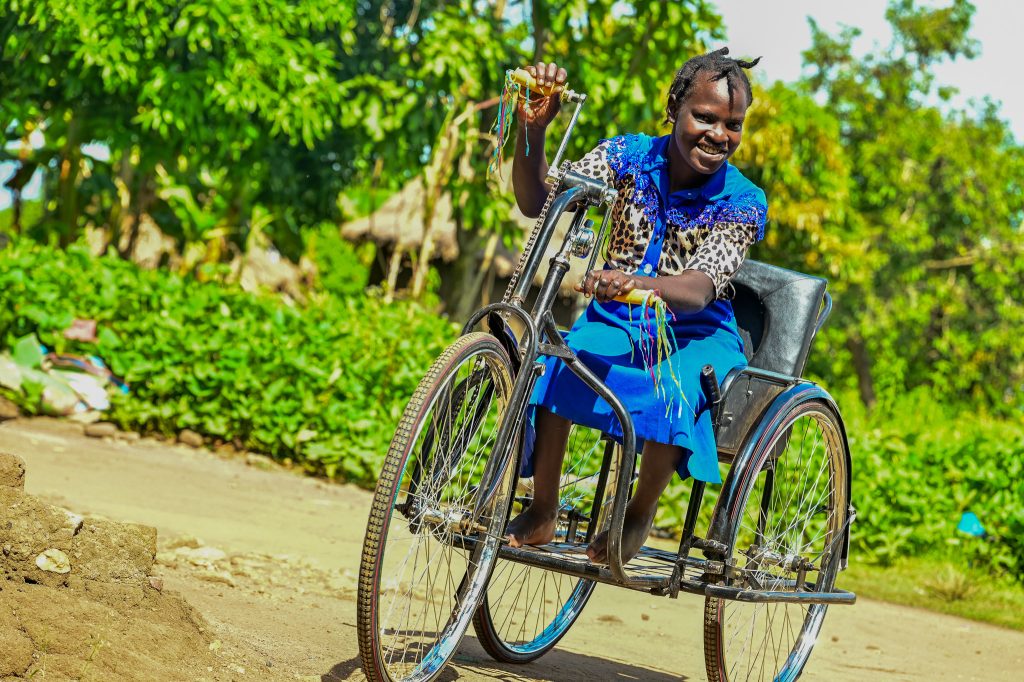
Persons with disabilities should not be confined to being politicians of disability. They should be politicians with disabilities—leaders capable of speaking about agriculture, healthcare, education, employment, women, youth, infrastructure, enterprise, security and economic development just like any other candidate.
The 2025 Persons with Disabilities Act in Kenya reinforces this principle, expressly recognising the right of persons with disabilities to participate in political and public life and to vote and be voted for directly or through freely chosen representatives. The law therefore gives legal substance to what should already be a simple democratic principle.
The electorate, too, has a responsibility. Kenyan voters should stop seeing disability first and leadership second. They should look at the person, the record, the ideas and the character. They should ask every candidate—including candidates with disabilities—what they will do, how they will do it and how they will be held accountable. But they should also refuse to allow disability to become a weapon of political discrimination.
Hon. Regina Chumba’s journey can therefore become part of a much larger Kenyan story. From Roosevelt to Duckworth, from Wilma Newhoudt-Druchen to Crystal Asige, from Tim Wanyonyi to Reuben Kigame, the evidence is increasingly difficult to ignore: people with disabilities have already demonstrated that they can lead, legislate, inspire, organise and transform institutions.
The issue is no longer whether they are capable. The real question is whether Kenya is courageous enough to give them an equal opportunity to prove what they can do. For the young Kenyan with a disability watching politics from the sidelines, the message should be unmistakable: your wheelchair does not cancel your ambition; blindness does not cancel your vision; deafness does not silence your ideas; and physical difference does not diminish your citizenship.
You belong in the classroom, the boardroom, the county assembly, Parliament—and, if you have the capacity and ambition, at the highest levels of government. Kenya does not need to elect persons with disabilities out of pity. It needs to recognise them as citizens whose proven abilities, experiences and leadership can enrich the Republic. The time has come to move the conversation from “Can they lead?” to the far more important question: “What can they achieve if we finally remove the barriers standing in their way?”
That is the promise of disability-inclusive democracy. And it is a promise that Hon. Regina Chumba and every other Kenyan aspirant with a disability have an opportunity to help fulfil.
Similar Posts by The Mt Kenya Times:
- When comradeship saves a life
- Not every struggling student is lazy
- Laikipia University: A natural haven for learning
- Why you should not milk a Kenyan buffalo
- Beyond the scars: The grief, fear and hope of living after breast cancer
About the Author