Billions For The Bourgeoisie Raila Campaign While Children Sleep Hungry And Hospitals Rot
 The Mt Kenya Times
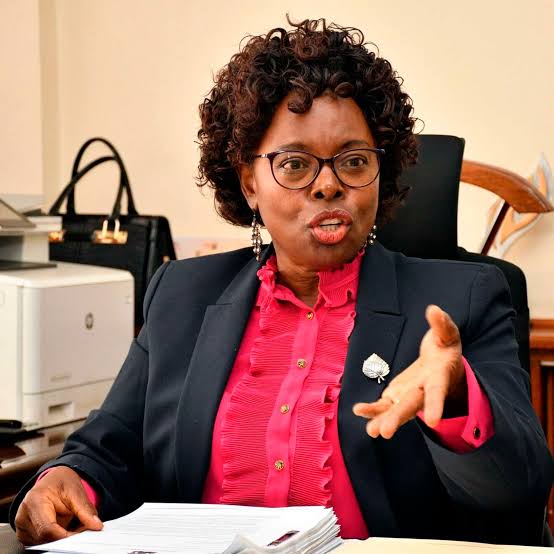
Raila Odinga unveils vision for AUC chairmanship at Addis event
When political loyalty costs billions, who will count the cost of the broken roads and starving children?
By: Midmark Onsongo
Worth Noting:
- In education, the scenario is no less tragic. Classrooms, especially in marginalized counties like Garissa, look like relics from a dystopian past. Desks are replaced by stones, textbooks by torn exercise books, and hope by despair. Yet here we are, cheerfully diverting billions. By comparison, the $10 billion could have constructed over 2,500 new classrooms, equipped each one, and paid teachers for decades. But who needs education when you have political theatrics to fund?
- And roads—ah, the roads! Symbolic of our government’s broken promises, they twist and crack like the lies told to the public. The Nairobi-Nakuru highway alone claims more lives yearly than diseases. Repair it? No, let’s send money to Raila instead.
As Karl Marx said, “Unless we unite to eliminate the owners (bourgeoisie), we workers (proletariat) will always be demeaned.” Today, Kenya echoes this very sentiment, not in whispers but in thunderous cries of despair. Imagine a nation where hospitals run on empty promises, schools crumble under the weight of neglect, and roads become the graves of ambition—yet somewhere, $10 billion is wired to finance Raila Odinga’s continental politicking at the African Union. Are we building leaders or digging graves for the future?
Ten billion shillings. Let that sink in. Not a million, not even a billion, but ten billion—money that could transform our crumbling healthcare system, repair dilapidated classrooms, or fill empty bellies. Instead, it dances away like a kite in a storm, with no clear destination but a political campaign for one man who, like Icarus, might just burn his wings. This obscene amount isn’t a myth but a tragic truth. Sources have tied the funding to questionable governmental decisions, with major whispers implicating Treasury insiders and certain unnamed statehouse influencers. Was it President William Ruto himself? Or a cabal of shadowy figures fattening their pockets while ordinary Kenyans die of hunger?
The irony couldn’t be more biting. Kenya’s hospitals are cemeteries in disguise—mortuaries overflowing with the sick, desperate souls left untreated because doctors lack equipment and patients can’t afford even a simple paracetamol. Kenyatta National Hospital, the supposed beacon of healthcare, is riddled with scandals, like a festering wound on the nation’s face. A father in Turkana walks 50 kilometers for medical aid only to be told, “The doctor isn’t available.” Does that father care about Raila’s African Union ambitions? The paradox stabs deeper: we fund campaigns, but we can’t fund life.
In education, the scenario is no less tragic. Classrooms, especially in marginalized counties like Garissa, look like relics from a dystopian past. Desks are replaced by stones, textbooks by torn exercise books, and hope by despair. Yet here we are, cheerfully diverting billions. By comparison, the $10 billion could have constructed over 2,500 new classrooms, equipped each one, and paid teachers for decades. But who needs education when you have political theatrics to fund?
And roads—ah, the roads! Symbolic of our government’s broken promises, they twist and crack like the lies told to the public. The Nairobi-Nakuru highway alone claims more lives yearly than diseases. Repair it? No, let’s send money to Raila instead. Hunger ravages counties like Turkana and Samburu. Women forage for wild fruits, children feed on air, and emaciated men dig graves instead of farms. Ten billion could feed millions, irrigate arid lands, and provide seeds to farmers. But, alas, our priorities are skewed.
The African Union’s agenda might be noble, but Kenya’s reality is dystopian. Raila Odinga, once a symbol of hope, risks becoming an emblem of misplaced priorities. His supporters will argue this funding solidifies Kenya’s role in African leadership. But at what cost? When a child in Kibera gnaws on a piece of plastic for lack of food, does it matter if their representative sits in Addis Ababa? Let us not pretend this is merely Raila’s fault. The rot runs deep—decades of plunder, institutional decay, and elite conspiracies. Ruto’s government promised a “bottom-up” approach, yet this transaction reeks of top-down mischief. MPs, governors, and other leaders are complicit too. How often do we hear fiery speeches in Parliament, yet the budget is still rubber-stamped?
The hypocrisy stinks to high heavens. Here, government officials drive luxury cars—fuel guzzlers worth millions—on pothole-ridden roads. They wear suits that cost more than what 50 families earn in a year. Their children study abroad while ours share classrooms with termites. The sycophants, meanwhile, sing praises like hired choirs: “Raila deserves it; Kenya deserves to lead Africa.”
But what does Africa deserve? Surely not leaders whose only distinction is their ability to squander resources. If Raila is a lion fighting for African dignity, why not fund his campaign from his own millions? Why should the Kenyan taxpayer, already drowning in taxes and inflation, shoulder this burden?
Consider this: Kenya’s public debt hit an alarming KSh 10.2 trillion by October 2024. With repayments consuming 60% of revenue, every shilling matters. Ten billion isn’t loose change; it’s betrayal on a grand scale. It’s the sound of betrayal echoing from State House to the poorest slum.
In politics, betrayal is packaged as strategy. Raila, a veteran, knows this too well. But this isn’t 2007 or 2017; Kenyans are wiser. We are tired of leaders speaking from both sides of their mouths. Raila’s silence on this matter is deafening. Does he believe we’ll forget as we always do? That anger will fade with the next empty promise?
No. This time, we must shout louder. We must remind our leaders that power belongs to the people. Remember the 2010 Constitution—it promised devolution, equity, and dignity. Today, it feels like a distant dream. But dreams can be revived, and nightmares can end.
As Kenyans, we must resist being pawns. The proverb says, “A goat that bleats cries for its butcher.” Let’s refuse to be goats. Let’s demand accountability. Let’s ask hard questions: Where exactly did the KSh 10 billion come from? Who approved it? Was Parliament consulted? If not, heads must roll.
And Raila, a man of history, must make history again—by rejecting this funding and insisting it be redirected to our dying hospitals, starving children, and broken schools. Leadership isn’t about titles or positions but service. If Raila truly believes in Africa’s future, he’ll lead by example, not by extravagance. Our cries are not for sympathy but action. Our demand is simple: let every shilling count. Let this government know we are watching. Let this betrayal remind us that freedom isn’t given but fought for daily. If our leaders won’t listen, let’s remind them in the ballot box, in the streets, and in every forum we can find. Because Kenya is more than Raila or Ruto; it’s the mother clutching her hungry child, the teacher writing on a chalkboard held together by hope, and the farmer praying for rain that never comes. It’s us—the people. And we will not be silenced.
This article was scripted by;
MIDMARK ONSONGO, SGS
(Socio-Geographic Scholar)
Similar Posts by The Mt Kenya Times:
- Mt Kenya Times ePAPER October 20, 2026
- Ruto rallies Kalenjin elders in Rift Valley unity push
- Sonko bid to nullify impeachment judgments fast-tracked in court
- Arrest the sponsors, not just the foot soldiers, Kalonzo tells police
- Police and politics shut down Kitale’s busiest market
About the Author