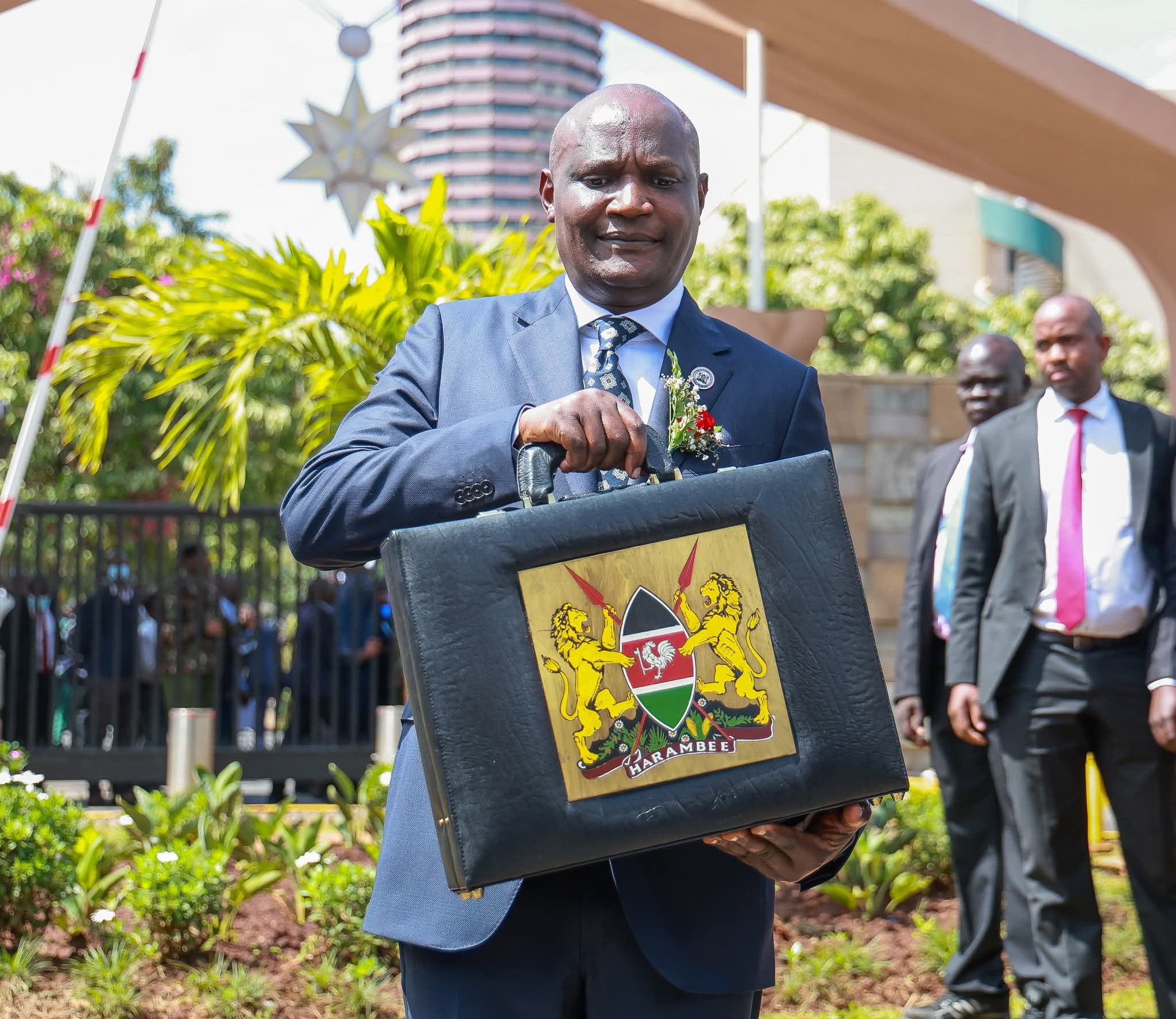
Treasury Cabinet Secretary John Mbadi when he presented 2025/26 Budget Estimates last year. Photo/courtesy
By MKT Reporter
The National Assembly has set nationwide public hearings on the proposed 2026/27 budget estimates, opening a critical phase in Kenya’s budget-making process and giving citizens an opportunity to directly influence how public funds will be spent in the next financial year.
In a notice issued by Clerk of the National Assembly Samuel Njoroge, Parliament said the hearings are aimed at strengthening public participation in line with Articles 118 and 221 of the Constitution, which require Parliament to involve citizens in legislative and budget-making processes.
The Budget Estimates for the 2026/27 financial year were submitted to Parliament on April 30 and referred to the Budget and Appropriations Committee for scrutiny before debate and approval by the House.
The proposed budget is expected to rise to approximately KSh4.78 trillion in the 2026/27 financial year, up from about KSh4.3 trillion in the current 2025/26 financial year budget approved by Parliament. The increase reflects additional spending on debt servicing, education, healthcare, security, infrastructure and implementation of the government’s Bottom-Up Economic Transformation Agenda (BETA).
Recent supplementary estimates approved by the National Assembly pushed the current 2025/26 budget closer to KSh4.6 trillion after MPs approved additional expenditure targeting pending bills and recurrent obligations in key sectors such as education, health and security.
According to Parliament, the 2026/27 Budget Estimates seek to prioritize sectors capable of creating jobs, increasing household incomes, expanding business opportunities and accelerating economic growth amid mounting fiscal pressure and rising public debt obligations.
“The Committee has resolved to hold Public Hearings on the Estimates in the Counties,” the notice states.
The public participation exercise will be conducted in three days across 16 counties with residents expected to submit oral presentations and memoranda directly to the Budget and Appropriations Committee.
The hearings will begin on Thursday next week in Kitui County at the Kitui Multi-purpose Hall, Garissa County at the Garissa Library, Homa Bay County at Orero Boys National School Hall, Nyandarua County at the Ol Joro Orok CDF Hall, and Nairobi County at the Utawala Deputy County Commissioner’s office.
On Friday, the hearings will move to Busia County, Kirinyaga County, Taita Taveta County, Tana River County and Marsabit County at venues identified by Parliament for public participation exercises.
The final phase on Saturday where it will cover Kajiado County, Meru County, Kisii County, Kakamega County, Turkana County and Kilifi County, with residents and stakeholders also expected to present their views on the proposed budget estimates.
Parliament said the hearings will be conducted in public halls, schools and administrative offices to ensure accessibility and wider citizen engagement across the selected counties.
The Budget and Appropriations Committee has also invited Kenyans, civil society organizations, professional bodies, businesses and other stakeholders to submit written memoranda on the proposed estimates by May 25, 2026, through the Office of the Clerk or via email.
The hearings come at a time when the government is under pressure to balance growing expenditure demands with fiscal consolidation efforts.
Treasury projections indicate that debt servicing will continue taking a significant share of government revenue in the coming financial year even as the State seeks to fund development projects and social programs.
Economists say the public hearings will provide Kenyans with an important constitutional platform to influence spending priorities before the budget is finalized ahead of the June budget presentation in Parliament.
The government maintains that the proposed budget is designed to stimulate economic recovery and support implementation of the Bottom-Up Economic Transformation Agenda through investments in agriculture, affordable housing, MSMEs, healthcare, digital transformation and infrastructure.
The National Assembly says the Estimates of Revenue and Expenditure are available at Parliament Buildings and on the Parliamentary website for public review before the hearings commence.
Similar Posts by The Mt Kenya Times:
- When parents trust your heart, they will trust your school
- Mt Kenya Times ePAPER October 1, 2026
- Museveni backs Lamu but keeps Uganda’s money at home
- Sifuna’s party wins its name — and Kenya’s opposition race begins in earnest
- Lamu’s $16B gamble: Africa’s biggest refinery divides the region
About the Author