The Mt Kenya Times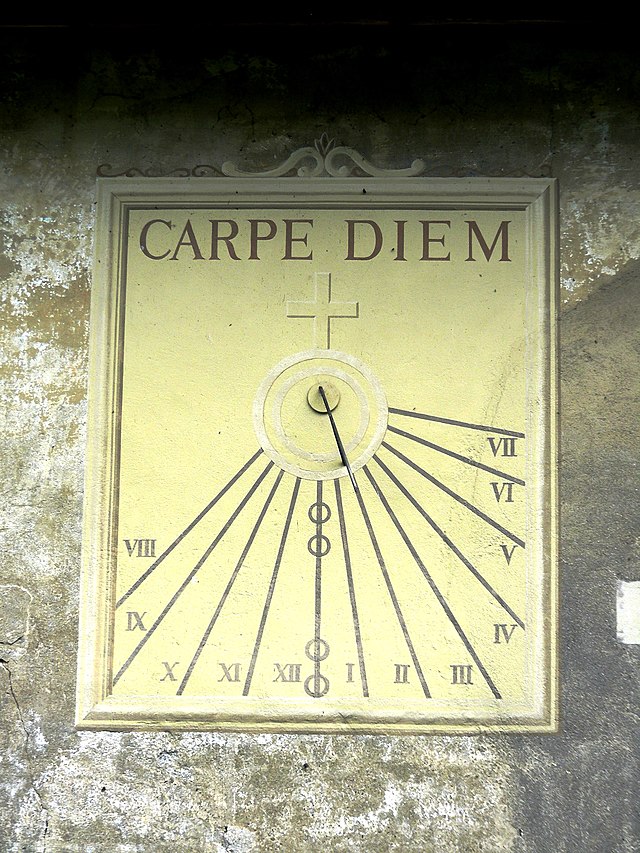
By Njonjo Mue
Worth Noting:
- The loneliness came from living away from home for the first time in a strange country where people tended to keep to themselves; the weather was typically British where it rained most of the time and the sun hardly bothered to show up, reminding me of Martin Luther King Jr. who had once quipped that Britain had gone from being the empire where the sun never set to the level where the sun hardly rises on the British empire; the self-doubt was the result of the struggle I had trying to convince the tutors at my college that I was good enough to read for the degree of my choice.
[ Previously in our on-going series on the life and times of lawyer activist Njonjo Mue: In Episode One , we sat with Njonjo at Uhuru Park in August 2010 as he joined a multitude of excited Kenyans in celebrating the promulgation of the new Constitution of Kenya. In Episode Two, Njonjo took us to a time before the beginning of his lifelong journey advocating for democracy and social justice, where we met his parents and grandparents, the rocks from which he was hewn.
In Episode Three , we were transported to Njonjo’s hometown of Thika where he enjoyed a magical childhood that laid the foundation of the man he was destined to become. In Episode Four, Njonjo spoke of the early years when he began to hear echoes of injustice that he found impossible to ignore and that would eventually transform him from a curious child into a restless activist.
In Episode Five, Njonjo explained that despite his Alma Mater, Alliance High School having a mixed record as far as its contribution to the fortunes and foibles of Kenya is concerned, he was proud to have been counted among a short list of those alumni who have pushed back against dictatorship and oppression, and advocated for democracy, good governance and social justice in independent Kenya. After six years at Alliance, Njonjo joined the University of Nairobi’s Law School for his LL.B degree. In Episode Six, Njonjo took us back to 1989, a momentous year when the world was engulfed in revolutions that toppled autocratic communist rule in Eastern Europe and threatened despotic one-party dictatorships in Africa. It was also a momentous year for Njonjo as he attended an exchange programme with American students, travelled abroad for the first time, and engaged in his own personal act of resistance against empire by working in London without a work permit.
In Episode Seven, Njonjo took us back to February 1990, a time when he took part in the first of many peaceful demonstrations when he joined other university students in condemning the gruesome assassination of Foreign Minister Robert Ouko. In Episode Eight , Njonjo spoke about his upbringing in a Christian home, attending a Christian school and his own journey towards finding faith.
In Episode Nine, as the world marked the thirtieth anniversary of the first assassination of an elected leader in post-colonial Africa, Patrice Lumumba of Congo, and as allied armies gathered for the mother of all battles against Saddam Hussein in the Persian Gulf, Njonjo’s love for music drew him in to a church meeting where, in spite of his best laid out plans for that warm Thursday evening, God finally caught up with him and he surrendered his life to the saving power of Jesus Christ. In Episode Ten Njonjo shared his pilgrimage from a purely personal faith to embracing the wholistic salvation of the true gospel of Jesus Christ who is King and Lord of all and who presides not just over individual lives, but also reigns over everything from galaxies and governments.
In Episode Eleven, after graduating with an LL.B degree from the University of Nairobi, Njonjo is awarded the prestigious Rhodes Scholarship and is full of high expectations of conquering the world as he leaves for Oxford University for his further studies, but his hopes are quickly dashed when he gets there only to realize that, in the opinion of the academic powers that be, he may be good, but not good enough. In Episode Twelve , after one and a half years out of residence, Njonjo returned to Oxford to begin a season that turned out to be as different from his earlier sojourn as day is from night, as he embraced a life of scholarship balanced with co-curricular activities, maintained a busy travel schedule that took him to Israel, Europe, Scandinavia and America, and as he found himself hopelessly drawn to a passionate embrace of a cross-Atlantic love interest.
In This Season, Njonjo zooms in on the time when he returned to Oxford where in addition to working hard, he decided to seize the day and to suck all the marrow out of the bone of life…]
****
My first year at Oxford had begun with a bang. It would end with a whimper.
I had arrived at Jesus College on that cloudy Sunday afternoon in early October 1991, a confident, freshly minted lawyer, having graduated among the top five students in my class and having also become an advocate of the high court. I had also become a committed Christian earlier that year and had experienced a period of exciting accelerated spiritual growth.
However, soon after my arrival at Oxford, three things quickly conspired to put a millstone of depression around my neck and to drag me down in a whirlwind of dark emotions and an existential struggle to keep my head above water to avoid drowning in a sea of suicidal thoughts.
This conspiracy comprised an unholy trinity of loneliness, the weather and self-doubt.
The loneliness came from living away from home for the first time in a strange country where people tended to keep to themselves; the weather was typically British where it rained most of the time and the sun hardly bothered to show up, reminding me of Martin Luther King Jr. who had once quipped that Britain had gone from being the empire where the sun never set to the level where the sun hardly rises on the British empire; the self-doubt was the result of the struggle I had trying to convince the tutors at my college that I was good enough to read for the degree of my choice.
I sunk into such a deep depression that at the end of the first year, in June 1992, I threw in the towel and returned home, a pale shadow of my former self. I was admitted to the hospital and treated for acute depression during the first ten days of October and, thankfully, I made a speedy recovery.
I got a job with a Nairobi law firm in November and then, in mid-January 1993, I traveled abroad to visit my siblings in California where I stayed for six months.
Towards Easter of 1993, while I was in the US, I had a relapse and was once again admitted to the hospital where the doctors made a final diagnosis of my condition. It was bipolar disorder, or manic-depression as it was then called. I was treated and I recovered within a week. However, the doctors overlooked to inform me that the condition I had been diagnosed with was a chronic one that would require lifelong treatment.
I thought it was like any other illness such as malaria. Therefore, once I left the hospital and had finished the medication that I had been given, I felt better and did not have any reason to go on taking the medication. For the next year and a half, I lived without any treatment or medication not out of defiance, but from sheer ignorance.
In January 1994, I returned to Oxford to continue with my studies.
By agreement with my tutors as well as Rhodes House, I was to continue in my status as a visiting scholar for the rest of the academic year and then join the one-year Bachelor of Civil Law (BCL is the Oxford equivalent of a Masters in Law, though for some odd historical reason, it continues to be known as a Bachelor degree) class in Michaelmas Term starting in October 1994 in order to sit my final exams in July 1995.
I decided to work hard in my studies but not to take them too seriously for as long as I was fulfilling the minimum obligations of being a visiting scholar. I fought back against my natural perfectionist streak as I went through my weekly reading lists and wrote and submitted my weekly essays to my tutors. I also sat in a number of interesting but optional lectures that were offered by the law faculty.
Eventually, I did start my BCL studies and particularly enjoyed being taught Public International Law by Professor Ian Brownlie who had authored the key textbook on the subject that we had used during my second year studying the same subject at the undergraduate level at the University of Nairobi.
My BCL comprised four main subjects: the Law of the Sea, Conflict of laws, the Law of Evidence, and Comparative Freedom of Expression.
I also enjoyed the sights and sounds of Oxford – both the city and the university – as if I was seeing them for the first time. Indeed before life got too busy, I made it a point of taking an afternoon off every fortnight to visit one of the museums or other sights that attracted more tourists than students followed by the obligatory high tea at one of the ubiquitous restaurants, tea shops or hotels that dot Oxford.
I had an increasingly busy social life as I made new friends both within and beyond the college and the law faculty. I attended many social events including formal dinners and cocktail parties in college and at Rhodes House, mingling with fellow Rhodes scholars from around the world.
I was also delighted to host Ngugi wa Thiong’o and his wife Njeeri for dinner during a week when he visited Oxford to deliver a series of lectures. In addition, I participated in a number of extra-curricular activities such as the Oxford Africa Society, the Oxford Civil Liberties Society and the Christian Union.
As President of the Graduate Common Room for the year 1994-5, I was also busy with student representation matters as well as ensuring that the graduate students had an exciting calendar of social events during the year.
One of the privileges that I enjoyed as president was to occupy a quaint one-bedroom apartment in the college the living room of which provided a great space where I hosted many a tea party for my growing number of friends.
In the summer, I joined friends in watching cricket while nibbling on strawberries and cream or just soaking up the sun while picnicking in one of the many parks in Oxford.
But I also enjoyed my moments of solitude. Most Monday afternoons during term time would find me reading a book as I enjoyed a cold pint of my favourite Stella Artois lager at the Turf Tavern a few metres down the road from Jesus College or at the Lamb & Flag Pub a mile away on St. Giles Street.
I also enjoyed taking quiet walks along the banks of the Cherwell or the Isis rivers while processing thoughts of greatness or silently reflecting on the meaning of meaning.
I also decided to take up a part time job although I really did not need the extra money since the Rhodes Trust provided a generous stipend to cover living expenses for scholars. However, I decided that taking on a job would enable me to stay grounded and humble and not let all the trappings of being in Oxford and well looked after get into my head.
For a while, therefore, I took up a cleaning job at the offices of the Whitefield Institute on Cornmarket Street just around the corner from the college. I would clean the offices including the kitchen and the toilets for two hours every Tuesday and Thursday. I also volunteered to work at the Porch, Oxford’s oldest day centre for homeless people.
Towards Christmas of 1994, however, I did take up another part-time job for the money. This was during the season when many shops required extra help to cope with increased holiday shopping. I did so in order as to raise funds for school fees for a childhood friend’s sister whom I had committed to supporting through high school.
The job was that of a salesperson at the WH Smith retail shop that specialised in selling books, stationery, magazines, newspapers and entertainment products. I loved the job as it allowed me to meet many interesting customers and be around books and buy quite a number of interesting ones for myself.
During the interregnum between my first and second periods of residence in Oxford I had come across and watched the 1989 movie ‘Dead Poets Society’ starring Robin Williams as a progressive English teacher who encourages his students to break free from the norm, go against the status quo and live life to the full.
The movie’s defining idea is captured by the Latin phrase ‘Carpe Diem’ or ‘Seize the Day’. Keating encourages his students, using a quote from Henry Thoreau’s book ‘Walden’, to “suck all the marrow out of life.”
Like Keating’s students, I came back to Oxford determined to “seize the day” and “suck all the marrow of life” and this I did for one and a half years between January 1994 and May 1995. However, if I knew then what I know now, I would have expected what was to follow. Living for one and a half years without treatment for my bipolar diagnosis was certainly going to extract a cost. A crash was coming.
In early May 1995, I suffered a relapse and went through a manic episode that led to admission for most of that month at the Warneford Hospital in Headington in East Oxford. I recovered well and unlike their counterparts at John George Hospital in California, the doctors at Warneford took the time to carefully explaine to me that bipolar disorder was a lifelong condition that would have to be managed by treatment including medication and therapy.
I was discharged from the hospital at the end of May. There was still a month to go before I was due to sit my final BCL examinations and I was confident that I could do so. However, my doctor strongly advised against it and counseled that I should withdraw and sit the exam at a later date. My tutors at Jesus College concurred.
I was therefore compelled to withdraw from the 1995 exams and registered to sit the exams in the summer of the following year because, unlike the university of Nairobi, Oxford did not offer supplementary or special examinations.
I returned home for a year during which I worked for three law firms in quick succession before being employed as a Programme Officer by ICJ-Kenya. As the 1996 BCL examinations approached, I was seriously worried on two accounts.
First, my scholarship at Oxford had come to an end. I did not so much as have the funds to purchase an air ticket to travel to Oxford to sit my exams.
Second, having been away from college for a year and having no access to books and other resources I needed to prepare for the examinations, I had gnawing doubts at the back of my mind that I would have a fair shot at passing the examinations.
As the date of the examinations drew near, I frantically approached several donors who had funded our work at ICJ-K, seeking financial support to enable me to travel to the UK. They all regretted to inform me that they did not fund individual causes.
In desperation, I appealed to the Highest Donor of all:
“Dear Lord,” I pleaded, “You know how I long to go back to Oxford to sit my exams and that all my efforts at raising the necessary funds I need have amounted to nothing. But your word says that you are my Father and that if I ask for anything in your name I will obtain it. It also says that silver and gold belong to you and that you own the cattle on a thousand hills. I am therefore praying that you would provide the money I need to purchase my ticket to the UK. In Jesus name. Amen.”
The day after I made this prayer, I saw an advertisement in the newspaper from Amnesty International. The London-based NGO was about to open a regional office for East Africa to be based in Kampala Uganda. They needed to recruit a regional director. I promptly sent out my application and, a week later, I received a letter from Amnesty informing me that I had been shortlisted for interview and that they would pay for my ticket to travel to London for the interview.
As it happened, the interview was scheduled to take place less than a week before my BCL examinations were due to take place in Oxford. Alas my prayer for a ticket to travel to Oxford to sit my exams had been answered. I, however, still had to surmount the second hurdle – successfully sitting for the exams with such little preparation.
A few days after the Amnesty interview, as is a traditional requirement at Oxford, I dressed formally in a black suit, white shirt, a white bowtie, and an academic gown, and I carried a mortarboard as I walked nervously into the Examination Schools of the University of Oxford located at 75 – 81 Oxford High Street, and took my examinations over a period of three days. I was comforted by the fact that whatever the outcome, I had done my best.
When I finished my last paper, I walked back to Jesus College where I found my friends armed with buckets of water, a bottle of champagne, flour and confetti ready to ‘trash’ me in the traditional Oxford manner of celebrating the completion of exams. By the time they were done, I was soaking wet, covered with foam, flour and confetti, and smelling of champagne. My friends then waited for me to take a shower and change before we went out to a pub for a celebratory drink.
I had done my best in the examinations, but when the results came out a few days later, I found out that my best had not been good enough. I had failed to get the pass mark by a few points. I was not entirely shocked due to the circumstances under which I had taken the exams.
I promptly registered to re-sit the examinations in the summer of 1997 and took the next flight home to Nairobi and continued with my work at ICJ-K.
As the year drew to a close, I knew I had to have a conference with myself on the subject of sitting the exam for a second time:
“Njonjo, you did not fail the exams earlier this year because you were stupid,” I told myself. “You failed because you had been away from college for a whole year without access to the books, articles, and other resources that you needed to prepare. That was just for one year. What will be different next year except the fact that you shall have been away twice as long?”
The outcome of this conversation with myself was that I had to reluctantly admit to myself that the possibility of passing the examinations the next year was even dimmer than before. I therefore took the difficult decision not to set myself up for failure once again. And so just before breaking for Christmas 1996, I wrote one of the most difficult letters I had ever had to write. It was addressed to my tutors at Jesus College:
” Dear Mr. Clarke,
“Greetings from Nairobi. As you are aware, following my failure of the BCL examination earlier this year, I registered to re-take the exams in the summer of 1997. However, upon reflection, I have had to admit that the reason that I failed the examination was the fact that I had been out of residence for one year without access to the books, cases, articles and other materials that I needed for preparation.
“By the time of the exams scheduled for next summer, I shall have been away for two years with an even lesser chance of passing. I have therefore decided to withdraw my candidature for that examination.
“It is unfortunate that this means that I will not obtain a degree from Oxford. However, I have been blessed to spend two incredible years at one of the best universities in the world during which time I got the opportunity to grow intellectually, socially and spiritually; to travel the world; and to make wonderful new friends.
“There are certainly those who will choose to judge me on the basis of a missing report card. This is a reality that I will have to learn to live with.
“But I take heart in also knowing that there are many more who will look beyond that and appreciate the unique qualities that I developed during the time I spent up at Oxford which have contributed to the special human being that I am in the process of becoming.
Yours truly,
Njonjo Mue “
Similar Posts by The Mt Kenya Times:
- Mt Kenya Times ePAPER October 20, 2026
- Ruto rallies Kalenjin elders in Rift Valley unity push
- Sonko bid to nullify impeachment judgments fast-tracked in court
- Arrest the sponsors, not just the foot soldiers, Kalonzo tells police
- Police and politics shut down Kitale’s busiest market
About the Author