Climate Finance And Neocolonialism: Kenya’s Struggle In The Global South
 The Mt Kenya Times
xr:d:DAFv65sL3EY:12,j:6230008739082370688,t:23093016
By Jerameel Kevins Owuor Odhiambo
Worth Noting:
- The role of international financial institutions (IFIs) in climate finance has been a subject of intense debate, particularly in the context of neocolonialism.
- The World Bank and the International Monetary Fund (IMF) have been at the forefront of mobilizing climate finance for developing countries, but their approaches have often been criticized for perpetuating dependency and imposing policy conditionalities that limit national autonomy.
- The case of the Kenyan government’s negotiations with the IMF for a $2.34 billion loan in 2021, which included climate-related conditions, exemplifies this dynamic. While the loan provided much-needed fiscal support, it also required Kenya to implement specific climate policies that some critics argued were not fully aligned with national priorities.
 “The intersection of climate finance and neocolonialism in developing nations represents a complex tapestry of power dynamics, economic interests, and environmental imperatives,” argues Dr. Amina Njeri, a renowned Kenyan environmental economist. This observation encapsulates the multifaceted challenges faced by Kenya and other Sub-Saharan African countries as they navigate the intricate landscape of global climate finance. The concept of climate finance, designed to support developing nations in their efforts to mitigate and adapt to climate change, has become a double-edged sword. While it offers essential resources for combating environmental degradation, it simultaneously reinforces existing power imbalances between the Global North and South. This dynamic is particularly evident in Kenya, where the influx of climate finance has been accompanied by concerns about sovereignty, economic dependency, and the perpetuation of neocolonial structures. The Kenyan experience serves as a microcosm of the broader struggles faced by developing nations in accessing and utilizing climate finance while maintaining autonomy and pursuing sustainable development. As we delve into this complex issue, we will explore the legal frameworks, international treaties, and scholarly perspectives that shape the discourse on climate finance and neocolonialism. Through an examination of case studies, data, and comparative analyses, we will unravel the intricate web of relationships between donor countries, international financial institutions, and recipient nations in the Global South.
The Paris Agreement of 2015 marked a significant milestone in global climate action, establishing a framework for climate finance that aimed to support developing countries in their transition to low-carbon economies. Article 9 of the agreement explicitly calls on developed countries to provide financial resources to assist developing countries with both mitigation and adaptation efforts. However, the implementation of this commitment has been fraught with challenges, particularly for nations like Kenya. The Green Climate Fund (GCF), established as a key mechanism for channeling climate finance, has been criticized for its complex accreditation process and stringent requirements that often favor large international organizations over local entities. This has led to a situation where Kenyan institutions struggle to access funds directly, instead relying on intermediaries that may not fully understand or prioritize local needs. The Constitution of Kenya, 2010, enshrines the right to a clean and healthy environment in Article 42, placing a responsibility on the state to ensure sustainable exploitation, utilization, management, and conservation of the environment and natural resources. However, the government’s ability to fulfill this mandate is often constrained by the conditions attached to climate finance, which may prioritize donor interests over local environmental and developmental goals. The case of the Lake Turkana Wind Power Project illustrates this tension, where concerns about land rights and community displacement were overshadowed by the project’s potential for clean energy generation and its attractiveness to international investors.
The concept of neocolonialism, first articulated by Ghanaian leader Kwame Nkrumah, finds new expression in the realm of climate finance. Nkrumah argued that the essence of neocolonialism is that the state which is subject to it is, in theory, independent and has all the outward trappings of international sovereignty, but in reality, its economic system and thus its political policy is directed from outside. This dynamic is evident in the way climate finance is often tied to policy conditionalities that shape Kenya’s national development strategies. The World Bank’s Climate Change Action Plan for Kenya, while providing crucial funding for adaptation and mitigation projects, has been criticized for promoting market-based solutions that may not align with local priorities or cultural values. The push for carbon trading schemes, for instance, has raised concerns about the commodification of nature and the potential for land grabs under the guise of conservation. These issues echo broader debates about the neocolonial implications of international environmental governance, as discussed by scholars such as Ramachandra Guha and Joan Martinez-Alier in their work on environmentalism of the poor.
The legal framework governing climate finance in Kenya is a complex interplay of international agreements, national laws, and customary practices. The United Nations Framework Convention on Climate Change (UNFCCC) and its associated protocols provide the overarching structure for global climate action, but their implementation at the national level often reveals gaps and contradictions. Kenya’s Climate Change Act of 2016 establishes a comprehensive framework for mainstreaming climate change responses into development planning, decision-making, and implementation. However, the act’s provisions for accessing and managing climate finance are often overshadowed by the requirements of international donors and financial institutions. The case of Kenya v National Environmental Management Authority & 2 others [2021] eKLR highlights the challenges of balancing environmental protection with development imperatives, as the court grappled with the legality of a coal power plant project that had received significant foreign investment. This case underscores the tension between Kenya’s commitment to renewable energy and the economic pressures that often come with climate finance packages.
The data on climate finance flows to Kenya and other Sub-Saharan African countries reveal a stark imbalance in the global distribution of resources. According to the Climate Policy Initiative’s Global Landscape of Climate Finance 2021 report, Africa as a whole received only 26% of the climate finance it needs, with Sub-Saharan Africa facing the largest gap. Kenya, despite being one of the larger economies in the region, still struggles to attract sufficient climate finance to meet its Nationally Determined Contributions (NDCs) under the Paris Agreement. The country’s updated NDC estimates that it will require approximately $62 billion between 2020 and 2030 to implement its climate action plans, with only 13% expected to come from domestic sources. This financial shortfall underscores the dependency on external funding and raises questions about the long-term sustainability of Kenya’s climate strategies. Moreover, the sectoral distribution of climate finance in Kenya reveals a bias towards mitigation projects, particularly in renewable energy, at the expense of adaptation initiatives that are crucial for building resilience in vulnerable communities.
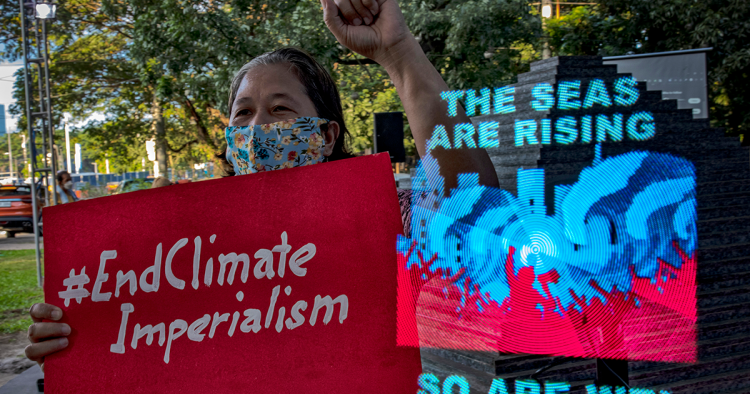 The experience of other developing nations provides valuable insights into the challenges and opportunities facing Kenya in the realm of climate finance. In India, the National Action Plan on Climate Change has been criticized for its top-down approach and limited engagement with grassroots organizations, echoing concerns about the lack of local participation in climate finance decisions in Kenya. Brazil’s experience with the Amazon Fund offers lessons in the complexities of managing large-scale international climate finance initiatives, particularly in balancing national sovereignty with donor expectations. The case of Indonesia’s Reducing Emissions from Deforestation and Forest Degradation (REDD+) program highlights the potential for community-based approaches to climate finance, but also the risks of corruption and elite capture that can undermine the effectiveness of such initiatives. These comparative examples underscore the need for Kenya to develop robust institutional frameworks and governance mechanisms to ensure that climate finance serves the interests of its citizens and contributes to genuine sustainable development.
The role of international financial institutions (IFIs) in climate finance has been a subject of intense debate, particularly in the context of neocolonialism. The World Bank and the International Monetary Fund (IMF) have been at the forefront of mobilizing climate finance for developing countries, but their approaches have often been criticized for perpetuating dependency and imposing policy conditionalities that limit national autonomy. The case of the Kenyan government’s negotiations with the IMF for a $2.34 billion loan in 2021, which included climate-related conditions, exemplifies this dynamic. While the loan provided much-needed fiscal support, it also required Kenya to implement specific climate policies that some critics argued were not fully aligned with national priorities. This scenario echoes the concerns raised by scholars such as Walden Bello and Naomi Klein, who have argued that the current structure of global climate finance reproduces colonial power relations under the guise of environmental protection.
The concept of climate justice, which emphasizes the ethical and political dimensions of climate change, provides a crucial lens for examining the relationship between climate finance and neocolonialism. Scholars like Maxine Burkett and Sheila Jasanoff have argued that the current global climate regime fails to adequately address historical responsibilities and differential vulnerabilities, instead reinforcing existing inequalities. In the Kenyan context, this is evident in the disproportionate impacts of climate change on marginalized communities, such as pastoralists in the arid and semi-arid regions, who often have the least access to climate finance and adaptation resources. The principle of common but differentiated responsibilities, enshrined in international environmental law, calls for a more equitable approach to climate finance that recognizes the historical contributions of developed countries to global emissions and the limited capacities of developing nations to respond to climate challenges.
The role of multinational corporations in climate finance adds another layer of complexity to the neocolonial dynamics at play in Kenya and other developing nations. While private sector investment is crucial for scaling up climate action, there are concerns about the potential for “green grabbing” – the appropriation of land and resources for ostensibly environmental ends. The case of the Olkaria Geothermal Project in Kenya’s Rift Valley illustrates this tension, where the expansion of renewable energy capacity has been accompanied by disputes over land rights and the displacement of indigenous Maasai communities. This scenario echoes broader debates about the commodification of nature and the risk of perpetuating colonial patterns of resource extraction under the banner of green development. Scholars like Esteve Corbera and Christophe Bonneuil have argued that market-based approaches to climate mitigation, such as carbon offsetting schemes, can create new forms of enclosure that disproportionately affect communities in the Global South.
The international legal framework for climate finance, while ostensibly aimed at promoting global cooperation, often reinforces power imbalances between donor and recipient countries. The principle of additionality, which requires climate finance to be new and additional to existing development aid, has been particularly contentious. Critics argue that many developed countries simply repackage existing aid commitments as climate finance, undermining the spirit of the UNFCCC and related agreements. The case of the Netherlands v. Urgenda Foundation, while not directly related to Kenya, sets an important precedent for climate litigation and underscores the potential for legal action to enforce climate commitments. This ruling, which required the Dutch government to take more ambitious climate action, highlights the growing recognition of climate change as a human rights issue and the role of the judiciary in holding states accountable for their climate obligations. For Kenya and other developing nations, such legal precedents offer potential avenues for challenging the current structure of climate finance and advocating for more equitable and effective mechanisms.
The governance of climate finance at the national level in Kenya reflects the broader challenges of balancing local needs with global imperatives. The National Climate Change Action Plan (NCCAP) 2018-2022 outlines a comprehensive strategy for mainstreaming climate action across sectors, but its implementation has been hampered by limited institutional capacity and coordination challenges. The establishment of the National Climate Change Council under the Climate Change Act was intended to provide high-level oversight of climate policy and finance, but its effectiveness has been questioned by civil society organizations who argue for greater transparency and public participation in decision-making processes. The case of Friends of Lake Turkana Trust & 5 others v Cabinet Secretary Ministry of Environment & 4 others [2021] eKLR highlights the importance of public interest litigation in ensuring accountability in climate finance decisions, as the court ruled in favor of greater community consultation in the development of renewable energy projects. This legal precedent underscores the potential for domestic legal frameworks to serve as a counterbalance to neocolonial tendencies in climate finance by empowering local communities and civil society actors.
As Kenya and other developing nations in the Global South continue to navigate the complex landscape of climate finance, there is a growing recognition of the need for alternative models that prioritize local agency and sustainable development. The concept of climate-resilient development pathways, as articulated in the Intergovernmental Panel on Climate Change (IPCC) reports, offers a framework for integrating climate action with broader development goals. This approach emphasizes the importance of context-specific solutions and the need to build adaptive capacity at multiple levels of society. Initiatives like the County Climate Change Funds in Kenya demonstrate the potential for decentralized approaches to climate finance that empower local communities to identify and implement adaptation and mitigation projects. However, scaling up such initiatives requires a fundamental rethinking of the global climate finance architecture to address power imbalances and ensure that resources reach those most in need. As scholars like Arun Agrawal and Maria Carmen Lemos have argued, effective climate governance requires not just financial transfers, but also the transformation of institutions and power relations at multiple scales.
In conclusion, the intersection of climate finance and neocolonialism in Kenya and other developing nations presents both challenges and opportunities for reimagining global environmental governance. While the current system often perpetuates historical inequalities and power imbalances, there are emerging pathways for more equitable and effective approaches to addressing the climate crisis. The Kenyan experience highlights the need for a nuanced understanding of the political economy of climate finance, one that recognizes the agency of developing nations and the importance of local knowledge and priorities. As the global community grapples with the urgency of climate action, it is imperative to develop financial mechanisms and governance structures that not only provide resources for mitigation and adaptation but also challenge the neocolonial underpinnings of the current system. Only through such a transformation can climate finance truly serve as a tool for sustainable development and environmental justice in Kenya and beyond.
The writer is a legal scrivener
Similar Posts by The Mt Kenya Times:
- Mt Kenya Times ePAPER October 17-18, 2026
- Ruto bets billions on Kerio Valley — with one eye on 2027
- Ruto’s health ministry kills Murang’a’s digital hospitals
- Kenya bets on Mount Kenya to drive a billion-shilling tourism revival
- Do you have a wealth vision? Or are you just working until you die?
About the Author