D-Day for Gachagua: a nation waits on a ruling that could rewrite Kenya’s politics
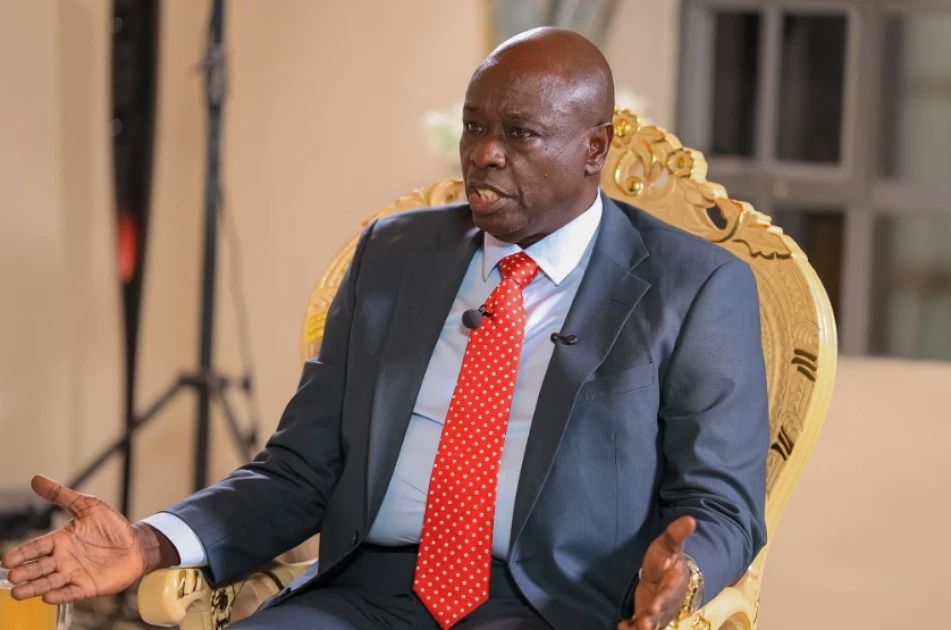
Former Deputy President Rigathi Gachagua
After 20 months of legal battles, church prayers, and defiant speeches, former Deputy President Rigathi Gachagua faces a High Court verdict today that will determine not just his future — but the shape of Kenya’s 2027 election
By MKT Reporter
The High Court delivers its judgment today, Monday 8 June 2026, in consolidated petitions challenging the constitutionality of former Deputy President Rigathi Gachagua’s impeachment — a ruling that carries consequences far beyond one man’s career.
Justices Eric Ogolla, Anthony Mrima and Frida Mugambi will read their decision in a case that will determine the legality of Gachagua’s removal from office and the subsequent appointment of Deputy President Kithure Kindiki. For Gachagua, his supporters and the fractious opposition coalition he now leads, the ceremonial hall at Milimani Law Courts in Nairobi is the most consequential room in Kenya this morning.
The journey to this moment has been long, bitter, and constitutionally unprecedented.
The impeachment process began in October 2024 after a motion sponsored by Kibwezi West MP Mwengi Mutuse accused Gachagua of gross misconduct, abuse of office, and violations of the Constitution. The National Assembly voted overwhelmingly to approve the motion before the matter proceeded to the Senate, which later upheld the charges and removed him from office. The 67 lawmakers of the Senate found him guilty on five grounds but absolved him on six charges — making him the first sitting Deputy President in Kenya’s history to be removed through impeachment.
Gachagua was removed from office in October 2024. Lawmakers accused him of promoting ethnically divisive politics and undermining the government. He has since alleged that bribes were solicited in both the National Assembly and the Senate to support his removal. His legal team moved swiftly. Challenges were filed, conservatory orders sought, and a protracted battle through multiple court levels began — one that involved the Supreme Court itself weighing in on whether the original High Court bench was properly constituted.
During the hearings, lawyers representing Gachagua raised 18 grounds of challenge, arguing that the impeachment process was unconstitutional, unfair, and violated his right to a fair hearing. The legal team further claimed that there was insufficient public participation and procedural irregularities during the impeachment proceedings. Parliament pushed back firmly. Lawyer Moses Kipkogei, representing the National Assembly, told the High Court that the proceedings were conducted within constitutional timelines and involved one of the most extensive public participation exercises in Kenya’s history, with some 223,000 Kenyans submitting views physically in various offices.
The constitutional questions the judges must now resolve are significant. At the heart of the case is whether impeachment disputes are justiciable at all. The Attorney-General, Parliament, the Senate and Deputy President Kindiki argued that impeachment is a political process entrusted to Parliament, urging the court not to substitute judicial opinion for parliamentary judgment. But petitioners argued that the Constitution created a supervisory judiciary with power to review exercises of public authority, and that Parliament cannot escape scrutiny simply because a dispute carries political consequences.
On the eve of the ruling, Gachagua was composed — and deliberately public about it.
Speaking during a church service at PCEA Karen on Sunday, Gachagua said he was ready to accept the High Court ruling while urging his supporters to remain calm regardless of the outcome. “I ask you to pray for us. I was removed from office against the law and the Constitution. The case has been heard and the verdict is tomorrow. We are ready for any outcome,” he said.
It was a message calibrated carefully for two audiences: his base, which he needed to keep steady, and a watching public that has seen Kenyan political disputes turn volatile. He added that if the judges ruled in his favour, it would affirm the strength of the country’s justice system. “If the three judges rule that we were treated unfairly and against the law and Constitution and lift the impeachment and let us be, we shall be grateful to God and grateful that the justice system in the country works,” he said.
But he was equally clear about what an adverse ruling would mean — not defeat, but a next step. Should the ruling go against him, Gachagua has indicated that he will immediately move to the Court of Appeal to challenge the decision. He has maintained that even an unfavourable ruling would not mark the end of his political ambitions, insisting that his path to State House remains open regardless of the outcome. “It is not a must that I lead while in an elected office; I can still do it from my Wamunyoro home, exactly what I have been doing since they hounded me out of office,” he said.
The stakes, however, extend well beyond Gachagua’s personal fortunes.
The June 8 judgment has emerged as a crucial factor in the 2027 elections, with implications for President William Ruto’s re-election bid and the presidential aspirations of Wiper Patriotic Front boss Kalonzo Musyoka and Jubilee deputy party leader Fred Matiang’i, the two United Opposition presidential hopefuls. A ruling that upholds the impeachment could bar Gachagua from contesting public office — or it could liberate him to serve as kingmaker rather than candidate. Analysts caution that a Gachagua presidential bid, if cleared by the court, could paradoxically benefit President Ruto by splitting anti-government votes and making it easier for the incumbent to secure a second term.
Gachagua has reiterated his commitment to the opposition cause and a push for a joint single candidate to face President Ruto in 2027. “If it will not be me, and it turns out that my sister Martha Karua or my cousins Edwin Sifuna, Fred Matiang’i, Kalonzo Musyoka, George Natembeya, Eugene Wamalwa… I will be good to submit,” he said. It is a statement that sounds magnanimous — and one that the opposition’s internal tensions immediately complicate. While Gachagua has publicly stated he will back Kalonzo for the presidency, former Interior Cabinet Secretary Fred Matiang’i is pushing back against how the coalition plans to pick a single candidate, proposing a scientific selection process that Kalonzo allies have dismissed as a boardroom manoeuvre.
Whatever the judges decide this morning, one thing is already clear: this ruling will not end Kenyan politics as Gachagua has learned to play it. If the impeachment is declared unconstitutional, he becomes a man vindicated — and emboldened. If it is upheld, he becomes a martyr whose grievance the opposition will continue to weaponise.
Either way, Rigathi Gachagua is not going home.
Similar Posts by The Mt Kenya Times:
- Mt Kenya Times ePAPER October 27, 2026
- Sifuna draws hope from Serbia and Brazil as Kenya’s 2027 race heats up
- Uhuru calls for unity as he marks 65th birthday
- Kenya establishes international crimes division: Justice delayed, but will it be delivered?
- World marathon champion Jepchirchir suspended in fresh blow to Kenya’s clean sport drive
About the Author