Farmers Urged To Improve Livestock Feed And Breeding Practices For Market Competitiveness
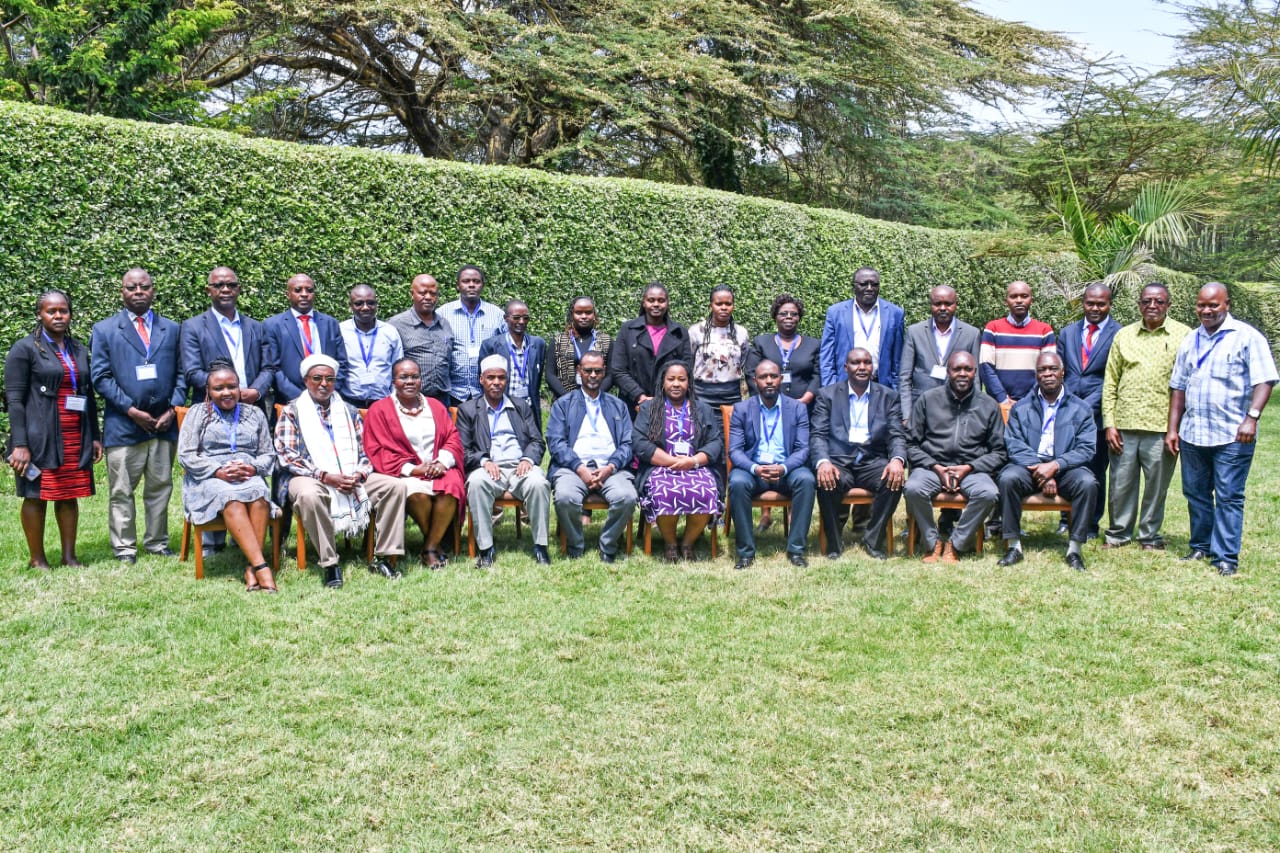
Participants at the inaugural the Kenya National Feeds Emergency Response Planning workshop in Naivasha. Photo/Courtesy
By Suleiman Mbatiah
Livestock farmers have been urged to invest in both feed production and improved breeding practices to meet the rapidly growing demand for animal products, both locally and in international markets.
According to Dr. Andrew Mwihia, the Cabinet Secretary of the Ministry of Agriculture and Livestock Development, Kenya is experiencing significant deficits in animal-source foods, a situation projected to worsen by 2030 if no action is taken.
A study conducted by the Ministry of Agriculture and Livestock Development in 2018 revealed that the country faces a 60 percent deficit in animal feed, with the greatest shortfalls occurring in the Arid and Semi-Arid Lands (ASALs).
In a speech delivered on his behalf by Professor Abdi Gulliye, an animal production expert, during the Kenya National Feeds Emergency Response Planning workshop in Naivasha, he emphasized that these investments are important for ensuring the long-term sustainability of the livestock industry.
The inaugural forum, facilitated by the African Union – Interafrican Bureau for Animal Resources (AU-IBAR) through the Resilient African Feed and Fodder Systems, brings together livestock feeds and fodder experts and other stakeholders.
AU-IBAR is a specialized technical office of the African Union Commission (AUC), led by a director, that provides strategic leadership in the development and management of animal resources across Africa.
Dr Huyam Salih, the AU-IBAR director, highlighted that Kenya, Somalia, and Uganda have conducted feed inventories and developed feed balances in the last five years, offering valuable experience for a unified regional response and managing transboundary actions.
According to official government statistics, the livestock sector plays a key role in Kenya’s economy, contributing approximately 12 percent to the national Gross Domestic Product (GDP) and 42 percent of the agricultural GDP.
“The Government regards livestock as a key driver for the development of the country, contributing to food security, job creation, and income generation for our people,” he noted.
Approximately 70 percent of the ruminant livestock population is located in arid and semi-arid lands, which constitute about 80 percent of the country’s land mass. These animals are primarily raised under a pastoral production system.
Data presented by Dr. Mwihia suggests that the country is overstocked by about 100 percent of its carrying capacity, leading to low animal production and increased land degradation.
He further noted that the country has been experiencing rising incidences of drought due to the escalating effects of climate change and variability resulting from global warming, worsening the animal feed deficit.
“The prolonged drought of 2020-2022 was the most severe in the last 40 years, resulting in livestock deaths estimated at Kshs 70 million. This figure does not account for losses in livestock body condition or ecological balance,” he said.
To address these challenges, the Cabinet Secretary announced that the government has prioritized the promotion of key value chains, including beef, sheep, goats, indigenous poultry, honey, dairy, and leather, to enhance productivity and sustainability within the livestock sector.
The livestock populations are estimated at 4 million heads of exotic dairy cattle, 16 million heads of indigenous cattle, 24 million heads of hair sheep, 34 million heads of indigenous goats, 4 million heads of camels, and 48 million indigenous poultry.
“The Government has secured access to various international markets for livestock through the efforts of the Head of State, President William Ruto,” he revealed, but lamented that Kenya has struggled to meet market specifications due to low live body weights.
He stated that the promotion of feedlots across the country and the commercialization of livestock keeping are expected to improve livestock off-take for the market. During the last financial year, the Government distributed 500 tonnes of sunflower seeds to producers nationwide.
“I urge research institutions to develop and provide the necessary technologies to value chain actors, while seed dealers and merchants should supply suitable seeds to producers to ensure a seamless and efficient value chain,” he added.
The government is in the final stages of developing a policy for land commercialization, aimed at making idle government land available to investors for production, thereby significantly reducing the feed deficit and enhancing the country’s animal feed security.
Similar Posts by The Mt Kenya Times:
- Mt Kenya Times ePAPER October 26, 2026
- Sakaja challenges Kamukunji police over Eastleigh suspect bail
- Muturi demands binding livestreaming rules for 2027 polls to prevent repeat of 2022 chaos
- NTSA calls for road safety to be declared a national disaster after 24 die in Mtito Andei crash
- Ruku turns on Waiguru over deputy president ambitions: ‘That seat is not being contested for’
About the Author