ICC member states dismiss prosecutor Khan over serious misconduct
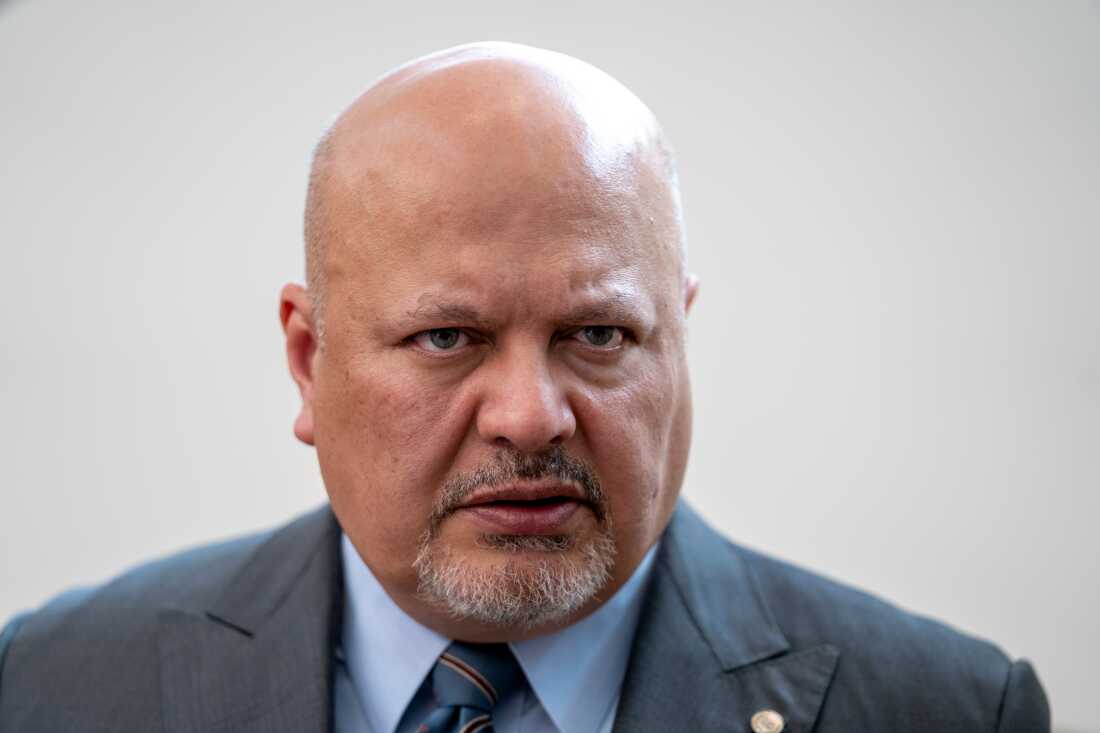
Karim Khan
The removal of Karim Khan ends a tenure defined by landmark arrest warrants and engulfed by allegations of sexual assault — leaving the world’s only permanent international criminal court to rebuild its credibility at a moment of acute geopolitical strain
By MKT Reporter
International Criminal Court member states voted on Friday to remove prosecutor Karim Khan from office, with 82 of the court’s 125 member states finding him guilty of serious misconduct and a serious breach of duty following allegations that he sexually assaulted a female member of his staff — marking the first time in the court’s history that a sitting chief prosecutor has been ousted.
The secret ballot, conducted at United Nations headquarters in New York during a special session of the Assembly of States Parties, delivered a decisive if sobering verdict on a tenure that had been consumed, in its final years, as much by internal scandal as by the headline-grabbing prosecutions that defined it. Sources told AFP that only 13 states voted for Khan to remain in his post. A further 15 members abstained.
Paivi Kaukoranta, president of the court’s governing body, read out the result without ceremony. “The assembly decided by a majority of 82 states parties that the elected official, prosecutor Karim Khan, committed serious misconduct and a serious breach of duty and to remove Karim Khan from office,” she said, before praising members for the “spirit of unity shown in upholding the integrity of the court.”
Khan, 56, a British barrister who had held the post since 2021, was not present in the chamber. He has denied all wrongdoing and his lawyer, Tayab Ali, moved swiftly to signal that Friday’s decision would not go unchallenged. “Mr Khan will challenge the lawfulness and fairness of the decision through all available legal mechanisms,” Ali said. He went further, warning that the removal carried consequences beyond a single individual. “The independence of the International Criminal Court depends upon its elected officials being protected from removal through processes that are political, procedurally unfair or inconsistent with the findings of independent judicial bodies,” Ali posted on X.
The allegations at the centre of the case were made by a Malaysian lawyer who served as Khan’s direct assistant. Speaking last week to CNN, the woman — who asked to be identified only by her first name, Sarah — described a pattern of escalating behaviour that culminated in physical assault. “There is no way for something to be consensual when you have such a power disparity,” she said. “What I think many people don’t understand is that Mr Khan was not just my boss, he was everyone’s boss.” Khan had voluntarily stepped back from his duties in May 2025 while a UN investigation was conducted, but maintained throughout that the allegations were false.
The ICC said on Friday that Khan’s office will now be headed by deputy prosecutors Nazhat Shameem Khan and Mame Mandiaye Niang. Khan’s dismissal immediately triggers the election process for a new chief prosecutor, although a vote is not expected before next year. The 25th session of the Assembly of States Parties, scheduled from 7 to 17 December 2026 at the UN in New York, is expected to address the prosecutorial election, with the realistic options being either folding it into that session or convening a resumed session in early 2027.
The timing could scarcely be more fraught. Khan’s removal comes at a moment when the court is already facing a campaign by the United States to dismantle the ICC, which Washington describes as a threat to its sovereignty. Since its creation in 2002 under the Rome Statute, the ICC has set international standards for adjudicating the world’s gravest crimes, recording seven convictions and maintaining a current docket of 34 cases. Its authority rests entirely on the cooperation of its member states — an authority that has been tested severely in recent years.
Much of that testing has been linked to Khan’s most consequential decision. In 2024, he applied successfully for arrest warrants against Israeli Prime Minister Benjamin Netanyahu and former defence minister Yoav Gallant over the conduct of the Gaza war. The ICC also issued warrants for senior Hamas commanders, several of whom have since been killed. The warrants drew immediate and intense American fury. Khan and several ICC judges were placed under US sanctions, and Washington made clear it regarded the court’s jurisdiction as illegitimate in cases involving the United States or Israel, neither of which has ratified the Rome Statute.
On Friday, American officials were unsparing in their response to his departure, though the message carried its own ambiguities. “It is good that he is gone, but he is only one small cog in this irredeemably corrupt institution,” State Department spokesman Tommy Pigott said on X — a statement that appeared to celebrate Khan’s removal while simultaneously rejecting the legitimacy of the institution that removed him.
Israeli Foreign Minister Gideon Saar went further, calling the removal “long-delayed” and arguing that the Gaza arrest warrants had been “an attempt to deflect from the serious misconduct he feared would be revealed.” He called for the warrants to be revoked immediately. Khan’s removal will have no immediate legal impact on those warrants, which can only be withdrawn by ICC judges, not by member states or the prosecutor’s office.
Human rights defenders were careful to separate the man from the institution. Liz Evenson, international justice director at Human Rights Watch, said after the vote that the court “is more than any one person; it’s a critical court of last resort that anchors a global movement for justice,” adding that the court must “hold itself to the highest standards.” Leila Sadat, professor of international criminal law at Washington University, welcomed the outcome. “Members of the court acted swiftly and decisively to remove an embattled and discredited official so that the court can move forward with its important work in all the situations on its docket,” she said.
For Africa, the verdict lands with particular weight. The continent has historically had a complex and often adversarial relationship with the ICC, with African leaders at various points accusing the court of disproportionately targeting African defendants while shielding Western and allied nations from scrutiny. Khan’s pursuit of arrest warrants against Netanyahu was widely noted across the continent as evidence of a more even-handed prosecutorial approach. What his departure means for that trajectory will depend heavily on who succeeds him — and on whether the court can stabilise itself sufficiently to carry out an election process that is both credible and swift.
For now, the court faces a period of institutional uncertainty at precisely the moment it can least afford one. Its Gaza investigation is stalled. Its senior officials are operating under American sanctions. Its founding legitimacy is being actively contested by two of the world’s most powerful governments. And the office at the centre of all of it — the prosecutor’s office, meant to be the engine of accountability — is, for the foreseeable future, leaderless.
The court that was created to speak for victims of the world’s worst crimes will need, before it can do anything else, to demonstrate that it is still capable of governing itself.
Similar Posts by The Mt Kenya Times:
- Mt Kenya Times ePAPER September 19-20, 2026
- Kenya joins US and UK to put citizens on the terrorism frontline
- Kenya’s parliament races to tame the AI frontier
- Kalonzo calls Ruto to order over Uhuru attacks
- Gachagua takes his 2027 campaign to America
About the Author