KALRO conference charts bold path for Kenya’s food security through innovation and climate resilience
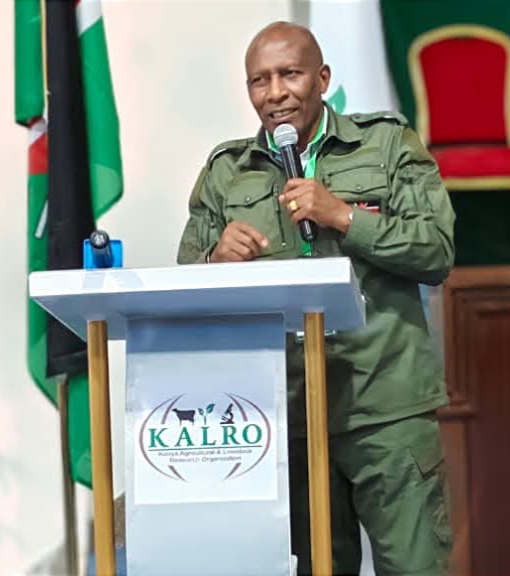
KALRO chairman Dr Thuo Mathenge addressing the delegates
By WMW
Kenya must accelerate the adoption of agricultural innovations, increase investment in research, strengthen partnerships and empower farmers if it is to secure its food future in the face of climate change and emerging threats to food production.
This was the key message emerging from the 2nd Kenya Agricultural and Livestock Research Organization (KALRO) Scientific Conference and Innovation Expo, which concluded in Nairobi, after five days of deliberations involving more than 2,000 local and international stakeholders.
The conference, held from Monday to Friday at KALRO headquarters, brought together scientists, policymakers, development partners, private sector leaders, farmers, universities, youth innovators, women representatives and international institutions under the theme, “Innovations for Sustainable Agri-food Systems, Climate Change Resilience and Improved Livelihoods.”
Participants agreed that agricultural research and innovation remain critical to addressing food insecurity, climate change, declining soil health, emerging pests and diseases, food safety concerns and the commercialization gap that continues to hinder the uptake of scientific innovations by farmers.
KALRO Director General Dr. Patrick Ketiem said the future of agricultural research lies not in the number of technologies released but in the impact they create among farming communities.
“The measure of our success is not how many technologies we release, but how many farmers adopt them. We must design for scale from the start and ensure our innovations reach the last mile,” said Dr. Ketiem.
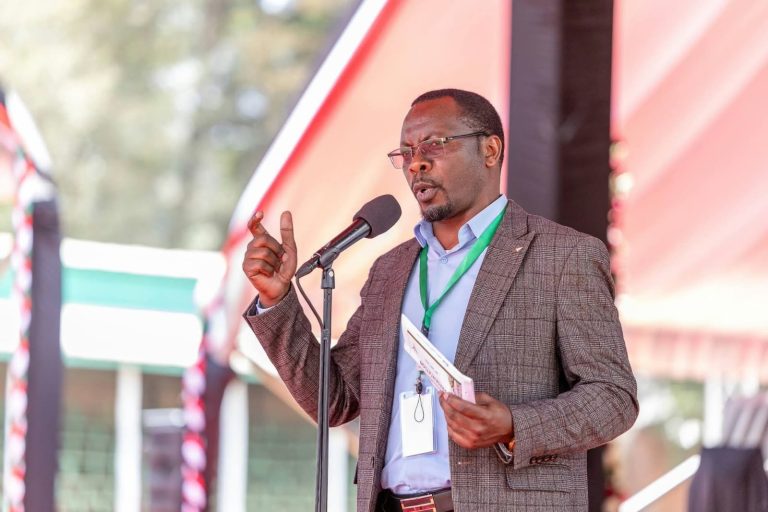
The conference was officially opened by the Principal Secretary in the State Department for Agriculture Development, Dr. Kipronoh Ronoh, on behalf of Agriculture Cabinet Secretary Mutahi Kagwe.
Climate change demands urgent action
Climate change emerged as the dominant concern during the conference, with delegates describing it as the greatest threat facing Kenya’s agricultural sector.
Participants noted that increasing droughts, floods, erratic rainfall patterns and emerging pests continue to undermine agricultural productivity and threaten the livelihoods of millions of smallholder farmers.
To address these challenges, the conference called for accelerated investment in climate-smart agriculture, including drought-tolerant crop varieties, resilient livestock breeds, soil and water conservation technologies, weather intelligence systems and sustainable natural resource management practices.
Delegates emphasized that strengthening resilience among smallholder farmers is essential for safeguarding Kenya’s food systems and ensuring long-term food security.
The conference further urged national and county governments to substantially increase funding for agricultural research, describing research and innovation as strategic national investments rather than expenditures.
Participants called for long-term financing mechanisms, modernized scientific infrastructure, stronger public-private partnerships and greater investment in scientific talent development and mentorship.
Digital Technologies and Commercialization
The conference highlighted the transformative potential of emerging technologies in agriculture and called for their wider deployment across the country.
Among the technologies identified as critical for future agricultural growth were Artificial Intelligence (AI), precision agriculture, earth observation systems, robotics, digital extension services and agricultural data platforms.
Delegates noted that digital solutions can improve productivity, strengthen extension services, support better decision-making and expand market access for smallholder farmers.
At the same time, participants stressed the need to bridge the commercialization gap that continues to prevent many research outputs from reaching farmers and markets.
The conference observed that Kenya cannot achieve sustainable agricultural growth by continuing to export raw commodities and called for increased agro-processing, value addition, agribusiness incubation, agricultural mechanization and improved access to finance.
Delegates emphasized that agricultural transformation requires stronger pathways connecting scientific innovations to commercial opportunities and farmer adoption.
Aflatoxin threat
One of the most pressing issues raised during the conference was the continued prevalence of aflatoxin contamination in maize and other staple foods.
Delegates expressed concern over the threat posed by aflatoxins to public health, child nutrition, livestock productivity and national food security.
The conference recognized Aflasafe KE01, developed through collaboration involving KALRO and international partners, as a proven biological control technology capable of reducing aflatoxin contamination by more than 80 per cent.
Participants recommended scaling up deployment of the technology in hotspot areas, integrating it into subsidy and e-voucher programmes, strengthening surveillance systems and undertaking nationwide public awareness campaigns.
In a notable development, KALRO Board Chairman Dr. Thuo Mathenge was appointed an Aflasafe Ambassador by the International Institute of Tropical Agriculture (IITA) and received a certificate recognizing his role in championing food safety initiatives.
Dr Mathenge urged Kenyans to take the threat of aflatoxin seriously saying it was a poison that was behind most of cancerous cases in the country.
He challenged scientists to move beyond laboratories and research stations and engage directly with farmers.
“Our farmers are the primary stakeholders in agricultural research. Scientists must spend more time in the field understanding farmers’ needs and ensuring innovations address real challenges on the ground,” he said.
The conference also identified communication as a critical factor in accelerating the adoption of agricultural technologies.
Delegates called for stronger visibility and communication strategies, including translating scientific findings into farmer-friendly formats and local languages, utilizing digital and traditional media platforms and strengthening collaboration with extension officers and county governments.
Youth, women and partnerships drive the future
Participants emphasized that young people and women are not merely beneficiaries of agricultural transformation but key drivers of change.
The conference recommended targeted investments in youth and women-led enterprises through skills development, technology transfer, access to finance, agribusiness incubation and leadership opportunities.
Delegates noted that empowering these groups would create jobs, stimulate innovation and contribute significantly to food security and economic growth.
The conference also reaffirmed that no single institution can transform agriculture alone and called for stronger collaboration among government agencies, research institutions, universities, development partners, farmer organizations, financial institutions and the private sector.
At the conclusion of the conference, participants adopted resolutions aimed at strengthening demand-driven agricultural research, scaling climate-smart technologies, expanding digital agriculture, enhancing commercialization, improving food safety, promoting value addition and increasing investments in youth and women-led enterprises.
Delegates pledged to continue advancing science, innovation and evidence-based policymaking as pillars of sustainable agri-food systems and committed to ensuring that agricultural innovations are translated into practical solutions that improve livelihoods, create employment and strengthen climate resilience.
As the curtains fell on the five-day event, one message resonated throughout the conference: Kenya possesses the scientific knowledge and innovative capacity needed to transform its agricultural sector, but the ultimate measure of success will be how effectively those innovations reach farmers and improve lives across the country.
The conference was also addressed by several other guests who included former chairman at the institution and the current Chancellor at Tharaka University Prof. Ratemo Michieka.
Similar Posts by The Mt Kenya Times:
- Ruto commissions Uasin Gishu dam to boost year-round farming
- Ruto calls Kenyatta a conman as Kenya’s 2027 battle begins in earnest
- Electricity access must lead to local opportunity
- God had to break your marriage to save your mother’s house
- Meru commissioner urges residents to act before the rains claim more lives
About the Author