KALRO, KNCCI forge alliance to unlock billions in global agricultural markets
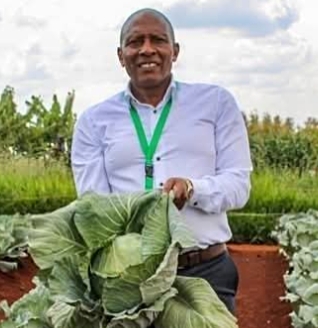
Kalro Chairman Dr Thuo Mathenge holding a cabbage in a past exhibition forum.
By WMW
Kenya’s agricultural research and business communities have been challenged to urgently align science, production and commerce to enable the country to seize massive export opportunities currently slipping through its fingers.
Speaking during a Kenya Agricultural and Livestock Research Organization (KALRO) event, Kenya National Chamber of Commerce and Industry (KNCCI) President Dr. Erick Rutto called for a radical transformation of Kenya’s agricultural sector from fragmented subsistence farming to large-scale, technology-driven commercial production capable of serving global markets.
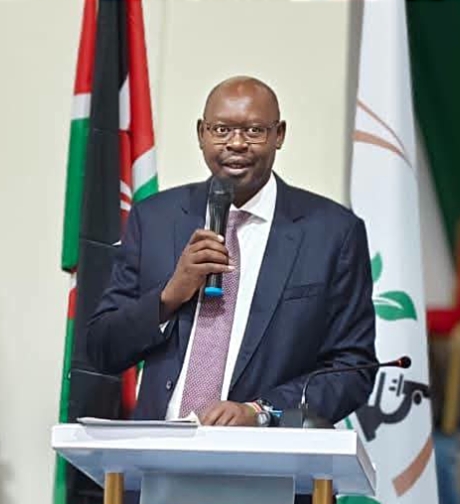
Dr. Rutto said although agricultural exports earned the country approximately Sh700 billion last year, Kenya was still failing to capitalize on enormous international demand due to inadequate production volumes, inconsistent supply and weak commercialization of research innovations.
“We have markets. The demand is there. What is lacking is the capacity to consistently produce the volumes required by international buyers,” said Dr. Rutto.
Drawing from market intelligence gathered through KNCCI’s international networks, he revealed that foreign buyers are increasingly seeking large-scale agricultural supplies from Kenya.
“There are markets that have requested up to five million goats. These buyers are not looking for occasional shipments; they want continuous and reliable supply chains. This presents a major opportunity for Kenya if we can organize production and scale up our capacity,” he said.
Dr. Rutto challenged KALRO scientists and livestock researchers to develop breeding programmes and production systems capable of expanding local herds to meet such demand.
He noted that while Kenya continues to enjoy a global reputation for producing high-quality agricultural commodities, production volumes remain significantly below potential.
Using coffee as an example, Dr. Rutto observed that Kenya produced approximately 49,000 metric tonnes last year, far below neighbouring Ethiopia’s estimated 600,000 metric tonnes and Uganda’s 400,000 metric tonnes.
“Our coffee is among the best in the world, but quality alone cannot sustain competitiveness if volumes remain low. Global buyers require both quality and quantity,” he said.
Dr. Rutto argued that Kenya has historically concentrated too heavily on policy discussions and governance structures while neglecting the industrialization and commercialization of agriculture.
He urged policymakers, researchers and private sector players to focus on scaling production, value addition and market-driven innovation.
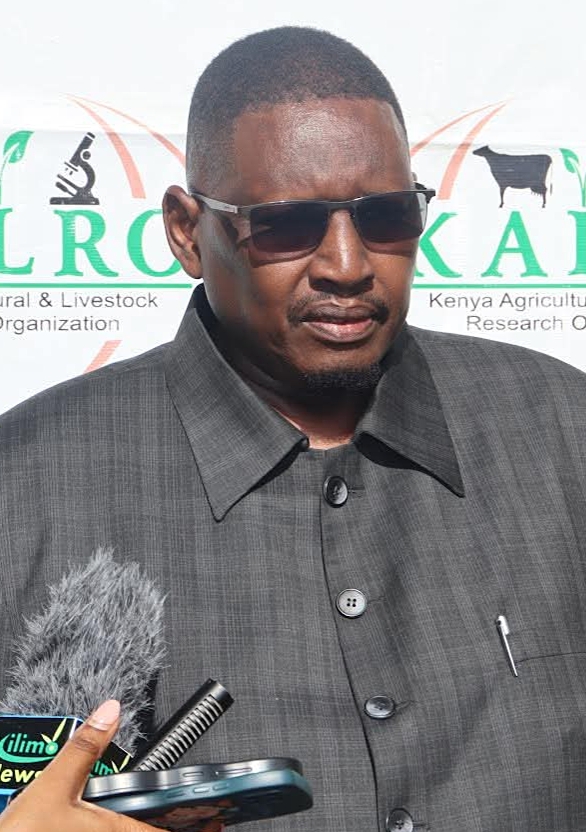
“The future of agriculture lies in aggregation, mechanization, climate-smart production and commercialization. Research must directly support industry, and industry must support farmers to meet market standards,” he said.
To improve competitiveness, Dr. Rutto said agricultural products must first be affordable and commercially viable within the domestic market.
He disclosed that KNCCI is actively lobbying for harmonization of county taxes and levies, which continue to increase production and export costs for farmers and agribusinesses.
At the same time, he announced a strategic partnership between KNCCI and KALRO aimed at accelerating the commercialization of agricultural technologies developed by researchers.
With a membership base of more than 60,000 businesses and extensive international networks, the Chamber, he said, is well-positioned to connect innovations from laboratories to markets.
Dr. Rutto invited KALRO scientists to participate in KNCCI’s bi-weekly county business forums to showcase technologies such as Aflasafe, improved seed varieties, livestock genetics and climate-smart dairyk solutions.
“We must ensure that innovations do not remain on the shelves. Research only becomes meaningful when it reaches farmers, creates jobs and generates income,” he said.
KALRO Board Chairman Dr. Thuo Mathenge welcomed the growing collaboration between researchers and the private sector, saying commercialization of research remains critical to transforming agriculture and improving livelihoods.
He noted that over the years, KALRO has developed and commercialized numerous crop varieties, livestock breeds and farming technologies that have significantly improved productivity among smallholder farmers across the country.
“Our responsibility as a research institution is to ensure that innovations developed by our scientists ultimately benefit farmers and agribusinesses. Partnerships with organizations such as KNCCI provide an important pathway for scaling technologies and creating economic impact,” said Dr. Mathenge.
He added that strengthening climate resilience, sustainable food systems and market-oriented production remains central to KALRO’s strategic agenda.
KALRO Director General Dr. Patrick Ketiem emphasized the importance of strengthening linkages between research institutions, industry players and farmers to accelerate agricultural transformation.
He said science must increasingly focus on practical solutions that respond to market demands while helping farmers improve productivity, resilience and profitability.
“Research must translate into tangible outcomes for farmers. We are committed to strengthening partnerships that ensure technologies move beyond research stations and into the hands of producers who need them most,” said Dr. Ketiem.
The Director General said KALRO would continue investing in innovations that address climate change, food security, mechanization, post-harvest management and value addition.
He further noted that collaboration with private sector actors would be critical in accelerating adoption of technologies and opening new domestic and international market opportunities for Kenyan farmers.
Agriculture remains one of Kenya’s most important economic sectors, contributing about a third of the country’s Gross Domestic Product and employing millions of Kenyans directly and indirectly.
Industry stakeholders say unlocking export markets, improving productivity and accelerating commercialization of agricultural research could significantly increase earnings while creating jobs and strengthening food security.
The emerging partnership between KALRO and KNCCI is expected to play a key role in bridging the long-standing gap between scientific innovation and commercial application, helping position Kenya as a more competitive player in regional and global agricultural markets.
Similar Posts by The Mt Kenya Times:
- Peter Mwathi: A proven leader with a record of service in Limuru
- Mt Kenya Times ePAPER September 22, 2026
- Ruto offers Kenya as test case on African risk
- Gachagua demands fuel deal accountability, accuses Ruto of deception
- Azimio is dead. Long live the Ukombozi Alliance
About the Author