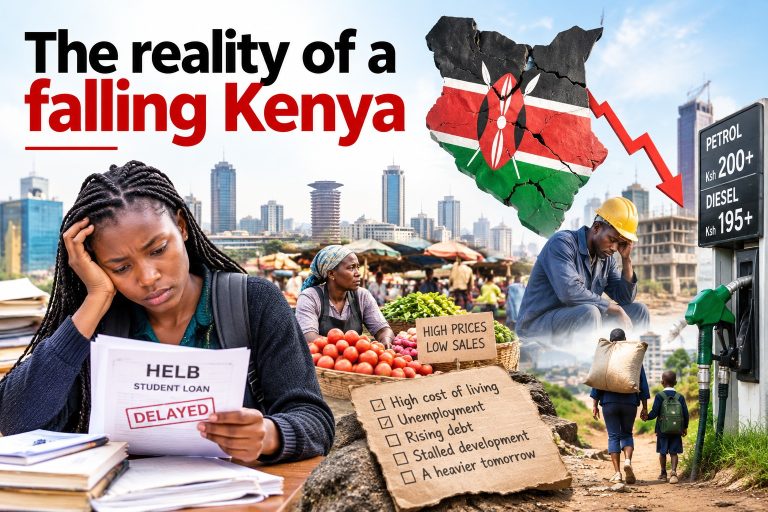
Kenya Doesn’t Have A Leadership Problem. It Has A Voter Problem; And That’s Why Justice Terrifies Us
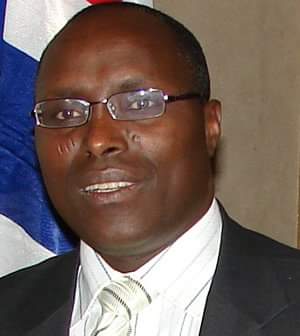

By Gitile Naituli
There is a comforting lie societies tell themselves when they are unwilling to confront their own complicity in decline. The lie is this: we would be better if only we had better leaders. It is a soothing narrative because it relocates responsibility upward, away from the citizens and toward the elite. But history is unkind to such self-deception. Nations do not get the leaders they wish for; they get the leaders they tolerate, excuse, and repeatedly elect. When justice frightens a people, they will dress fear as pragmatism and call surrender “realism.” Martha Karua unsettles Kenya not because she is weak, unelectable, or out of touch. She unsettles Kenya because she is unyielding in the wrong currency. She does not trade in ethnic arithmetic, transactional loyalty, or emotional blackmail. She trades in rules. She insists that law must be superior to relationships, that institutions must matter more than personalities, and that consequences must follow conduct, even when that conduct belongs to the powerful. In a political culture built on negotiation with impunity, that is not merely inconvenient. It is terrifying.
Kenya’s political order survives by informal arrangements. Deals are struck in backrooms and sanctified at rallies. Corruption is not denied; it is normalized, rationalized, and ethnically laundered. Accountability is not rejected openly; it is postponed indefinitely. Leaders are forgiven in advance, on the promise that this time they will deliver. Within such a system, the truly dangerous figure is not the tyrant or the thief. It is the disciplinarian, the one who can not be managed, bargained with, or softened by praise.
Every election cycle follows the same ritual. Citizens declare fatigue with corruption and demand change. Political elites repackage the same actors with fresher slogans. Voters, anxious about uncertainty, choose familiarity over reform. The country then slides further into debt, anger, and hopelessness. When the bill comes due, the public blames leadership again, conveniently forgetting the choice that made it inevitable. This is why Martha Karua is perpetually framed as “too rigid,” “too hard,” or “politically difficult.”
Those are not neutral descriptions. They are coded admissions. What they really mean is that she can not be bent into the culture of accommodation. She will not protect thieves for the sake of stability. She will not suspend the principle to preserve coalitions. She will not weaponize the law selectively, harsh on enemies, and indulgent to allies. In a country where justice has long been negotiated rather than enforced, consistency itself becomes a threat.
Kenya’s problem, then, is not the absence of reformist leadership. It is the electorate’s ambivalence toward reform when it threatens comfort. We say we want accountability, but only for “the other side.” We say we want the rule of law, but not when it inconveniences our own. We celebrate anti-corruption rhetoric while quietly insisting that our “own” must be spared. Justice is welcomed as an idea and rejected as a practice.
This contradiction corrodes the republic. Public debt balloons not merely because leaders borrow recklessly, but because voters reward grand promises over sober discipline. Institutions weaken not only because executives interfere, but because citizens applaud shortcuts that favour them. Anger grows not just because of policy failure but because the social contract itself is dishonest. We demand outcomes without accepting the discipline required to achieve them.
There is a deeper moral failure here. A society that fears justice eventually loses the capacity for self-respect. When laws are seen as weapons rather than safeguards, citizens retreat into tribes, churches, and personalities. Politics becomes a theatre of emotions, not a forum for choices. In such an environment, a leader who insists on impersonal rules feels alien, almost cruel because she refuses to play the familiar game of exceptions. And yet, this is precisely the leadership Kenya claims to desire. We say we want institutions that work, courts that are respected, and public finance that is disciplined. But when a candidate embodies those values without apology, we recoil. We tell ourselves she is unelectable, forgetting that electability is not a natural law. It is a collective decision.
The uncomfortable truth is that Kenya is not yet reconciled with the cost of justice. Justice demands that some people go to jail, that stolen wealth is recovered, that shortcuts are closed, and that favouritism ends. It demands patience because institutions rebuild slowly. It demands courage because the transition from impunity to accountability is always turbulent. Many voters sense this, intuitively, and choose avoidance over renewal.
So the mirror remains unwelcome. It is easier to mock the disciplinarian than to confront the disorder she exposes. It is easier to cycle through charismatic redeemers than to commit to structural repair. But mirrors do not lie. A nation that repeatedly rejects rule-bound leadership is announcing something about itself, not about the candidate. Kenya does not lack capable leaders. It lacks a voting culture willing to endure the discomfort of reform. Until citizens decide that justice is worth the price it demands, no election will save this country. The tragedy is not that Martha Karua is rejected. The tragedy is that, in rejecting her kind of leadership, Kenya keeps voting against its own future.
Prof. Gitile Naituli is a former commissioner with National Cohesion And Integration Commission
Similar Posts by The Mt Kenya Times:
- Mt Kenya Times ePAPER October 23, 2026
- Ruto’s parting COMESA call: Remove the barriers, honour the commitments
- Direct hospital access to KEMSA cuts drug delays, says PS
- Africa can’t wait: Continent seeks $1 trillion for climate adaptation
- Ruto passes the baton as Africa’s trade bloc faces a fragmenting world
About the Author