The Mt Kenya Times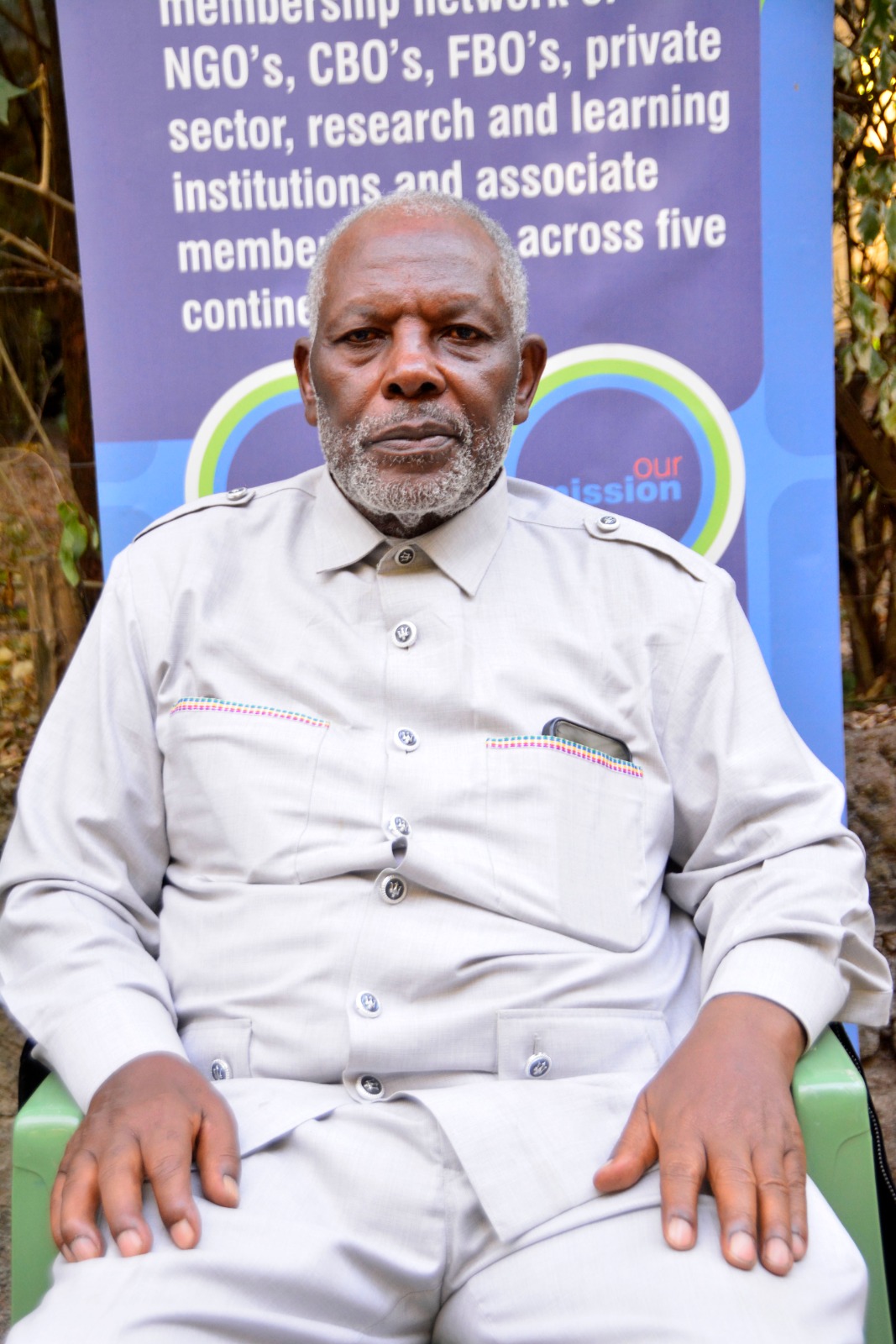
Prof Allan Ragi
After 35 years on the frontlines of Kenya’s fight against HIV, Prof Allan Ragi says the funding crisis is unlike anything he has seen before
By John Kariuki
Prof Allan Ragi has spent 35 years at the centre of Kenya’s fight against HIV and AIDS, and he says the financing crisis now confronting the country is unlike anything he has witnessed in that time.
Ragi, Executive Director and Board Secretary of the Kenya AIDS NGOs Consortium (KANCO), has issued a stark warning: Kenya must move urgently to secure alternative and sustainable funding for its HIV programmes or risk watching decades of hard-won progress unravel within a matter of years. The message is not abstract. The consequences are already visible in clinics, community organisations and health facilities across the country.
“We cannot wish this away,” Ragi has said repeatedly to policymakers, health officials and civil society partners. “The disruption is real, and it is happening now.”
The trigger for Ragi’s alarm is clear. The United States has historically been one of Kenya’s most important sources of external HIV financing, channelled primarily through the President’s Emergency Plan for AIDS Relief (PEPFAR). When the administration in Washington initiated a suspension and review of foreign health assistance in January 2025, the effects were felt almost immediately across Kenya’s health system. Community health monitoring systems stalled. Clinics lost embedded health workers. Supply chains for HIV commodities were disrupted. And according to a 2026 study published in BMC Public Health, the country recorded declines in HIV testing, uptake of pre- and post-exposure prophylaxis, antiretroviral therapy initiations and tuberculosis screening in the months that followed.
The numbers behind those declines are alarming. New HIV infections in Kenya rose from 16,752 in 2024 to 19,991 in 2025, reversing progress that had reduced infections by more than 67 percent since 2010. On average, 54 people are newly infected with HIV every day in Kenya, and 57 die from AIDS-related illnesses daily. Mother-to-child transmission remains at seven percent, above the global target of five percent. A study of HIV clinics in Kenya, Uganda and Tanzania found that in the first five weeks following the withdrawal of US funding, new patient enrolment fell by 59 percent compared with the same period in the previous year, while viral-load testing dropped by 33 percent.
These are not abstract statistics. They represent missed tests, interrupted treatments, disengaged patients and communities losing the services they depend on to stay alive.
The broader funding environment has tightened simultaneously. According to a report by the Centre for Epidemiological Modelling and Analysis at the University of Nairobi, external health funding to Kenya fell from KSh126B in the 2024/25 financial year to KSh54B in 2025/26. The Global Fund, another cornerstone of Kenya’s HIV financing architecture, has cut its HIV allocation to Kenya by 18.2 percent for the 2026–2028 grant cycle, reducing it to approximately KSh26.4B — down from KSh32.3B in the previous cycle. A joint analysis by KFF and UNAIDS found that donor government funding for HIV in low- and middle-income countries fell by $2.1B in 2025, the largest single-year decline since the global HIV financing scale-up began. Researchers estimate the government would need to allocate approximately KSh66.9B to cover the gap left by the US withdrawal alone.
Ragi has watched Kenya’s HIV response evolve from the early years of the epidemic, through the era of large-scale international financing, antiretroviral scale-up and community mobilisation. That trajectory is precisely what makes the current moment so consequential in his view. Kenya has made remarkable progress. Antiretroviral therapy has transformed HIV from a death sentence into a manageable chronic condition for those with sustained access to treatment. But those gains are not self-sustaining. They require predictable financing, consistent supply chains, a functioning health workforce and community structures capable of reaching people that formal health systems often cannot.
A 2026 qualitative study conducted in Thika captured the human dimension of the disruption. Following the funding shock, some HIV clinics were rapidly integrated into general primary care facilities — a move that, while administratively pragmatic, raised concerns about confidentiality and stigma among patients. The study also documented reports of antiretroviral therapy rationing, missed monitoring visits and patients disengaging from care entirely.
For Ragi, the structural lesson is plain. An HIV response built predominantly on external financing is a response with a structural weakness embedded within it. International assistance has been enormously valuable — it has saved lives and built systems — but it was never designed to be permanent. The disruption of 2025 and 2026 has simply accelerated the reckoning.
That does not mean Kenya must walk away from international partnerships. It means Kenya must build a financing system in which international assistance complements domestic investment rather than substituting for it. That requires stronger government budget commitments to HIV and tuberculosis, better integration of HIV services into the wider health system — carefully managed so as not to compromise the confidentiality that patients depend on — and a diversified financing base that draws on private-sector partnerships, innovative financing mechanisms, health insurance schemes and community contributions alongside public funding.
Civil society organisations sit at the heart of this architecture, and Ragi is clear that they must not be marginalised in the transition. Community organisations reach people living with HIV, young people and populations in areas that formal health systems rarely penetrate effectively. They fight stigma, support treatment adherence and serve as the connective tissue between policies designed in Nairobi and patients living with HIV in rural counties. Any transition from donor financing to domestic financing that hollows out these structures would be self-defeating.
At the 26th International AIDS Conference in Rio de Janeiro in July, researchers described Kenya as one of five countries where worrying departures from historical treatment trends had been observed. Researchers also found that 77,163 fewer children globally received PEPFAR-supported HIV treatment in fiscal year 2025 compared to the previous year. Kenya featured prominently in those findings. IAS President-Elect Prof Kenneth Ngure of Jomo Kenyatta University of Agriculture and Technology told the conference that the findings were compelling evidence of far-reaching consequences for the world’s most vulnerable populations.
The current crisis could, if handled with strategic seriousness, become an inflection point. Countries such as Botswana and South Africa have demonstrated that domestically financed HIV responses are achievable with sustained political commitment over time. Kenya has the institutions, the technical expertise and the epidemiological knowledge to chart a similar path. What it requires now is the political will to treat HIV financing as a domestic security and development priority rather than a function of international goodwill.
Ragi’s three and a half decades on the frontlines of Kenya’s HIV response give his warning particular weight. He has seen what the epidemic looked like before treatment existed, and he has seen what sustained investment and community mobilisation can achieve. He is not predicting catastrophe. He is describing one if Kenya does not act.
After all the progress made, the country cannot afford to allow a financing crisis to reverse what took a generation to build.
Similar Posts by The Mt Kenya Times:
- Diaspora Times Global Oct 24 – Oct 30, 2026
- America’s baby bust: U.S. birth rate hits record low as women choose later motherhood
- Literary Outreach Incubation Program Instills The Culture From Book Adaption To Spoken Words
- Why starting school too early is failing our children
- Who defines Africa’s destiny? The western lens, African compliance and the struggle for intellectual sovereignty
About the Author