Kindiki Calls Development Review Meeting, Criticizes Gachagua’s Inaction

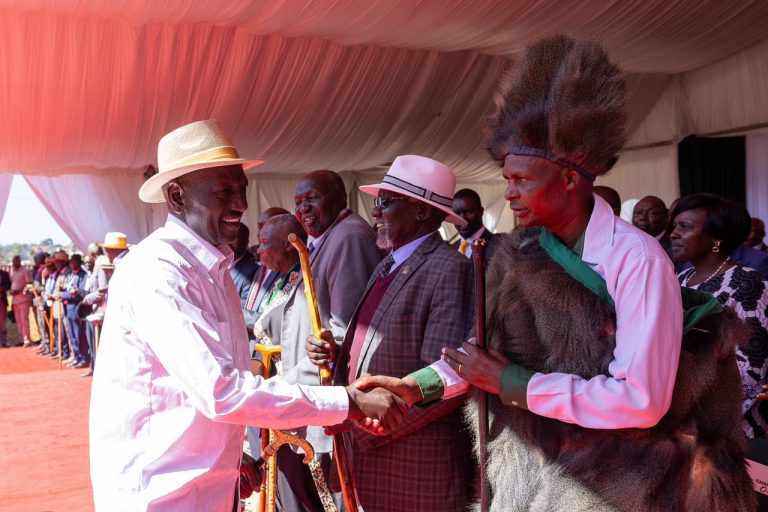
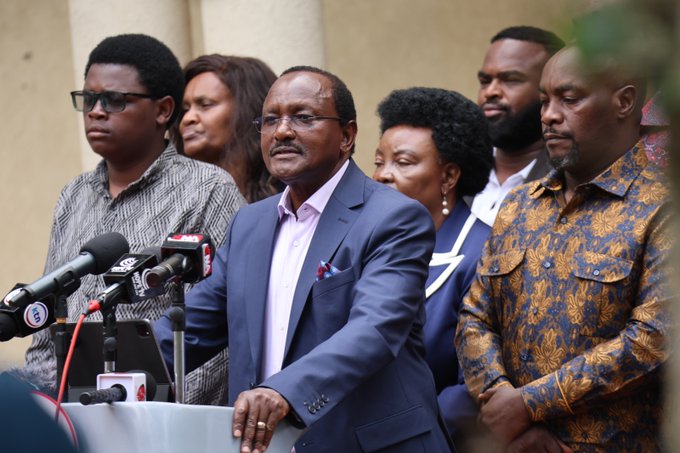
Deputy President Prof Kithure Kindiki, Tharaka Nithi County Governor Muthomi Njuki and other leaders after their consultative meeting at Karen yesterday

By Mwenda Njeru and William Muchiri
Worth Noting:
- “For two years, not a single meeting was convened by Gachagua. His failure to assist the President in monitoring the development agenda has cost the government valuable time and dented its reputation,” Kindiki stated.
- He clarified that the consultation forums were development-oriented, not political.
- “These meetings are not meant to campaign for President Ruto. The time for campaigns will come, and when it does, we will work with those in our party,” he said.
- Addressing the political landscape, Kindiki remarked on the changing dynamics, noting that despite the intense 2022 campaign battle, Ruto is now the leading supporter of Raila Odinga’s African Union (AU) bid.

Deputy President Prof. Kithure Kindiki yesterday convened a high-level meeting with Tharaka Nithi County leaders from across sectors to assess the progress of key development projects promised by the Kenya Kwanza administration.
Dozens of the leaders led by area governor Muthomi Njuki thronged the Deputy President’s Karen official message.
Speaking during the meeting, Kindiki emphasized that President William Ruto’s campaign was anchored on addressing priority projects identified through County Economic Forums, leading to the signing of County Economic Charters.
Among the priority projects for the county were roads, water, markets, and commercial agriculture, including tea, dairy, and green grams.
These projects, he noted, were also incorporated into the Kenya Kwanza manifesto, which outlined the government’s commitments.
Kindiki criticized former Deputy President, Rigathi Gachagua, saying that for the past two years, no progress had been made in tracking these development commitments because Gachagua failed to hold review meetings.
“For two years, not a single meeting was convened by Gachagua. His failure to assist the President in monitoring the development agenda has cost the government valuable time and dented its reputation,” Kindiki stated.
He clarified that the consultation forums were development-oriented, not political.
“These meetings are not meant to campaign for President Ruto. The time for campaigns will come, and when it does, we will work with those in our party,” he said.
Addressing the political landscape, Kindiki remarked on the changing dynamics, noting that despite the intense 2022 campaign battle, Ruto is now the leading supporter of Raila Odinga’s African Union (AU) bid.
However, he reiterated that the Kenya Kwanza government remains committed to fulfilling its campaign promises.
“Every year, we will hold meetings with all counties for accountability because, ultimately, the public will demand answers from us,” he said.
Kindiki dismissed the notion that the Deputy President’s role should be centered on political fights. “The work of the DP is not to fight the President. The President is the general vision carrier and will primarily commission completed projects,” he stated.
He took a swipe at leaders like Kalonzo Musyoka, arguing that they have little to show in terms of development for their people.
Kindiki also traced the history of manifesto-driven governance in Kenya, noting that the first structured manifesto was under President Mwai Kibaki but was not fully implemented.
“Uhuru also had a manifesto, but his second term saw a shift in priorities. The Ruto government is committed to strictly following its manifesto, and by the next election, Kenyans will judge us based on our achievements,” he said.
According to Kindiki, the past two years have been tough for Ruto’s government due to economic challenges inherited from the previous administration. “Ruto took over when Kenya was on the verge of insolvency. Some people misinterpret his statements as blaming Uhuru, but that is not the case,” he explained.
He pointed out that COVID-19 had shut down the economy for nearly a year and a half, worsening the financial crisis.
However, he highlighted recent economic gains, such as the stabilization of the dollar at Ksh.130, a drop in interest rates from 15.8% to 11%, and improvements in overall economic stability.
“Under Kibaki, low loan interest rates helped businesses thrive. It took him five years to stabilize the economy, yet Ruto has made significant progress in just two years despite external and internal political challenges,” Kindiki argued.
He likened the government’s efforts to biblical Moses leading people to the promised land. “Kenyans must understand that foundational changes take time. Five years are not over, and we are laying a strong base for sustainable development,” he said.
Kindiki criticized leaders who incite the public, urging them to help people understand government efforts instead.
“A good leader is not always popular at the start, but eventually, they earn public trust,” he remarked.
The DP reaffirmed the government’s commitment to completing stalled projects across all 47 counties.
He outlined key areas of focus, including agriculture, mining, blue economy, roads, electricity, special economic zones, markets, and aggregation centers.
On housing, Kindiki cited Singapore as an example of a country that invested in public housing despite initial resistance.
“Forty years ago, Singapore’s housing program was unpopular, but today, citizens appreciate it. The same will happen in Kenya. Years from now, people will see the value of the Housing Programme,” he said.
Kindiki predicted that poor leadership and public incitement would make it difficult for Gachagua and his allies to find a political foothold in 2027.
He also suggested that Uhuru Kenyatta remains the only person capable of engaging some national-level issues because he is a retired Head of State and that informs the need for unity and friendship.
He concluded by assuring Kenyans that the Kenya Kwanza government is not chasing popularity but is focused on delivering tangible development.
“This government is investing in long-term solutions. We are creating jobs, both permanent and temporary, to ensure the youth have employment opportunities,” he said.
As the government moves forward, Kindiki assured that annual review meetings will be a standard practice to track progress and ensure accountability.
Other political leaders from the county who present included; Senator Mwenda Gataya, Woman Representative Susan Ngugi, MPs; George Murugara (Tharaka), Kareke Mbiuki (Maara), Patrick Munene (Chuka Igambang’ombe) and County Assembly Members led by Speaker John Mbaabu. Several religious, former leaders, professionals and grassroots leaders were also present.
National Assembly Majority Leader Kimani Ichung’wah and Senate Majority Leader Aaron Cheruiyot were also attendance.
Similar Posts by The Mt Kenya Times:
- Mt Kenya Times ePAPER October 20, 2026
- Ruto rallies Kalenjin elders in Rift Valley unity push
- Sonko bid to nullify impeachment judgments fast-tracked in court
- Arrest the sponsors, not just the foot soldiers, Kalonzo tells police
- Police and politics shut down Kitale’s busiest market
About the Author