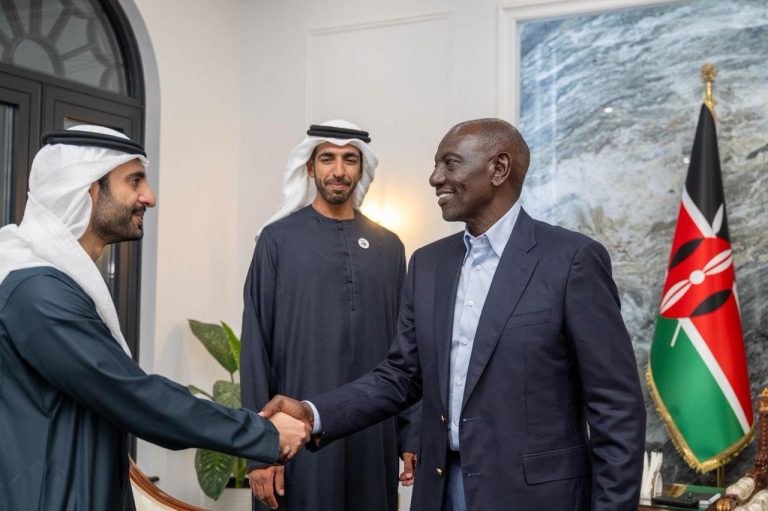
President William Ruto in Kisumu for the Fourth Investment Conference of the African Sub-Sovereign Governments Network

By: James Kilonzo Bwire
Worth Noting:
- Projects like the Koru-Soin dam and the Lake Victoria ring road are prime examples of initiatives expected to create thousands of jobs while stimulating economic growth in Nyanza, a region historically marginalized in development.
- These projects align with the AfCFTA’s objectives to promote sustainable investment and industrialization, essential for poverty reduction and economic resilience. By fostering an environment conducive to innovation, Kisumu can attract sustainable investments that not only benefit local communities but also contribute to broader national and regional economic goals.
- The conference serves as a vital platform for local leaders to engage with international investors, potentially unlocking significant funding for infrastructure projects.
President William Ruto’s arrival in Kisumu for the Fourth Investment Conference of the African Sub-Sovereign Governments Network marks a significant milestone in revitalizing regional economies. The conference, themed “Leveraging the AfCFTA for Sustainable Trade and Investment,” aims to enhance intra-African trade and empower local governments, positioning Kisumu as an emerging investment hub. This event reflects Kenya’s commitment to harnessing the potential of the African Continental Free Trade Area (AfCFTA), a landmark agreement designed to create a single market for goods and services across the continent.
The AfCFTA has the potential to increase intra-African trade by over 81% within the next decade, generating substantial economic growth and job creation. Ruto’s participation underscores Kenya’s strategic focus on leveraging this agreement through targeted investments in infrastructure and technology. The emphasis on public-private partnerships (PPPs) is crucial, as these collaborations can drive development in key sectors such as energy, transportation, and agriculture.
Projects like the Koru-Soin dam and the Lake Victoria ring road are prime examples of initiatives expected to create thousands of jobs while stimulating economic growth in Nyanza, a region historically marginalized in development. These projects align with the AfCFTA’s objectives to promote sustainable investment and industrialization, essential for poverty reduction and economic resilience. By fostering an environment conducive to innovation, Kisumu can attract sustainable investments that not only benefit local communities but also contribute to broader national and regional economic goals.
The conference serves as a vital platform for local leaders to engage with international investors, potentially unlocking significant funding for infrastructure projects. By prioritizing collaboration and sustainable practices, Ruto’s government aims to transform challenges into investable opportunities, positioning Kisumu at the forefront of Africa’s economic landscape. The emphasis on sustainability within the AfCFTA Investment Protocol is particularly noteworthy; it encourages investments that align with environmental protection and social equity, addressing climate change challenges while promoting economic development.
As African nations strive to meet their Sustainable Development Goals (SDGs), integrating sustainable practices into investment strategies will be crucial. The AfCFTA Investment Protocol provides a transparent framework for investment regulation across Africa, promoting coordinated positions and cooperation among member states. It seeks to streamline regulations that have historically been fragmented across different countries, enhancing predictability for investors while ensuring that investments contribute positively to host countries’ socio-economic landscapes.
Moreover, as Africa faces significant challenges such as climate change and economic disparities, initiatives like the AfCFTA are essential in creating frameworks that encourage responsible investment while fostering resilience against these threats. The integration of sustainability into investment protocols not only aligns with global standards but also addresses local needs effectively. The protocol emphasizes that each State Party has the right to regulate investments within its territory to achieve national public policy objectives, including environmental protection and social equity.
The potential for synergy between the AfCFTA’s investment protocol and other international agreements offers promising avenues for catalyzing sustainable investment in Africa. By focusing on sectors that promise sustainable growth—such as renewable energy, technology-driven industries, and sustainable agriculture—African countries can attract foreign direct investment (FDI) that not only brings capital but also knowledge transfer from skilled investors.
In summary, President Ruto’s engagement in Kisumu during this conference is not merely ceremonial; it represents a commitment towards building an economically resilient future for Kenya and Africa at large. The collaborative efforts initiated here could lay down the groundwork necessary for transformative change across various sectors within the continent—ultimately positioning Africa as a formidable player on the global economic stage.
The success of this conference could catalyze a new era of sustainable growth and development not only in Kisumu but across the continent, paving the way for a prosperous future where local economies thrive in harmony with global markets. By embracing sustainable practices and fostering collaboration between governments and investors, Kisumu can emerge as a beacon of hope in Africa’s quest for economic transformation. Through active community engagement and innovative approaches to investment facilitation, African nations can work towards achieving their ambitious development goals while ensuring that growth is inclusive and environmentally sustainable.
James Kilonzo Bwire is a Media and Communication Practitioner.
Similar Posts by The Mt Kenya Times:
- Julius Ogamba’s task force: The answer to Kenya’s school unrest crisis?
- Diaspora Times Global Oct 24 – Oct 30, 2026
- America’s baby bust: U.S. birth rate hits record low as women choose later motherhood
- Literary Outreach Incubation Program Instills The Culture From Book Adaption To Spoken Words
- Why starting school too early is failing our children
About the Author