Navigating Kenya’s Political Landscape: The Imperative Of Alliances And Accountability

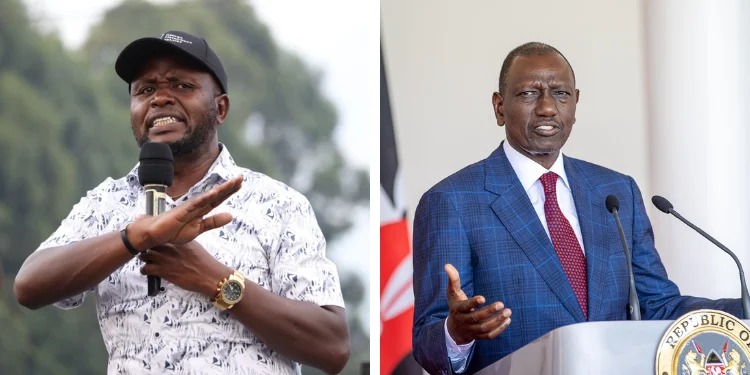
Mumias East MP Peter Salasya and COTU Secretary General Francis Atwoli

By: James Kilonzo Bwire
The conversation between Mumias East MP Peter Salasya and COTU Secretary General Francis Atwoli illuminates the intricate dynamics of Kenyan politics, where alliances and accountability are crucial for effective governance. Atwoli’s counsel to Salasya underscores the necessity of forging strong relationships with seasoned politicians, particularly Raila Odinga, who has been a dominant figure in Kenya’s political arena for decades. Odinga’s extensive political journey, marked by multiple presidential bids and a legacy of opposition leadership, highlights the importance of strategic relationships in navigating the complexities of Kenya’s political landscape.
Atwoli advised Salasya to approach Odinga before making public statements, reflecting a broader strategy essential for political survival in Kenya. This approach is particularly relevant given the historical context of political rivalries and shifting alliances that characterize the nation’s governance. The interplay of personal ambitions and collective responsibility is a recurring theme in Kenyan politics, where leaders must balance loyalty to their parties with accountability to their constituents.
Salasya’s defense of the Constituency Development Fund (CDF) against Odinga’s advocacy for devolved funding illustrates a critical debate on development strategies in Kenya. While Odinga argues that devolved units are more effective for local development, Salasya insists that the CDF is vital for addressing immediate community needs. This clash highlights the tension between traditional funding mechanisms and newer models aimed at enhancing local governance. The CDF has historically played a significant role in financing local projects, providing communities with resources to address urgent needs directly.
Moreover, the discussion surrounding the controversial Adani deals adds another layer of complexity to this political landscape. President William Ruto’s cancellation of these deals amid allegations of fraud underscores the pressing need for transparency and accountability in governance. The fallout from this situation illustrates how corruption can undermine public trust and hinder development efforts. Both Atwoli and Salasya recognize that blind allegiance to party leaders can be detrimental; thus, they advocate for a more nuanced approach that prioritizes the interests of constituents over party loyalty.
Kenya’s political environment is characterized by its fluidity, where unexpected alliances often emerge. For instance, Ruto’s recent collaboration with Odinga, his former rival, reflects a convergence of interests that may pose risks but also offers opportunities for stability. Such alliances are often formed out of necessity rather than ideological alignment, as politicians seek to maintain their regional or ethnic support bases while negotiating national partnerships.
The historical context of Kenya’s political landscape reveals a pattern where parties have often failed to represent the broader interests of their constituents. Political parties have been criticized for prioritizing ethnic affiliations over national cohesion, perpetuating divisions rather than fostering unity. This has led to a situation where political parties are seen as vehicles for advancing personal or ethnic interests rather than as platforms for national development.
As Kenya approaches its next elections, the ability of leaders like Salasya to engage constructively with established figures like Odinga will be crucial for their political longevity. The electorate increasingly demands accountability from their leaders, especially in light of widespread corruption and governance failures that have plagued the country. The 2010 Constitution aimed to address these issues by promoting principles of leadership and integrity; however, challenges remain in ensuring that these principles are upheld in practice.
In conclusion, the conversation between Salasya and Atwoli serves as a microcosm of the challenges facing Kenyan politicians today. The necessity of alliances, the importance of local development strategies, and the demand for accountability are all critical factors that will shape Kenya’s political future. As new leaders emerge, their ability to navigate these complexities will determine not only their success but also the trajectory of governance in Kenya. Strengthening local governance through enhanced accountability mechanisms will be essential in rebuilding public trust and ensuring that democratic gains take root in society. Ultimately, it is through collaborative efforts that Kenya can aspire towards a more inclusive and transparent political environment that serves all its citizens effectively.
James Kilonzo Bwire is a Media and Communication Practitioner.
Similar Posts by The Mt Kenya Times:
- Mt Kenya Times ePAPER October 20, 2026
- Ruto rallies Kalenjin elders in Rift Valley unity push
- Sonko bid to nullify impeachment judgments fast-tracked in court
- Arrest the sponsors, not just the foot soldiers, Kalonzo tells police
- Police and politics shut down Kitale’s busiest market
About the Author