New Innovative Technologies And Their Application In The Educational Environment

Fayzullaeva Madina Abdumumin

By: Fayzullaeva Madina Abdumumin
Worth Noting:
- Innovative activity is a type of activity related to the transformation of scientific research or scientific and technical achievements into a new or improved product used in practical activities, technological processes or a new approach to social services.
- Innovative activity is a process aimed at implementing the results of completed scientific and technical achievements and developments or other scientific and technical achievements in new or improved products sold on the market, a new or improved technological process used in practical activities, additional scientific research and development related to it.
- Technology is causing major changes in all sectors of the economy. These changes have been felt in healthcare, the financial world, entertainment, and even government. The good news is that these changes will make the world a better place!
Annotation. Technological innovation has a significant impact on educational systems at all levels. Online courses, study guides, educational programs, social networking tools, and other emerging technologies are disrupting the traditional classroom environment. This article provides information on new innovative technologies and their use in the educational environment.
Keywords: Innovation, Virtual reality, innovative projects, education, 3D printing.
Introduction. In order to ensure stable economic growth in our country, the process of transition to the innovative development system of the economy is underway. The center of such a development system is moving to the initial level of our national economy complex – to the level of enterprises, firms, companies, corporations, joint-stock companies, at this level discoveries, inventions, and scientific researches are turning into new technologies, products, techniques, and information communications in newly built or renovated workshops and enterprises.
Material and research methods. Innovative economy allows to create an excess flow of innovations, while regularly developing technological processes. In general, the desire and need to make a large profit prompts the private owner to do unique, profitable work that his competitors do not have in order for his goods to attract and sell well. Economic freedom, competitive markets, the rule of law and private property are factors that automatically develop innovations, increase demand for them, attract investment in innovative products, and create a bridge between an idea and an innovative product. High technologies will enable the country to approach developed countries in terms of per capita income in the near future with an advancing economy. In this regard, the venture performs the task of manufacturing technological and scientific and technical, high-tech and innovative products. Innovation means innovation, namely “investment in innovation”. The final result of innovative activity in the form of a new or improved product sold on the market, a new or improved technological process used in practical activities. The need for state regulation of innovative processes is primarily due to their growing importance for the economy and society as a whole. The structure of the economy changes under the influence of innovations. After all, due to the increase in the efficiency of the use of resources, part of them will be released and redistributed to other areas of activity.
Innovative activity is a type of activity related to the transformation of scientific research or scientific and technical achievements into a new or improved product used in practical activities, technological processes or a new approach to social services.
Innovative activity is a process aimed at implementing the results of completed scientific and technical achievements and developments or other scientific and technical achievements in new or improved products sold on the market, a new or improved technological process used in practical activities, additional scientific research and development related to it.
Technology is causing major changes in all sectors of the economy. These changes have been felt in healthcare, the financial world, entertainment, and even government. The good news is that these changes will make the world a better place!
Result and analysis. One of the main sectors affected by this disruption is education. These innovations gave a new look to classrooms and changed the way lessons are conducted. Here are six of the top tech innovations that will make a big difference in education.
- Virtual Reality (VR) in Education. Virtual reality technology is already the hottest thing in the tech world. Major companies are preparing for a brutal war for this technology, including Google, Sony, Oculus (backed by Facebook), Samsung and others. One of the fields of application of VR technology is education. With VR, students can learn by interacting with the 3D world. Google is at the forefront of implementing experiential learning in schools through VR technology.
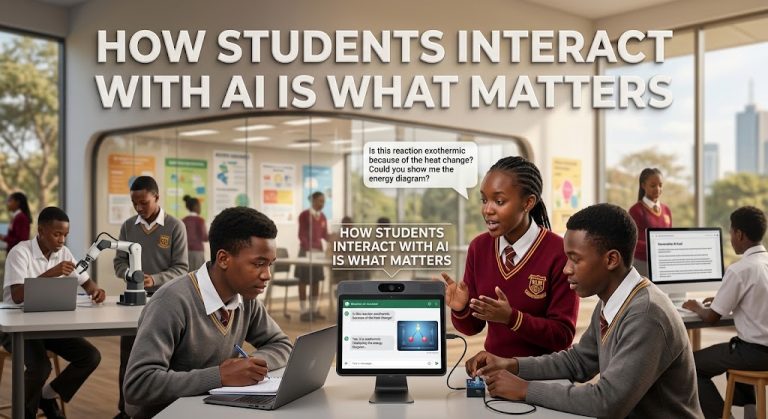
- Artificial intelligence and machine learning. Artificial intelligence is used at all levels of technology, from the most basic to the most advanced. AI is used in schools to automate key activities such as assessing subjects and providing feedback on areas for improvement. It is also used to improve personalized learning among students, especially those with special needs. Through machine learning, customized programs are developed to meet the individual needs of students. AI tutors have been developed to teach students subjects such as math and writing.
- Cloud computing for education. Thanks to cloud computing technology, educational resources can be accessed from anywhere in the world. Important resources such as written lessons, audio lessons, videos and video assignments can be stored on the school’s cloud terminal. Students can access these resources from the comfort of their own homes and complete assignments and submit them to their teachers. The silly excuses students give for not completing assignments can be a thing of the past. Cloud computing eliminates the hassle of carrying tons of books or living in your local library. This technology also allows students to communicate live with the teacher.
- 3D Printing. 3D printers are already making waves in education and students are loving them. Content previously taught through textbooks can now be represented through 3D models. Through this printing technique, students can better understand things that are considered complex. In higher education, 3D printing is used by engineers and system designers to develop prototypes that are used in the development of final systems. 3D printing takes concepts and makes them real.
- Social networks in educational institutions. Educational institutions did not lag behind in using the influence of social networks. In fact, most of these social networking sites were developed on campuses and the first users were college students. Even though universities and colleges are located several continents apart, they can connect with each other through social networking sites. Through these sites, they can organize contests, meetings and parties. Students from different schools use social media to share ideas that can change lives.
- Use of biometrics in schools. No more truancy and cheating! The introduction of biometric systems in schools serves to regulate education and strengthen discipline. Facial recognition, fingerprints, voice recognition and eye tracking are some of the biometric techniques that schools have implemented to streamline their operations. In addition to monitoring student attendance, they are also used to borrow school property such as books from the library. Teachers use eye tracking techniques to monitor how students are absorbing the content they are being taught.
- Quantum Computing. While still exotic, quantum computing is rapidly becoming a reality. You can still access quantum processors and experiment with their semi-legendary tunneling, entanglement, and Q-Bit architecture. Undoubtedly, experiments show that in the future, quantum computing will improve even more and eventually overtake traditional computing models. When that happens, we can expect a new generation of artificial intelligence evolution and instant access to cloud data.
The widespread use of the Internet is one of the factors that accelerate the introduction of technological innovations in the field of education. Ideas spread quickly and people can research the best ways to use technology in education. Hardware companies produce devices such as laptops and tablets that are customized to meet specific educational needs. Fierce competition between different technology firms is another factor that accelerates the pace of technological innovation. The future of education is undoubtedly bright!
Interactive technologies are methods that help teachers and students to change places. Communicating in groups, working on information, students discover new opportunities for self-learning. This is a whole set of working methods and methods aimed at creating activities in which students interact with each other, working on solving a common problem.
Conclusion. Interactive technologies are implemented in schools through seminars, debates, problem lectures, debates, where students can express their opinions and learn to argue their opinion. Innovative technologies in education make it possible to organize education and direct it in the right direction. People have always been afraid of unknown and new things, they react negatively to any changes. Stereotypes that exist in the public mind, affecting the usual way of life, lead to painful events, prevent the renewal of all types of education. The reason why people do not want to accept innovations in modern education is because they block the vital needs for comfort, security and self-affirmation. Not everyone is ready to relearn theory, take exams, change their minds, spend personal time and money. Once the update process has started, it can only be stopped using special techniques.
Fayzullaeva Madina Abdumumin kizi is a master’s student in the faculty Pedagogy of Chirchik State of Pedagogical University
Similar Posts by The Mt Kenya Times:
- Mt Kenya Times ePAPER October 24-25, 2026
- Muturi calls on IEBC to keep election technology tender clean and on schedule
- Ruto meets UAE minister in push to deepen trade ties
- Gideon Moi breaks silence on Ruto fallout, cites broken promises
- The doctor who refused to abandon a sick Uganda
About the Author