
Omtatah Moves To Nullify IEBC National Tallying Centre, Calls It A Constitutional Breach

Busia Senator Okiya Omtatah
By Grace Wanjiru
Busia Senator Okiya Omtatah has filed a petition in the High Court seeking to nullify the Independent Electoral and Boundaries Commission’s (IEBC) practice of establishing and operating a National Tallying Centre during presidential elections, arguing that the move is unconstitutional and undermines the integrity of Kenya’s electoral process. The outspoken legislator and activist insists that the Constitution does not provide for a national centre with powers to verify, alter, or re‑tally presidential election results, and that the practice has repeatedly caused disputes in past elections. He wants the court to declare that the IEBC has acted outside its mandate by creating a system that contradicts the clear provisions of Articles 86 and 138 of the Constitution, which outline how votes should be counted, tallied, and declared.
In his petition, Omtatah argues that the Constitution establishes a straightforward and transparent process for presidential elections, requiring that votes be counted at polling stations, collated at the constituency level, and declared promptly and openly by constituency returning officers. According to him, these announcements are intended to be final, leaving no room for further verification at the national stage. He contends that Section 39 of the Elections Act, which introduced national‑level verification and tallying, unlawfully expanded the powers of the IEBC by creating a National Tallying Centre that assumes a role the Constitution does not envisage. Omtatah says this provision has opened the door to confusion, duplication, and possible manipulation, undermining the principle of finality in constituency results.
The Senator points to the 2013, 2017, and 2022 presidential elections as examples where disputes arose due to the operations of the National Tallying Centre. He argues that the practice has consistently generated controversy, eroded public trust, and created grounds for contestation in court. He further challenges provisions that allow the IEBC Chairperson to declare presidential results before receiving all constituency results, saying this undermines the constitutional principle that constituency results are final. Omtatah insists that national verification is unnecessary and unconstitutional, and that the IEBC Chairperson’s role should be limited to announcing results already declared at the constituency level without alteration.
The petition also faults the Attorney General for failing to advise the government on the unconstitutionality of these electoral practices. Omtatah accuses Parliament of passing legislation that undermines constitutional safeguards intended to protect electoral integrity, arguing that lawmakers failed in their duty to uphold the supremacy of the Constitution. He maintains that the Elections Act and accompanying regulations crafted by the IEBC have unlawfully expanded the Commission’s powers, creating a parallel process that contradicts the Constitution’s clear framework. His petition asks the High Court to interpret the constitutionality of Section 39 of the Elections Act and determine whether IEBC’s conduct at the National Tallying Centre violates the constitutional scheme for presidential elections.
Omtatah’s move comes at a time when electoral reforms remain a contentious issue in Kenya, with opposition leaders and civil society groups frequently raising concerns about the transparency and credibility of the IEBC. His petition underscores the broader debate about how Kenya conducts its elections and whether existing laws and practices align with constitutional principles. By challenging the legal foundation of the National Tallying Centre, Omtatah seeks to force a judicial review that could reshape the way presidential results are managed and declared in future elections. He argues that the Constitution was designed to prevent manipulation by ensuring that results declared at the constituency level are final, and that introducing a national verification process undermines this safeguard.
The Senator’s petition is expected to spark intense debate among political actors, legal experts, and the public. Supporters of his move argue that it could strengthen electoral integrity by eliminating opportunities for manipulation at the national level. Critics, however, may contend that a national tallying centre is necessary to consolidate results and provide a central point of communication. Omtatah counters that the Constitution already provides for transparency and accountability at the constituency level, and that creating a national centre only duplicates processes and creates room for disputes. He insists that the IEBC must operate strictly within the constitutional framework and that any deviation undermines democracy.
The High Court’s interpretation of Section 39 of the Elections Act will be crucial in determining the future of Kenya’s electoral system. If the court agrees with Omtatah, the ruling could nullify the IEBC’s practice of operating a National Tallying Centre, forcing the Commission to rely solely on constituency results. Such a decision would have far‑reaching implications for how presidential elections are conducted and could reshape the role of the IEBC Chairperson. It would also raise questions about the validity of past elections where national verification played a role, potentially opening the door to new legal challenges. On the other hand, if the court upholds the current system, it would reinforce the IEBC’s authority to manage results at the national level, though critics would likely continue to question its constitutionality.
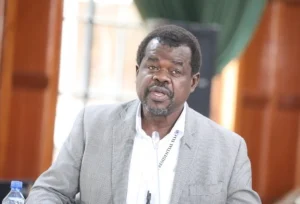
Omtatah’s petition reflects his long‑standing commitment to constitutionalism and public interest litigation. Known for his activism and frequent court battles against government actions, he has built a reputation as a defender of constitutional safeguards. His transition from activism to the Senate has not diminished his resolve to challenge practices he views as unconstitutional. By taking on the IEBC, Parliament, and the Attorney General, Omtatah positions himself as a key voice in the ongoing debate about electoral reforms. His petition highlights the tension between legal frameworks and political practices, underscoring the need for clarity and adherence to constitutional principles.
The case also brings into focus the role of Parliament in safeguarding electoral integrity. Omtatah accuses lawmakers of failing to uphold the Constitution by passing legislation that contradicts its provisions. He argues that Parliament’s actions have undermined the principle of finality in constituency results, creating a system that allows for manipulation at the national level. His petition calls on the judiciary to correct this imbalance by striking down unconstitutional provisions and restoring the integrity of the electoral process. The Attorney General’s failure to advise the government on these issues is also highlighted, with Omtatah insisting that the office has neglected its duty to protect constitutional order.
As the petition proceeds, Kenyans will be watching closely to see how the High Court interprets the Constitution and whether it agrees with Omtatah’s arguments. The outcome will have significant implications for the credibility of future elections and the role of the IEBC. For many, the case represents an opportunity to address long‑standing concerns about electoral manipulation and to strengthen democratic safeguards. Omtatah’s move underscores the importance of vigilance in protecting constitutional principles and ensuring that electoral processes remain transparent, fair, and credible.
Similar Posts by The Mt Kenya Times:
- Diaspora Times Global Oct 17 – Oct 23, 2026
- Is social media a blessing or a curse for university students?
- Light at last: How electricity is reshaping Nandi and Uasin Gishu
- The triple squeeze: how EPRA’s fuel price hike is reshaping the survival equation for the common mwananchi
- Zelenskyy accuses Trump of rewarding Putin as Pope pleads for peace from a hospital bed
About the Author



Omtata for president!