People And Culture: The Burial Rite Of A Circumciser Among Kabras Community In Western Kenya
 The Mt Kenya Times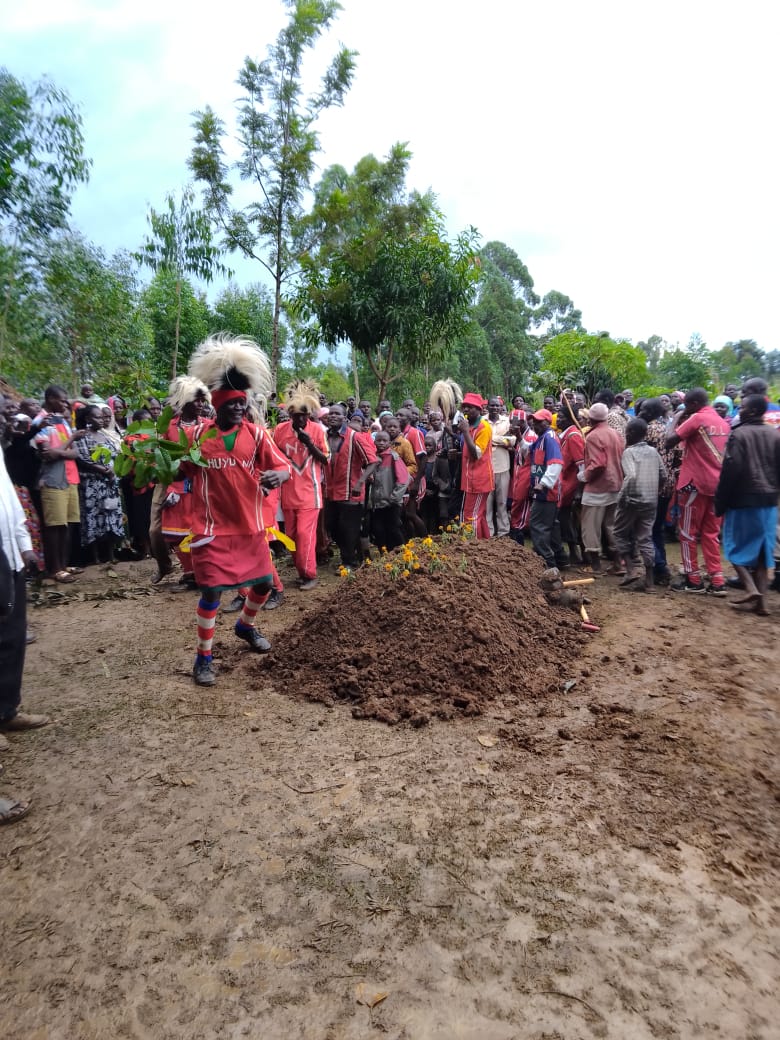
The Burial Rite of A Circumciser among Kabras community in Western Kenya
By Sefu Sabila
Worth Noting:
- “This is an important rite of passage for any Luhya man, we always welcome this season with a ceremony, animals are slaughtered knives are sharpened, and each one knows which area to conduct the curcumsion. Everything is set ready, including the herbs and disinfection of the knives, as we also ask for blessings from our ancestors of zero deaths after curcumsion.” Mzee Matayo explained.
- The ceremony is also conducted by Bukusu elders in Trans Nzoia county for the people ready for initiation to begin. Mzee Matayo further says the practices vary from one Luhya community to another. While some practice after every one year, communities like Maragoli of vihiga county practice after every 5 years for boys to usher them into adulthood from childhood.

Culture gives us a sense of belonging and identity. Despite the ‘heavy’ flow of the western culture, many communities in the country have stood firm in passing their cultural practices, beliefs and traditions to other generations.
Luhya communities are known for their cultural practice of circumcision, for instance, the Kabras a substitute of the Luhya tribe found in Kakamega County, practice curcumsion on August of every even year. Before the season begins, the elders come together and perform rituals to cleanse the period. The ‘Abashefi‘ ( circimcisers)come together to bless the month and the practice.
Matayo Mukwei an elder from Kabras says, the ritual is to appease their ancestors to have a successful season, with zero deaths recorded. During this ceremony, they will be in their uniform, red in colour and a hat made from animal skins.
“This is an important rite of passage for any Luhya man, we always welcome this season with a ceremony, animals are slaughtered knives are sharpened, and each one knows which area to conduct the curcumsion. Everything is set ready, including the herbs and disinfection of the knives, as we also ask for blessings from our ancestors of zero deaths after curcumsion.” Mzee Matayo explained.
The ceremony is also conducted by Bukusu elders in Trans Nzoia county for the people ready for initiation to begin. Mzee Matayo further says the practices vary from one Luhya community to another. While some practice after every one year, communities like Maragoli of vihiga county practice after every 5 years for boys to usher them into adulthood from childhood.
“We the people of Kabras practice after every one year, similar to the Bukusus in Bungoma and Trans Nzoia, in August while others get prepared for December. However, some like Maragoli intially used to circimcise boys after every 10 years, but the elders after many considerations including age, reduced to 5 years; which they conducted this year August since 2016.” Mzee Matayo explained.
On Saturday was the burial ceremony of one the ‘Abashefi’ in Mutsuma area, Malava Constituency, Mzee Japheth Namusia, who hails from a family of curcimcisers. The late was among the few old curcimcisers in the village, according to mzee Matayo. His burial was followed by a series of traditions from his colleagues.
After the Christian service, the team if curcimcisers take over the ceremony, in full attires, singing circumcision songs as they head to the grave with the body of the late, one carrying a banana plant. The community members join in singing and dancing just like any other circumcision ceremony.
“Being his final ride on earth, and nurture of his work, we have to perform a symbolized circumcision with a banana tree at his grave yard. A senior most circumciser performs the rite, ‘omushefi‘ is also buried with some traditional herbs and his tools, marking the end of era.” Mzee Matayo explained.
” There are other traditions performs that women and children are not allowed to see around his body, for example while they check the state and position in which the deceased is laying. In our tradition, it said a certain posture in which the deceased is laying and faces when being buried, if not careful confirmed can make bring bad omen to his household. In cases where the deceased has his hands folded, special herbs are used to straighten or someone close to the deceased speaks to them, and they happen to unfold their hand. ” Mzee Matayo added.
Mzee Matayo urged that such unique traditions need to be documented and passed to other generations. He refuted those associating the traditions to cultism and witchcraft, saying it’s the reasons leading erosion and disregard to many beautiful African culture.
“There is a very wrong belief in the society today by modernization that, everything tradition is associated to dark powers. Even the Holy Bible says give ceaser what belongs to ceaser, and God what belongs to God. We want our culture show cased across the world. We have many beautiful cultures and traditions apart from the only known Maasai culture. We condemn any culture that is oppressive, but that which makes us outstanding we shall pass to our generations. ” Mzee Matayo affirmed.
On 10th October, the country marked the Utamaduni Day fqor the fast time ever since it was gazetted in the constitution as a public holiday. The event was graced by the first lady Mama Rachel Ruto, Kenyans from across the country showcasing their beautiful cultures and traditions from attires, food and dances.
As Mzee Matayo frames it, we should not be slaves of our culture but take pride in our traditions and culture. “Culture should not be a yoke in our necks, but something to be proud of without the feeling of being guilty.” Mzee added.
With diverse culture and traditions in Western Kenya, the cultures of circumcision and burial tires have been maintained by residents of Western Kenya. Over the weekend, the Turkana community in Northern Kenya had their annual cultural festival Tobong’u Lore, which show cased the beautiful culture of the Turkana people, the festival gives another face of Turkana County, far from drought and cattle rustling that have become a menace on Northern Kenya. There were calls from leaders to promote culture largely from across the country to the world, as there is much beautiful untold cultures along the Maasai culture known worldwide.
Similar Posts by The Mt Kenya Times:
- Nairobi Standard Chartered Marathon sponsorship rises 17% to unlock KSh273m for vulnerable groups
- When Rights exist on paper but barriers remain: Kenya must end the second-class treatment of Persons with Disabilities
- When everyone can speak, who will get heard?
- Fatuma Ibrahim Ali shortlisted for Parliamentary Service Commission seat
- Nairobi National Park: Connecting the world to nature through live conservation
About the Author