Porsche looked to the past as Tesla attempted to fly into the future
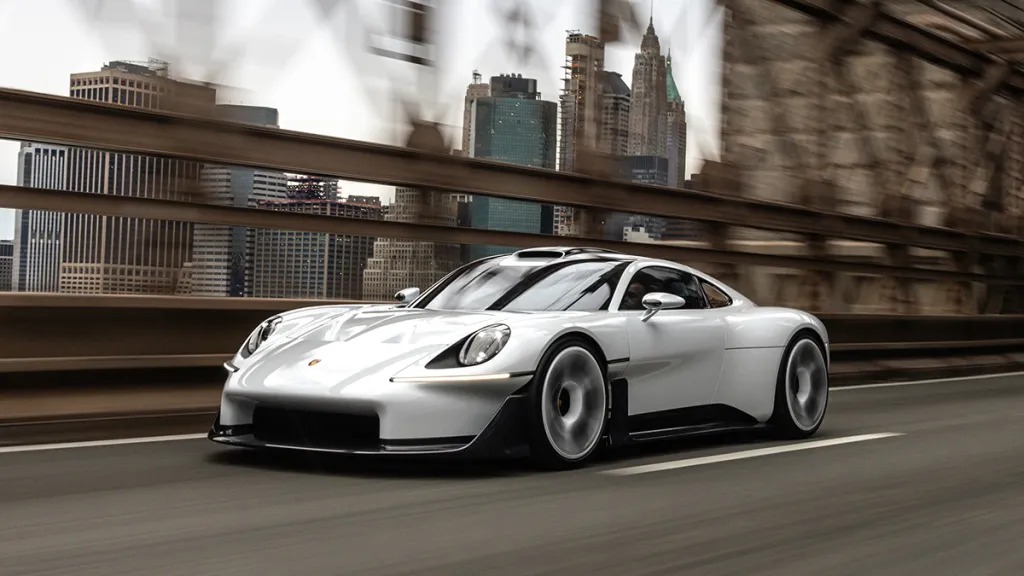
Porsche Mission S
Two iconic brands unveiled radically different visions of performance motoring on the same day — one reached back to rediscover what made driving desirable, the other questioned whether cars need to stay on the ground at all.
By John Irungu Maina
The automobile industry has always been defined by its capacity to reinvent itself. On 15 October 2026, two of its most compelling names presented visions of high-performance motoring that disagreed on almost everything. Porsche unveiled the Mission S, a mid-engined sports car concept rooted in the manufacturer’s celebrated heritage, while Tesla presented its long-awaited new Roadster accompanied by a demonstration involving rocket-style thrusters that briefly lifted the vehicle off the ground. One asked how much of the past deserves to be preserved. The other questioned whether the conventional definition of a car remains sufficient.
For Porsche, the Mission S is more than a styling exercise. It represents a deliberate return to the principles that built the German manufacturer’s reputation: purposeful engineering, driver engagement, and a design language recognisable across generations. Its proportions draw inspiration from historic machines — the 911, 959, 917, and 928 — while its mid-engined architecture recalls the racing and road-going supercars through which Porsche demonstrated its engineering ambitions across six decades.
The most striking statement, however, lies inside the cabin. At a time when manufacturers compete to install ever-larger screens and increasingly elaborate digital interfaces, Porsche has chosen restraint. The Mission S carries no permanently integrated central infotainment display. Instead, it combines physical controls with five circular instruments and a retractable smartphone mount that provides navigation and information when needed. Its key sits to the left of the steering wheel — a long-standing Porsche tradition quietly reaffirmed.
This is not a rejection of technology. It is a considered argument about how technology should serve the driver rather than distract from the act of driving. Modern vehicles can make simple tasks unnecessarily complicated by transferring familiar physical functions to touchscreens. Porsche’s approach suggests that the next stage of automotive innovation might involve making technology less conspicuous rather than more dominant. A well-positioned button, a tactile control, an instrument that communicates immediately — these can be as valuable as the most advanced digital interface money can engineer.
In that respect, the Mission S reaches into automotive history without attempting to live in it. It takes familiar principles and asks whether they still have a place in an increasingly digital world. That question is particularly striking coming from a manufacturer that has repeatedly demonstrated its capacity for technological ambition. Porsche is not afraid of the future. It is simply unwilling to discard the past without examination.
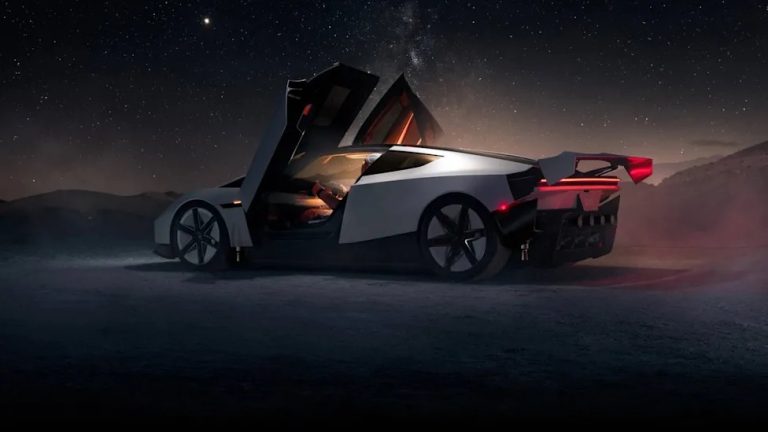
Tesla arrived with a fundamentally different proposition. The new Roadster was presented as an electric performance machine whose ambitions extend well beyond conventional measures of acceleration and top speed. Developed in collaboration with SpaceX, the vehicle was demonstrated using cold-gas thrusters and a system that allowed it to lift and manoeuvre briefly above the ground. Tesla also promoted an acceleration claim of less than one second from zero to 60 miles per hour — a figure so extraordinary that it will require independent verification before it can be accepted as a reliable production specification.
It was an undeniably dramatic demonstration. But spectacle and technological revolution are not the same thing, and the distance between them matters considerably. A vehicle that lifts off the ground under controlled demonstration conditions is not automatically a practical flying car. An extraordinary prototype display does not establish that the same capability can be deployed safely, reliably, and legally on public roads. Tesla has indicated that production is expected to begin in 2028, meaning customers will wait some time to discover how much of what was shown on stage translates into what arrives in their driveways.
Nevertheless, the Roadster offers a genuinely provocative glimpse of a possible future. It challenges the assumption that the next generation of performance cars must be defined exclusively by improvements to established measures such as horsepower, torque, and lap times. Tesla is asking a more radical question: what if tomorrow’s performance car is judged by capabilities that today’s drivers barely associate with automobiles? That question may not yet have a practical answer. But the fact that it is being asked seriously, by a manufacturer with the resources and engineering culture to pursue it, changes the terms of the conversation.
The contrast between these two approaches is precisely what made their simultaneous unveiling so compelling. Porsche is reclaiming the emotional and mechanical connection between driver and machine. Tesla is pushing towards a future in which engineering boundaries are treated as temporary inconveniences. Porsche’s message is that innovation can emerge from a deeper understanding of what made the sports car desirable in the first place. Tesla’s is that the definition of desirable performance may be on the verge of changing altogether.
Yet neither philosophy is entirely detached from the other. The Mission S is not a nostalgic exercise in recreating the past, and the Roadster does not represent a future free from the fundamentals of vehicle engineering. Both manufacturers are attempting to make the automobile more extraordinary — through different interpretations of what extraordinary means and different assessments of where the industry’s real frontier lies.
The Roadster’s demonstration captured the imagination. Its long-term significance will depend on whether its most ambitious technologies become practical realities rather than permanent prototypes. The Mission S, by contrast, offers a quieter but equally important reminder that a more engaging driving experience does not require a vehicle to perform feats that appear to defy gravity.
Porsche looked backwards to identify what deserves to survive. Tesla looked forwards to explore what might become possible. The future of motoring will likely need both instincts — the discipline to preserve what works and the audacity to imagine what does not yet exist.
But perhaps the most important lesson from 15 October is that the automobile’s future will not be determined by technology alone. It will depend on what drivers expect from the machines they choose to love. And in an industry increasingly consumed by what comes next, Porsche has made a quietly persuasive case for remembering why the journey mattered in the first place.
Similar Posts by The Mt Kenya Times:
- Mt Kenya Times ePAPER October 27, 2026
- Sifuna draws hope from Serbia and Brazil as Kenya’s 2027 race heats up
- Uhuru calls for unity as he marks 65th birthday
- Kenya establishes international crimes division: Justice delayed, but will it be delivered?
- World marathon champion Jepchirchir suspended in fresh blow to Kenya’s clean sport drive
About the Author