The Mt Kenya Times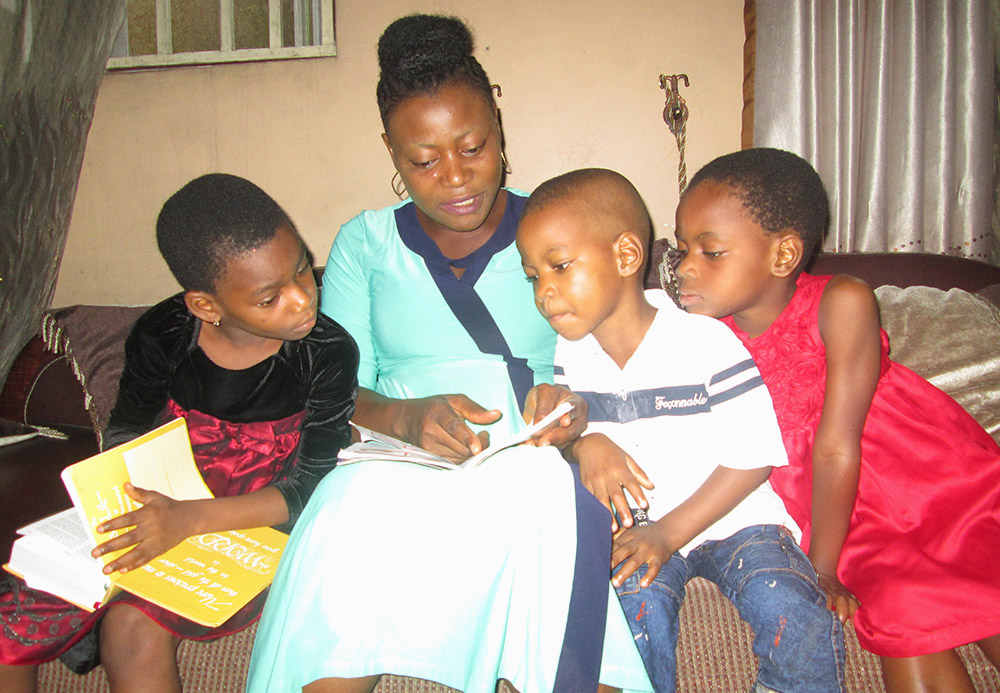
By: Wanjohi. P. Mugambi
Worth Noting:
- Whatever treatment he gets in his home is generally reflected in his dealings. ‘A child who is rejected by parents, may carry the resulting attitude of martyrdom outside the home and even into adult life,’ remarked Hurlock.
- It has already been discussed in previous chapter that how children show reaction and grow accordingly as per the lover and affection they get in the family which is influenced by their position among the siblings. On the whole the character, conduct and personality as a whole of the child is greatly influenced by the treatment he gets in his family and outside too.
This is a very significant factor in human life. When more than one child is born to some parents, there may be the influence of order of birth on the personality development of different children. The first child generally occupies a position in the family with makes his personality adjustment difficult. He likely suffers from the inexperience of the parents. Many of those children become selfish and later on spoiled.
In some families, the first children become more favourite to parents and in some families they become substitute parents to younger siblings and take responsibility fairly earlier. Many of the first born children are over protected.
When the second child barns the parents do not show that much of anxiety and emotional tension as they are now experienced in child care after the birth of the first child. Hence second child and others are not that much over protected and are better adjusted, witty and fun-loving than the first child. They also face some difficulty due to “bossing over” of the first one.
This may give rise developing an “inferiority ambition” with them. When the third child is born, the middle one faces a different situation in adjustment as he has to give up his place as the youngest one. He may feel neglected or over looked as his security is undermined from above and below. In order to compensate, he may develop greater social skill, and try to please the members of the family in order to draw their attention to him.
He may also try to seek satisfaction from social contacts with people outside the family. The youngest child gets a better position in the family. He is not only loved by his parents but by his elder brothers and sisters. Due to this some of the youngest children become babysit and irresponsible.
In an unfriendly household he is likely to be bossed and frustrated by everyone above him. Some of these children getting love from others may develop an affectionate attitude towards the world and may be in a position to be liked by others.
However, irrespective of the position of the child, it depends more on the parents as regards their attitude, experience in child care and their socio-economic conditions a to how they would bring up a child. Treatment he receives in the family it is rightly said that a child carries his home in his pocket.
Whatever treatment he gets in his home is generally reflected in his dealings. ‘A child who is rejected by parents, may carry the resulting attitude of martyrdom outside the home and even into adult life,’ remarked Hurlock.
It has already been discussed in previous chapter that how children show reaction and grow accordingly as per the lover and affection they get in the family which is influenced by their position among the siblings. On the whole the character, conduct and personality as a whole of the child is greatly influenced by the treatment he gets in his family and outside too.
A child to be properly disciplined the child has to obey certain regulations fixed by the society. He must have to show respect to the rights of others while enjoying privileges. It is better to be obedient to right actions than to obey blindly to elders. This discipline is to be acquired gradually through action and experience. Obedience does not mean surrender.
The child has to be firm which is required for good discipline. Discipline is always constructive. Many parents resort to threat for securing obedience. Such threats may result in fear and may undermine his trust in the adult.
Before giving any punishment to the child for any undesirable act it is important to understand whether it involved disobedience. The punishment should aim at enabling the children handle their own affairs progressively and making wise decisions. This should be given soon after the misdeed is under taken otherwise it may fail to associate act with it.
Rewards can also be used to discipline the child but it should not be taken as regular bribes to the children. Like punishment, rewards should have direct relationship to the acts for recognition. One the whole discipline helps the child to grow up, feel secured and get along with other people to be a successful citizen.
Whichever stimulus frightens a child is the cause of fear. It induces the flow of adrenalin in one’s body. With the flow of adrenalin, the heart beating becomes faster and energy is quickened with more supply of sugar, as a result the body is prepared with action to run away. When fear is mild the body is cautioned for self-protection.
At pre-school stage, a child’s fear depends upon his age, past experience, sex and his intellectual development. During this period fears arise mainly from people, animals or objects of his environment. Most of the fears are acquired, but acquired in different ways.
Sometimes elders are cause of this while knowingly or unknowingly they frighten children for one reason of other. Even elders like grandmothers do frighten them while narrating stories of ghosts and demons. Loud and harsh noises also cause sudden fear with children. Some animals, birds and insects also create fear in the minds of the children.
Particularly during pre-adolescent period, fear becomes more generalised, taking the form of anxiety or worry. Besides this as per English and Parson, “all young children ha’ three dominant fears—the fear of being deserted, fear of not being loved, and fear of being punished by horrible mutilation.” It is studied that children who are over protected, cautioned against danger very often, listen too many frightening stories and are debarred of outgoing experiences and independence show much fear.
This is more experienced with children who are more sensitive in nature. The particular pre-school period is characterised by phobias which are ascribed to objects like water, balloon, fire and animals like cats, dogs, butter flies etc. Towards the later stage fear may arise due to accident, ill health, sight of a dying person etc
Similar Posts by The Mt Kenya Times:
- Nigeria Starts Making Its Own Next-Generation Malaria Nets
- Diaspora Times Global Oct 3 – Oct 9, 2026
- Kwale’s electricity push moves from grid to growth
- Linguistic Features Of Chromatonyms In English And Uzbek
- A Poem, a Universe: A poetry book gaze at Jumaniyoz Jabborov’s “Ko‘zgudagi sanam”
About the Author