The Mt Kenya Times
President William Ruto
By: Dennis Wendo
Worth Noting:
- The political and leadership echelon need to listen, interrogate, filter and harbor viable and practical voices of concern emanating from the citizens. The desire of forming a broad based government may be perceived as a solution towards addressing inclusivity and cohesion. It should not be viewed as a master plan to debilitate the opposition. The President’s handlers should vertically and evenly raise their antennae and provide real time recommendations that resonate with a majority.
- The traction of the finance bill 2024 was and remains a jaw-dropper as we shift focus towards the 2024/2025 national budget. The bill engendered spontaneous reprisal from various quarters spearheaded by the Gen’z
The presidency transcends an individual and is the highest office to be held by any citizen whilst the person holding the office is the President. The Constitution of Kenya 2010 at its prologue appreciates the aspirations of all Kenyans for a government based on the essential values of human rights, equality, freedom, democracy, social justice and the rule of law. The people exercise their sovereign power directly or through their democratically elected representatives.
The sovereign of the people is employed at the national and county levels, delegated to parliament, legislative assemblies, national executive and executive structures, the Judiciary and independent tribunals. The cardinal objective is to demonstrate a government that embodies the ideals and desires of the people with the right to hold those in public office accountable for their acts.
The 2010 Constitution subject’s presidency to a comprehensive normative checks and balances through an independent and empowered bicameral parliament. It establishes an independent and administratively empowered judiciary, commissions and independent offices, a devolved system of county governments, a restructured public service and an empowered civil society.
Articles 131 and 132 of the Constitution of Kenya 2010 further defines the authority and functions of the head of state and government. The President discharges the executive authority of the Republic and more importantly is a symbol of national unity and a guarantor to the protection of human rights, fundamental freedoms and the rule of law. We may disagree with the president but exigently as law abiding citizens should strive not to disgrace the Presidency.
The political and leadership echelon need to listen, interrogate, filter and harbor viable and practical voices of concern emanating from the citizens. The desire of forming a broad based government may be perceived as a solution towards addressing inclusivity and cohesion. It should not be viewed as a master plan to debilitate the opposition. The President’s handlers should vertically and evenly raise their antennae and provide real time recommendations that resonate with a majority.
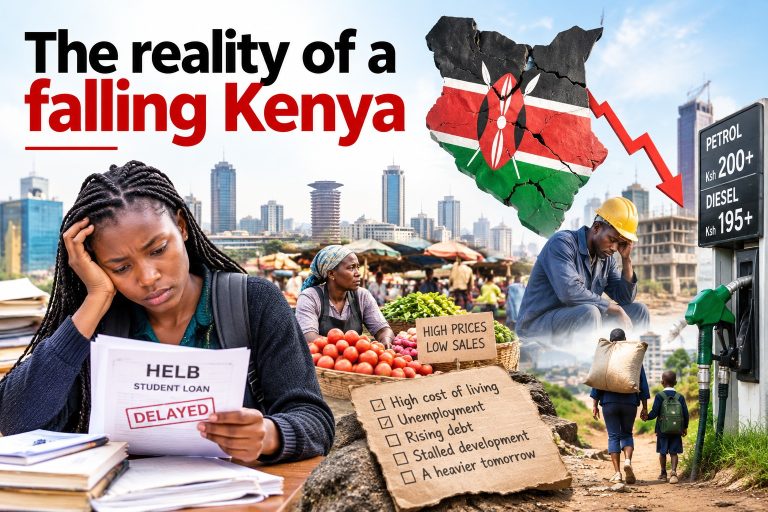
The traction of the finance bill 2024 was and remains a jaw-dropper as we shift focus towards the 2024/2025 national budget. The bill engendered spontaneous reprisal from various quarters spearheaded by the Gen’z. The trickle down effects are decisively still in place. Majority denounced high cost of living, inflation, over taxation, unemployment, nepotism and corruption.
Of concern are the whispers and aggressive straight talk from sections of citizens over their dissatisfaction towards the government. The narratives of we versus them appear to be unfolding with divisive ethnicity and tribal hatred starting to manifest openly, in places of work, businesses and online. This is unhealthy, a potential threat to national stability and scary to local and external potential investors.
Artificial Intelligence(AI) is first taking shape and space. These are systems endowed with the intellectual processes akin to human beings and have the ability to reason. As we embrace the extensive use of the internet, it remains salient to uphold and enforce social media ethics to the latter. The guidelines require people and organizations to behave responsibly, shun harmful behavior and be accountable for their actions. Let us utilize social media to advance unity, cohesion and moral values. The computer misuse and cybercrime laws and policies need to be aligned to accommodate the concept of AI and be discharged to control the growing concerns over the misuse of the internet and related applications. The fiery reciprocity being witnessed on social media paints the Nation negatively and is bound to yield a spoiled generation if unchecked moving forward.
The President should whip his lieutenants against making utterances likely to divide the country along tribal, religious, race, class and regional lines. Outwardly, peace and cohesion should not be a class dictate or preserve of a few in the society, rather a collective responsibility. The political set should take the lead role in uniting communities and shun incitement and misuse of youths to propagate violence.
Key stakeholders such as faith-based organizations, the media, parents, teachers and youth groups should take the lead role in promoting unity in diversity within the multi-cultural communities as well as the inculcation of moral and ethical values to the society to tame polarity among the citizens.
Notably, constitutional offices should be embraced and respected. For instance, Article 239 of the Constitution lists national security organs whose primary object is to promote and guarantee national security in accordance with the principles mentioned in Article 238(2). Majority of the officers in the security systems sacrifice to deliver on their mandate, close to perfection despite the work related dynamics. A few elements within the same system carry the baggage of office misuse. Criticizing these cadres is significant, however, it must be factual and evidence based devoid of witch hunts and propaganda. A negative blanket coat to such offices, demoralizes and demeans the officers and is bound to erode public trust, negate their job performance and service delivery.
Public accountability remains essential to any good government. Any constitutional adjustments should be centered towards improving the structures of the government for it to be more responsive to the needs of the people in a challenging state of affairs. The amendments should prioritize the promotion of better governance and strengthen democratic institutions.
Dennis Wendo
Integrated Development Network- Public Benefits Organization (PBO)
Similar Posts by The Mt Kenya Times:
- Mt Kenya Times ePAPER October 24-25, 2026
- Muturi calls on IEBC to keep election technology tender clean and on schedule
- Ruto meets UAE minister in push to deepen trade ties
- Gideon Moi breaks silence on Ruto fallout, cites broken promises
- The doctor who refused to abandon a sick Uganda
About the Author