Provide A Schedule Of Oil Marketers Who Have Benefited From Exchequer And FDL Disbursements – Finance Committee Tells CS Ndung’u
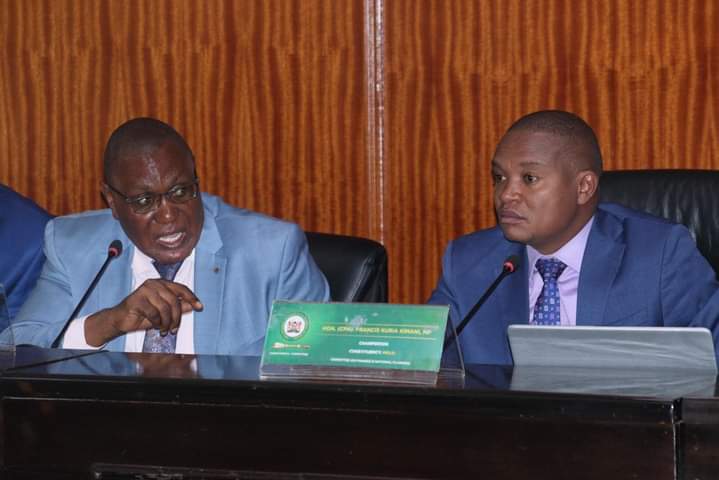
Committee chairman Kuria Kimani and a colleague during the session

By PSCU
Worth Noting:
- “Kenyans want to understand what is the difference between the fuel subsidy program that the government has since abandoned, and the fuel price stabilization program which is currently operational. Additionally, it is imperative that for transparency, this Committee gets details of the oil marketing companies that benefitted from the latest disbursements whether to settle fuel subsidies or for fuel price stabilization”, Kimani told the CS.
- The lawmakers hard pressed the CS to explain the difference between the two programs, noting that the two played the same role; that of keeping pump prices at manageable levels. They expressed concerns that despite the rollout of the fuel stabilization program, pump prices had remained high, even with reduced prices of crude oil across the globe.
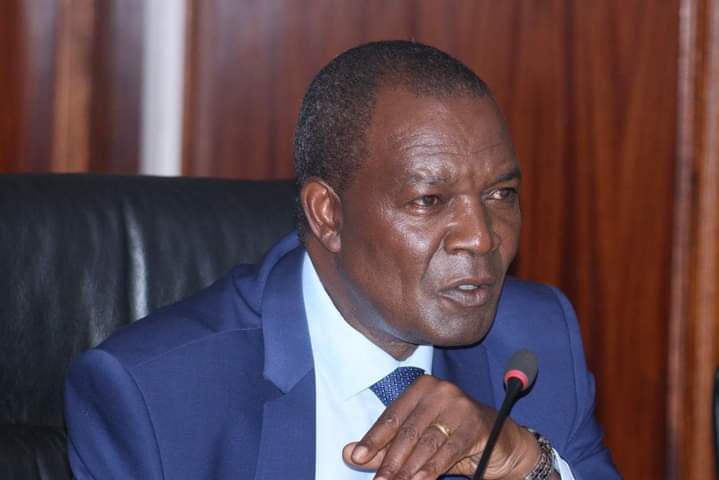
The National Assembly Departmental Committee on Finance and National Planning wants the Cabinet Secretary for National Treasury and Economic Planning Prof. Njuguna Ndung’u to provide a schedule of oil marketing companies that have benefited from exchequer disbursement and from the Petroleum Development Levy which is earmarked for fuel price stabilization.
Speaking when they met the CS in Parliament Kuria Kimani-led committee further asked the CS to provide details of oil marketing companies who benefitted from a withdraw from the Consolidated Fund geared towards settling pending obligations on fuel subsidy during the 2022/2023 Financial year and the balances owed to them.
Led by the chairperson, the committee members underscored the need to be transparent to the country on the matter, adding that it was important to explain to Kenyans the difference between fuel subsidy-which the new administration said it has since abandoned, and fuel price stabilization, which currently in operation.
“Kenyans want to understand what is the difference between the fuel subsidy program that the government has since abandoned, and the fuel price stabilization program which is currently operational. Additionally, it is imperative that for transparency, this Committee gets details of the oil marketing companies that benefitted from the latest disbursements whether to settle fuel subsidies or for fuel price stabilization”, Kimani told the CS.
The lawmakers hard pressed the CS to explain the difference between the two programs, noting that the two played the same role; that of keeping pump prices at manageable levels. They expressed concerns that despite the rollout of the fuel stabilization program, pump prices had remained high, even with reduced prices of crude oil across the globe.
In response, the CS explained that while fuel subsidies used to be settled from exchequer disbursement, the current fuel price stabilization program is funded from the Fuel Development Levy. He further elucidated that if the kitty is exhausted, the National Treasury charges from within the vote of the Ministry of Energy and Petroleum.
While justifying the withdrawal of monies from the Consolidated Fund for payment of subsidies, Prof. Ndung’u told the lawmakers that the payment had been made to settle pending obligations to oil marketing companies that the previous government had already committed to,under the subsidy program.
According to the CS, a total of Kshs. 47.7 bn shillings exchequer disbursement has been executed from September 2022 to June 2023, while Petroleum Development Levy disbursement amounting to Kshs. 20.3 bn had been effected during the same period.
He however sought to clarify the limited role of National Treasury in the disbursement. He told the lawmakers that his ministry just hosts the account for the Fuel Development Levy on behalf of the Ministry of Energy and Petroleum. He further pointed out that the role of the National Treasury is confined to releasing monies when a request is made by the Ministry of Energy and Petroleum.
“Hon. Chair, the information you are seeking from us can only be sought from the Ministry of Energy and Petroleum. The National Treasury just hosts the account for the ministry and only releases the exchequer to the Ministry upon request. The management of the Levy is under the Ministry’s purview”, CS Ndung’u explained.
At the same time, the Committee has asked the CS to prioritize disbursement of monies to the NG- CDF to ensure timely distribution of bursaries before schools open next month.
The matter which arose on the sidelines of today’s meeting, comes in the wake of protests by MPs during yesterday’s afternoon sitting, over the slow disbursement of the funds which benefit millions of students from poor famines in form of bursaries.
The lawmakers told the CS that with this year’s students sitting the last KCPE exams, there is a projected 100 per cent transition without fail, which can only be supported through bursaries.
“The lot that sat for KCPE examinations is the last under the previous education system. We expect all those students to transition to secondary schools without fail since they cannot repeat classes under a different system. How do we support this without NG-CDF? ”, Hon. David Mboni questioned.
While acknowledging that the country was experiencing liquidity challenges, the CS promised to look into the matter and facilitate disbursement within this month.
Similar Posts by The Mt Kenya Times:
- Mt Kenya Times ePAPER August 27, 2026
- Opposition will have a candidate by April, says Gachagua
- Kalonzo takes his campaign to the people across three counties
- Kenya’s election technology tender: A KSh10B procurement under fire
- The goon question: What Ruto’s vow to act personally really means for Kenya
About the Author