Ruto’s Dangote broadside signals the start of Kenya’s most combustible election season in years
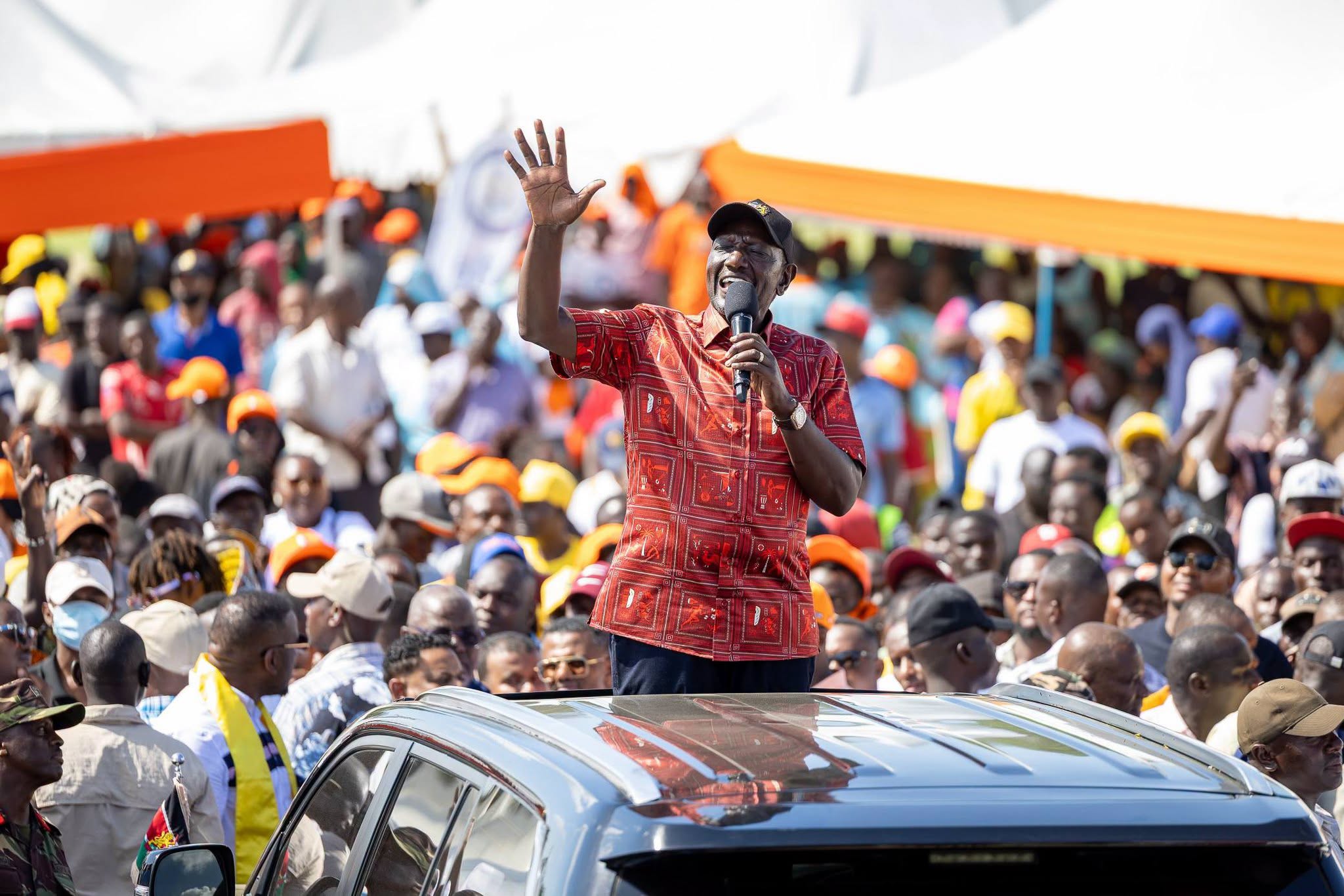
President William Ruto
The President’s public assault on Edwin Sifuna over the Lamu refinery deal is less about a document than about drawing battle lines ten months before Kenyans go to the polls
By James Mwangi
President William Ruto publicly accused Nairobi Senator Edwin Sifuna of extortion on Thursday, claiming the opposition legislator was acting as a proxy for former President Uhuru Kenyatta in demanding access to the agreement signed this week between Kenya and Nigerian billionaire Aliko Dangote for the construction of the Dangote East Africa Petroleum Refinery in Lamu County.
The attack, delivered with unmistakable relish during a tour of Taita Taveta and Mombasa counties — the sixth consecutive day of a coastal development offensive — was not merely a response to a parliamentary question. It was a political declaration. Kenya is, in effect, already in campaign mode, and the Dangote refinery has become the first major battleground of what promises to be the most combustible election season the country has seen in a generation.
Ruto’s language was pointed and deliberate. Referring to Sifuna by the nickname “Mr Empty of shiny things,” he told coastal crowds: “Yesterday I heard that fellow, Mr Empty of shiny things, asking where the Dangote agreement is. I looked at that man — first of all, he has been sent. Mr Empty of shiny things has been sent by that sponsor to come and ask about the refinery agreement.” He added that if Sifuna wanted the document, the proper channel was Parliament. “That agreement is asked for in Parliament — that is where it should be brought,” Ruto said, pointedly refusing to release it directly to the opposition.
The President then reached further back into history, reviving allegations that Kenyatta’s administration frustrated Dangote’s earlier attempt to build a cement factory in Kenya through demands for kickbacks. “That trickery you engaged in is why Dangote failed to invest in Kenya’s cement business. You cannot try the same with this refinery. I am watching very closely. You cannot,” Ruto warned. It was a calculated strike — tying Sifuna to Kenyatta, tying Kenyatta to past corruption, and positioning himself as the man standing between a predatory political class and transformative national investment.
Mombasa Governor Abdulswamad Sherrif Nassir, a Ruto ally who was present, sharpened the threat: “Those who will try to take Dangote to court — we will be joined in that case in court to put all those extortionists aside.” The Governor’s words were not spontaneous. They were a coordinated signal that the Lamu refinery, a project of genuine strategic significance, will be defended aggressively against any legal or political challenge in the months ahead.
To understand what is really happening here, one must look beyond the theatre of a single speech and into the political mathematics of August 2027. Ruto enters the campaign season in a position that is more complicated than his public confidence suggests. His approval ratings have been tested by a cost-of-living crisis, the withdrawal of the Finance Bill in June 2024 under street pressure that shook his administration to its foundations, and the lingering damage from a junior coalition with opposition figures that satisfied neither side. The Dangote refinery, announced with considerable fanfare, offers something his political calendar urgently needs: a large, visible, nationally significant project that he can run on.
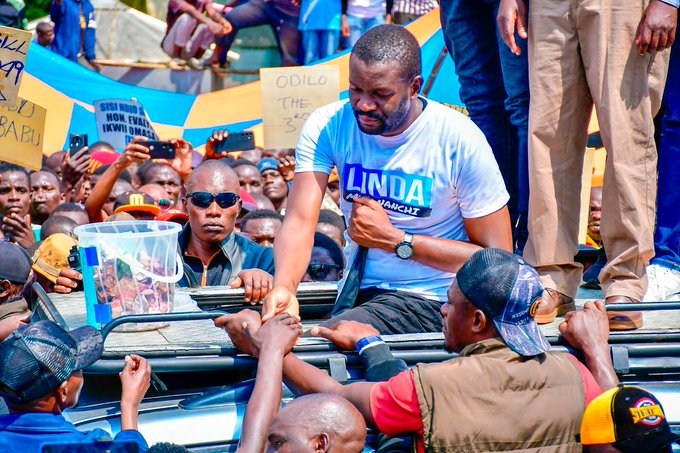
Sifuna, for his part, has emerged as one of the most effective opposition communicators in the country, combining a sharp tongue with genuine organisational reach through what he calls the Linda Mwananchi Movement, a formation whose Western alliance networks span both Luo Nyanza and Western Kenya. His demand for transparency over the Dangote agreement is, on its face, entirely legitimate — agreements of that scale, involving national infrastructure and foreign investment, should be subject to parliamentary scrutiny. But in the hyper-charged atmosphere of pre-election Kenya, legitimacy and political motive are rarely separable, and Ruto has chosen to treat the demand as the latter exclusively.
The real question the Dangote confrontation raises is what the political period between now and August 2027 will actually look like. Kenya’s election cycles have a well-documented pattern: the further from voting day, the more development-focused the rhetoric; the closer to the date, the more tribal, personal, and occasionally dangerous the discourse becomes. Ruto is already in phase one, touring the Coast with title deeds and refinery agreements, positioning himself as the builder-president who delivers where others only promised. The coastal development blitz — six days, multiple counties, title deeds, electricity connections, and now a petroleum refinery — is the opening chapter of a campaign biography being written in real time.
But phase two is coming. The opposition, fractured for much of Ruto’s first term, is beginning to coalesce. Kenyatta’s influence, though diminished, has not disappeared. Raila Odinga’s return from his African Union bid brings back the most experienced opposition strategist in the country’s political history. Gachagua, now leading the Democracy for the Citizens Party, commands loyalty across Mount Kenya in ways that could complicate Ruto’s traditional base. And Sifuna, younger, louder, and increasingly visible, is positioning his Western alliance networks as the connective tissue of a broad anti-incumbency coalition.
The Dangote exchange is therefore a preview of the register in which the next ten months will be conducted. Ruto will run on delivery — on refineries, on title deeds, on digital health systems, on road projects. His opponents will run on accountability — on what the agreements say, on who benefits, on the KSh104.8B questions that remain unanswered in the health sector, and on the unresolved grievances of a public that has borne heavy taxation through a difficult economic period. Neither side is wrong about what they are emphasising. Both are choosing their strongest ground.
What is clear is that Kenya’s political temperature will only rise from here. The Lamu refinery, whatever its ultimate economic significance, has already served a purpose that Ruto’s political team fully intended: it has given the President a large, coast-facing, nationally resonant project to defend, and in defending it, an excuse to go after his opponents with a ferocity that signals the gloves are now permanently off.
Edwin Sifuna asked where the Dangote agreement was. The answer he got told him — and the country — something more important than any document could: that the 2027 election campaign has already begun, and that Ruto intends to fight it on his own terms, loudly, on the road, and without apology.
Similar Posts by The Mt Kenya Times:
- Garang’s ghost: What South Sudan does with its liberation ideals
- When the teacher breaks: TSC’s quiet battle for mental health in the classroom
- Patel makes history with third African crown
- From menstrual health to AI: Kenya keynote tour puts youth voices at the centre
- The Kenyan paradox: How political elitism and social stratification are mortgaging the ambitions of future generations
About the Author