Sixty-nine children too many: Why Kenya must finally fix its broken school safety system
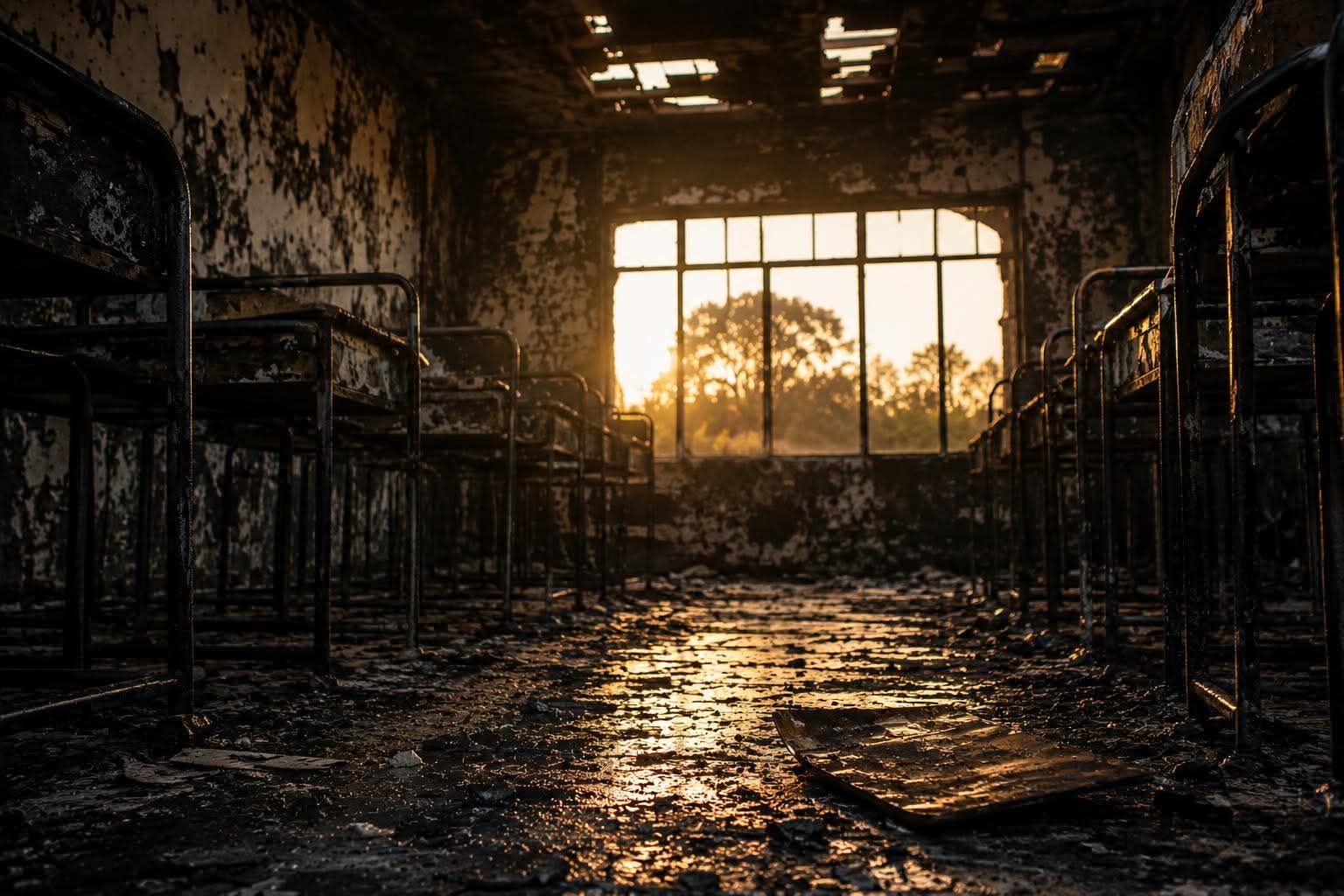
Burned down dormitory
The numbers do not lie — and neither does the pattern behind them.
By Jane Mwangi
In my years working in the education sector, I have witnessed five mass casualty events involving children. The Moi Girls fire of 2018 claimed ten lives. In 2019, Precious Talent Academy collapsed, killing eight children. In 2020, Kakamega Primary saw fourteen children die in a stampede. In 2025, Hillside Endarasha lost twenty-one children in a dormitory fire. Now Utumishi adds sixteen more to that painful tally.
That is sixty-nine children.
And that number does not include the many others lost in fires, accidents, drowning incidents, and school-related tragedies that never make headlines.
After every tragedy, Kenya follows a familiar script: blame is assigned, simple explanations are offered, and the country moves on. We speak of discipline, parenting, or moral decline. But these are only fragments of a much larger picture.
In the case of Utumishi, there is also a criminal dimension that must be confronted. Accountability for deliberate harm is necessary and unavoidable.
But alongside that truth is another we repeatedly avoid: systemic failure.
Overcrowded dormitories, weak inspections, inadequate water supply, blocked exits, and ignored safety standards are recurring realities. These conditions do not cause every tragedy — but they turn manageable incidents into mass casualty events.
Had safety systems been functioning as intended — inspections consistent, enforcement real, and standards non-negotiable — the scale of loss would have been significantly reduced.
This is not new.
From St Kizito in 1991, Bombolulu in 1998, Nyeri High in 1999, Kyanguli in 2001, and Moi Girls in 2017, the pattern is consistent: weak enforcement, overcrowding, unresolved grievances, and delayed institutional response.
After Kyanguli, Kenya briefly grasped a hard truth: punishment is not prevention. That moment informed genuine reforms, including revised safety standards and new regulatory frameworks. But urgency faded, and implementation weakened with it.
Today, inspections are often predictable, violations persist, and enforcement is largely reactive — triggered only after tragedy strikes.
We have built systems that assume compliance rather than enforce it.
Yet we know what works. Where regulators are empowered and independent, standards hold and unsafe institutions are shut. Basic education should never be the weakest link in the regulatory chain.
This conversation must move beyond outrage and blame toward structural reform. We must confront overcrowding, strengthen inspection regimes, and ensure accountability is continuous — not episodic.
Because the truth is simple: children are safest in systems designed to prevent failure, not merely respond to it.
Sixty-nine children is not a statistic. It is a warning.
Utumishi, Endarasha, Kyanguli, Moi Girls — these are not isolated tragedies. They are symptoms of a system under strain.
We know what must be done. The question is whether we will finally do it.
If we truly believe that the life of a Kenyan child is priceless, then that belief must be reflected in how we design, fund, inspect, and enforce safety in our schools.
Not after the next tragedy. Now.
Jane Mwangi is an education sector professional with experience spanning school safety, policy, and child welfare in Kenya.
Similar Posts by The Mt Kenya Times:
- When young lives become disposable
- The day death refused to be scammed
- Statement win at the Gtech: Brentford outclass Chelsea to claim all three points
- When disability funds become a frontier for accountability: Kenya’s PWDs refuse to be invisible
- Public voices concerns over proposed education laws
About the Author