National Health Service medics and nurses demand higher pay which the Government says it cannot afford. Our photo shows NHS staff on their lunch break in a London Hospital. Copyright Photo SHAMLAL PURI.
STRIKES BLIGHT BRITAIN AS WINTER OF DISCONTENT THREATENS TO CRIPPLE LIFELINE SERVICES
By SHAMLAL PURI
Associate Publisher & Senior Editor – UK
Worth Noting:
- Essential public services will come to a grinding halt in the United Kingdom as several thousand disgruntled workers, including many from the diaspora, work in the Ambulance services.
- Railways will go on a nationwide strike in December and January, paralysing significant services throughout the country.
- Ambulance staff demand fair pay and staffing levels or they will walk out. Unison, the UK’s biggest trade union, announced that ambulance workers intend to go on strike before Christmas.
- Ambulance technicians, 999 handlers, and paramedics will not work during the industrial action. The union has yet to confirm the dates for the action, but several parts of the country, including parts of London, the North-West, South-West England and Yorkshire. Observers say there may be more areas that could be hit as ambulance crews in other Hospital trusts were yet to take a final decision.

More than 100,000 National Health Service (NHS) nurses in the United Kingdom are demanding a pay rise. They are set to go on strike on 15 and 20 December, days to the run-up to Christmas, crippling lifeline services in hospitals and endangering the lives of patients.
This is the first-ever national walkout with the overwhelming support of the Royal College of Nursing (RCN), which represents two-thirds of NHS nurses. The strike, throughout the UK, is the biggest in RCN’s 106-year history.
December is also when nurses are overwhelmed with not only Covid-19 patients but also those coming into the Accident and Emergency departments of the hospitals either through accidents or festive binge drinking.
Health Secretary Steve Barclay has refused to discuss the pay demands of the nurses even after they offered to meet him to discuss their demands.
Speaking to BBC Breakfast, Pat Cullen, the RCN secretary, said the Government should stop the spin and discuss their pay rise demands so he can avert the strikes. Mr Barclay has the power and means to stop their action by opening serious talks to discuss the dispute.
Judging by Mr Barclay’s response, he is in no mood to compromise and accept their demands.
The nurses are demanding a 19.2% pay rise which could cost the Government £10 billion annually.
The Government, citing the current recession, says it cannot afford to pay more to hospital staff.
The Government appears to forget nurses’ sterling role during Covid-19 alongside doctors who saved thousands of lives. A lot of those still alive may well have been Tory voters!
It is well-known that employers never settle pay disputes in full as demanded by the workers but reach a middle-way compromise through negotiations until it is time to sit again and agree. But to turn down meetings point blank appears suicidal for any government as labour relations form a powerful tier of good governance.
Strikes are never good and hardly benefit anyone. I have participated in the National Union of Journalists (NUJ), of which I have been a bonafide member, striking over pay disputes. I have stood, with colleagues, outside on picket duty in the cold wintry weather. I know how it feels.
There is more bad news and Prime Minister Rishi Sunak warned of severe challenges in the winter of 2022 arising from industrial action.
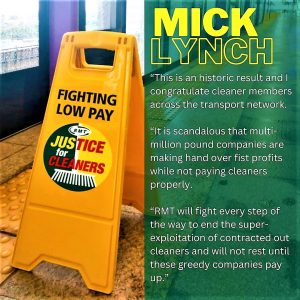
Essential public services will come to a grinding halt in the United Kingdom as several thousand disgruntled workers, including many from the diaspora, work in the Ambulance services.
Railways will go on a nationwide strike in December and January, paralysing significant services throughout the country.
Ambulance staff demand fair pay and staffing levels or they will walk out. Unison, the UK’s biggest trade union, announced that ambulance workers intend to go on strike before Christmas.
Ambulance technicians, 999 handlers, and paramedics will not work during the industrial action. The union has yet to confirm the dates for the action, but several parts of the country, including parts of London, the North-West, South-West England and Yorkshire. Observers say there may be more areas that could be hit as ambulance crews in other Hospital trusts were yet to take a final decision.
There are strong possibilities that workers at individual hospital trusts could come out in sympathy with their colleagues elsewhere.
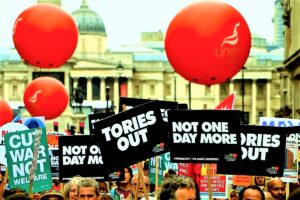
Even though ambulances may be short-staffed during industrial action, the public has been assured there will be cover available to dispatch ambulances in emergencies. The Army is also on standby to take over from the striking NHS staff.
To add to the public’s agony, several other public services organisations have their grouse. They will stop working or run skeleton services.
Winter is usually the strike season when major public services are hit by workers downing their tools to demand higher pay.
The current wave of strikes continues with the British postal service Royal Mail workers, firefighters, dock workers, immigration staff and university lecturers.
Royal Mail has warned that Christmas postal deliveries will be suspended, holding the festive season at ransom. Postal workers will stand out at pickets and will suspend deliveries.
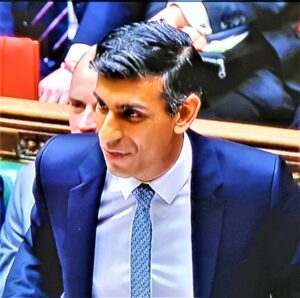
Observers say that postal workers have been told to concentrate on delivering parcels, many sent as emotional value Christmas gifts, and pay less attention to letters.
The danger in this move is urgent letters, business correspondence, and legal documents will be held back, compromising deadlines and resulting in breaches of agreements or court order deadlines.
Communication Union Workers (CWU), the post worker’s union, will stop work for seven days from 1, 9, 11, 14, 15, 23 and Christmas Eve, 24 December.
Postal workers are angry at how Royal Mail bosses treat their employees without respect. They have the best pay conditions but are unhappy with the attitude of their bosses and working conditions and the use of casual labour in the postal sorting system.
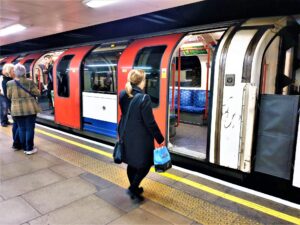
The second rail workers’ strike this year will bring Britain’s railways to a screeching halt, causing chaos for millions planning their Christmas.
Over 40,000 members of the powerful Rail, Maritime and Transport Union (RMT) are due to down their tools and walk out on 48-hour stoppages on 13, 14 and 15 December disrupting the public’s holiday plans.
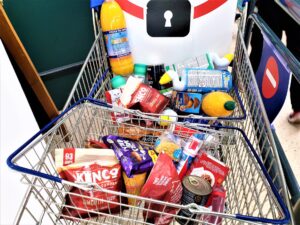
Strikes will also hit the London Underground system leading to fears that they will cause massive £300 million damage in London alone, adding to the wobbly economy’s woes.
Among those who will refuse to work are cleaners whose responsibility is keeping the trains clean and ensuring healthy network travel. This is especially important during these days of Covid-19.
Commuters also have a nasty habit of dropping sandwich wrappers and leaving behind newspapers. Cleaners also have the task of recovering forgotten items which they have to hand over to the Lost property office of the network,
Among the long list of items forgotten are briefcases, backpacks, spectacles, watches, phones, house keys, and in some rare cases, a briefcase full of money, dentures, a prosthetic arm, and believe it or not – a hamster in a cage.
Working away from their home, Britons usually go home for their festive season but may miss out on family gatherings.
New Year travel plans will also be hit as the RMT members walk out again on 3, 4, 6 and 7 January 2023.
The rail dispute has been rumbling since June without a solution.
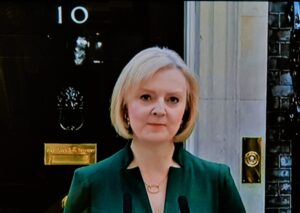
Mick Lynch, the General Secretary of RMT, slammed the Government for its “lack of urgency” in dealing with the long-running dispute over jobs, pay and working conditions and finding a meaningful solution.
He found the Government’s response astonishing despite meetings with Ministers to thrash out a solution. The Ministers appear to be discussing a resolution at the Government level.
The Government, on its part, is keeping its options open and discussing ways of resolving the dispute with transport unions. Still, it needs to be faster in finding a solution to end the dispute for the benefit of taxpayers and the travelling public.
Added to this are bus strikes by several companies, including Abellio, for four days, 1-2, 9-10 and 16-17 December. The Metroline bus network staff will stop work between 1-3, 8-9 and 15-16 December.
More than 100,000 civil service members will go on strike in December, the dates for which are yet to be announced.
University lecturers and sixth-form college staff sections also walk out over pay disputes.
Sixth-form teachers have suffered real terms pay cut since 2010, which they put at 20%.
The Sunak Government is in a severe dilemma as they have too much on their plate – reviving an almost moribund economy after his predecessor Liz Truss crashed it turning the screw on tax rises and the spiralling cost of living crisis, not to mention rising energy costs.
The poser is: Could this be the death knell for the Tories? Voters usually shun a government that has failed them and, more so, a high taxation party.
Many opponents of the Sunak administration say that Rishi is running a zombie Government struggling for survival. A weak government, which imposes taxes on the public, prolonging their suffering, often loses in the general election scheduled for December 2024.
Political knives are already out for Rishi Sunak, with his opponents in the Tory party waiting to see whether he succeeds as the Prime Minister or runs out of excuses.
Britain saw rail and airport strikes last year when people’s holiday plans were ruined, and they lost thousands of Pounds in wasted airfares and holiday bookings.
Strikes are not unique in the United Kingdom. There is a long tradition of workers stopping work, but a major NHS strike is the first.
The older generation has not forgotten the major nationwide industrial action in the British coal industry in 1984-85 led by the fiery National Union of Mineworkers (NUM) militant leader Arthur Scargill.
That violent confrontation was against the National Coal Board (NCB), a government agency in the Margaret Thatcher era, to protest over colliery closures. Thatcher also attempted to curtail trade union power, which has historically been the backbone of the labour movement.
The Tory Government of the time wanted to shut down 70 pits which the NUM opposed leading to the year-long strike. NUM finally lost to the Government, but the strike was one of the longest in the world.
Scargill, the NUM leader, is 84 today and lives in retirement, but he has not lost his zest for trade unionism and a fight. He surfaced in June to support the rail strike in Sheffield.
The year-long strike led to violence between the striking miners and the police and flying pickets. Flying pickets are groups of striking workers that move from one workplace to another to picket them. Usually, flying pickets are illegal – you can only join a picket line at your workplace.
The result was that the once-rich coal mining industry led to major pit closures.
The strike was the most violent industrial action of the 20th Century and led to thousands of job losses.
The British coal mine industry was wiped out. From 1,000 mines at their peak today there are only 46 coal mines. The once coal-rich areas now have turned into poverty traps, with families of former coal miners struggling for survival.
While one doesn’t wish to see the 1980s types of coal industry strikes returning to haunt the UK, there is a sincere hope that the present-day Sunak Government and the strikers will find a solution to the demands of the striking professionals.
The nurses have been offered a 1% increase, which they have rejected. Over the years, they have seen a 20% erosion in their wages.
Male nurse John, a divorcee who did not wish to be identified by his full name, said he is so scared of the high energy bills in these dark winter days that it is dark outside when he wakes up to go to work. He draws the curtains of his flat’s window to let the bright streetlight illuminate his room. He saves a little money by not turning on his room light.
He skips breakfast as he has nothing in his larder and eats a subsidised sandwich in the hospital canteen.
Not everyone is lucky to have the facility of a free streetlight like John.
Female nurses, single mothers, unable to feed their children, resort to prostitution in their spare time while off duty to earn a few extra Pounds.
Many nurses also turn to food banks for free food donated by charities as they cannot afford to buy food for their children; with the pay they receive, much of it goes to pay their bills, taxes and house rent.
It is unlikely the Government will be able to offer a quick solution to the strikers because all this needs a lot of cash resources, which is precisely what the Government needs- spare cash.
The result could be the Government will tax the public higher. Then the Tories also risk losing the next general election. Oh! That vicious circle! Britons are already groaning under the weight of high taxes.
Similar Posts by Shamlal Puri:
- BRITAIN PLEDGES ‘ROCK SOLID’ SUPPORT TO UKRAINE
- KENYAN HOCKEY LEGENDS HONOURED IN LONDON
- Tourism bonanza for the Middle East: FOUR DAYS WHEN THE WORLD CAME UNDER ONE ROOF IN DUBAI
- LONDON PACKAGING WEEK WITH TOP GLOBAL BRANDS ATTRACTS THOUSANDS OF VISITORS
- UK’S NATIONAL HEALTH SERVICE IN BIZARRE COLOUR BAR CRISIS
About the Author