The Betrayal Of Sovereignty: How Kenya’s Leaders Have Turned Article One Into A Hollow Promise
 The Mt Kenya Times
 By Jerameel Kevins Owuor Odhiambo
Kenya’s Ksh 10.6 trillion debt, poor corruption ranking, and the government’s attempt to push through the unpopular Finance Bill 2024 despite overwhelming public opposition expose a deep failure of leadership. Fifteen years after adopting a constitution that vested all sovereign power in the people, the political class treats that authority as its private possession. What was meant to be a safeguard against abuse has become a symbolic document in the hands of leaders who behave like masters instead of public servants.
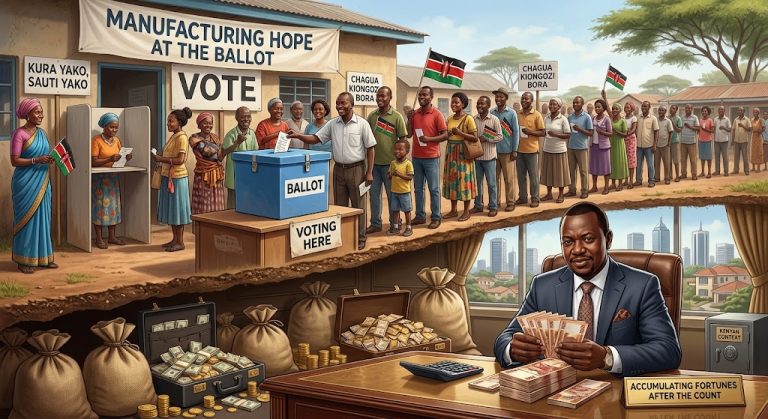
The pattern of betrayal follows a predictable cycle, refined over decades of post-independence governance. A new leader emerges whether through the ballot or through political maneuvering promising transformation, accountability, and servant leadership. They invoke the struggles of our founding fathers, quote Dedan Kimathi and Mekatilili wa Menza, speak eloquently of wanjiku and the hustler. Then, once power is secured, the metamorphosis begins. Campaign promises dissolve like sugar in rain. The “people’s champion” develops a sudden appreciation for executive privilege. Cabinet appointments reward political debts rather than competence. Tender processes become vehicles for enriching the connected. Parliament, meant to be our legislative shield against executive excess, becomes a rubber stamp assembly where loyalty to the party leader trumps loyalty to constituents. Despite comprehensive legal frameworks and institutional mechanisms, corruption remains a major impediment to governance and development, and the institutions designed to fight it; the Ethics and Anti-Corruption Commission, the Office of the Director of Public Prosecutions lack the independence and power to pursue meaningful accountability.
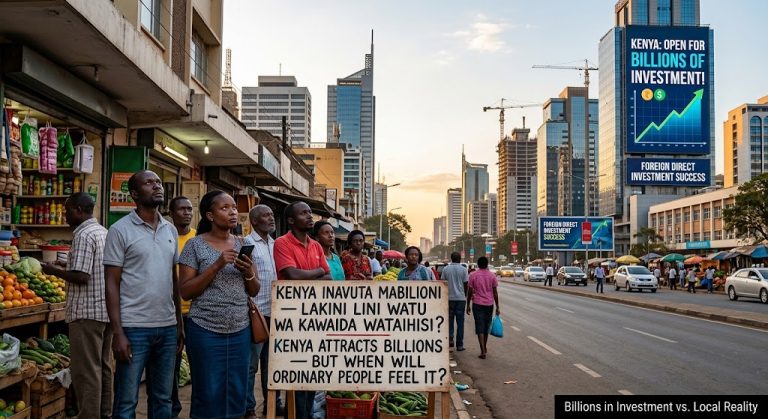
This betrayal reaches its grotesque apex when we examine how public resources are deployed. Kenya Revenue Authority collections for the fiscal year 2023/24 amounted to KSh 2.4 trillion, falling short of the tax revenue target of KSh 2.5 trillion, yet somehow government officials find resources for foreign trips, luxury vehicles, and bloated delegations. The government’s debt service obligations consumed 68.3% of revenue in FY 2023/24 meaning more than two-thirds of every shilling collected goes not to hospitals, schools, or roads, but to servicing loans taken by previous administrations, often under questionable circumstances, for projects that exist only as line items in budget books. Meanwhile, an investigative report found that the government sold fake fertilizer to farmers at a time when a quarter of the population faced food insecurity. This is not governance; this is organized plunder with constitutional cover.Here is the uncomfortable truth that must be spoken: Article One’s promise of popular sovereignty has never been genuinely tested because Kenyan citizens have yet to fully embrace its implications. We have outsourced our sovereignty to politicians, then complained when they abuse it. We delegate our power every five years through elections, then retreat to our private lives, expecting our chosen representatives to magically transform into selfless public servants. We focus our political energy on defending “our” tribal candidates against “their” tribal candidates, never questioning why the system produces only candidates from the same elite class regardless of ethnicity. We know Article One promises us power, but we have not developed the civic culture, institutional frameworks, or sustained mobilization necessary to actually wield it. The Constitution gives us tools; public participation forums, recall mechanisms, constitutional commissions, the Bill of Rights yet these remain largely unutilized, unknown to most citizens, or captured by the very interests they were meant to check. Popular sovereignty cannot be exercised through episodic protests alone; it requires persistent, institutionalized engagement that most Kenyans, exhausted by the daily struggle for survival in an economy rigged against them, simply cannot sustain.
What would it mean to truly activate Article One? It would mean recognizing that sovereignty is not passive it’s not something you possess simply by being Kenyan. It’s active, requiring constant vigilance, participation, and willingness to hold power accountable. It means county governments must be reformed from being mini-State Houses for corrupt governors into genuine vehicles for local empowerment and service delivery. It means Parliament must be reclaimed from party bosses and returned to constituents through genuine constituency engagement, term limits for all elected officials, and the removal of the current system where MPs primarily serve those who funded their campaigns rather than those who voted for them. It means the Judiciary and independent tribunals designated as organs through which sovereign power is exercised must be protected from executive interference and given the resources to function effectively. It means civic education must be revived not as government propaganda but as genuine empowerment, teaching every Kenyan what Article One means, what powers they hold, and how to exercise them. Most fundamentally, it means accepting that liberation is not a one-time event that happened at independence or with the 2010 Constitution, but an ongoing project that each generation must undertake.
The choice before us is stark. We can continue on the current trajectory, enduring governments that treat public office as an opportunity for private accumulation, watching our debt burden crush future generations, accepting that our children will inherit a country where corruption is the norm and accountability is the exception. Or we can embrace the revolutionary promise embedded in Article One: that we, the people, are the source of all legitimate authority, and that any government that fails to serve us can and must be held accountable, reformed, or replaced through constitutional means. The 2024 protests proved that Kenyans can mobilize across ethnic lines for shared interests. The challenge now is to transform that protest energy into sustained institutional change. This requires new political formations that genuinely prioritize issue-based politics over ethnic mobilization, civil society that engages year-round rather than only during crises, and a citizenry that understands sovereignty not as an abstract constitutional concept but as a practical tool for demanding responsive leadership. The power has always been ours; the only question is whether we have the courage, commitment, and collective will to actually use it. Our leaders have not failed us by accident they have failed us because we have allowed them to believe that sovereignty belongs to them rather than to us. It’s time to correct that misunderstanding, permanently and irreversibly.
The writer is a legal commentator
Similar Posts by The Mt Kenya Times:
- Kenya joins US and UK to put citizens on the terrorism frontline
- Kenya’s parliament races to tame the AI frontier
- Kalonzo calls Ruto to order over Uhuru attacks
- Gachagua takes his 2027 campaign to America
- Uhuru owns “sponsor” — and Ruto should be worried
About the Author