The Mt Kenya Times
By Jerameel Kevins Owuor Odhiambo
Worth Noting:
-
The consequences of this curse manifest in myriad forms, each more pernicious than the last. From the blatant disregard for the sacrosanct principles of constitutionalism and due process to the brazen subversion of the checks and balances enshrined within the hallowed halls of democracy, the actions of these depraved leaders have left an indelible stain upon the fabric of Kenyan society. As the great Kenyan writer, Ngugi wa Thiong’o, poignantly remarked, “A nation’s leaders should be the custodians of its dreams, not the harbingers of its nightmares.”
-
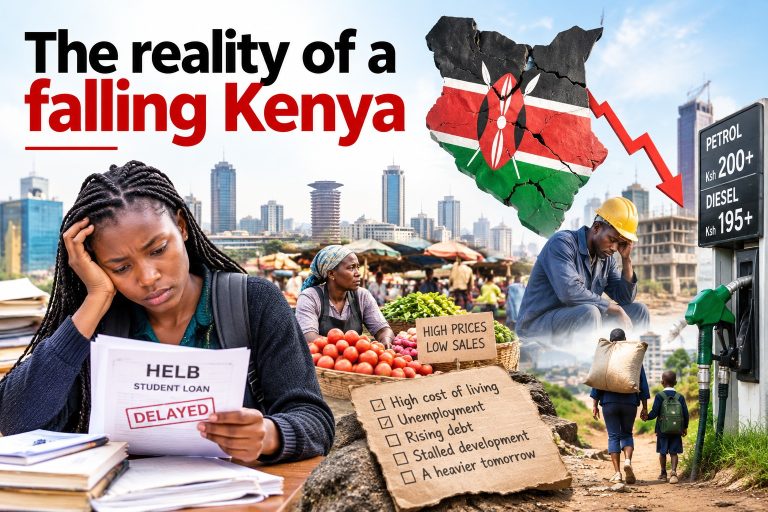
The deleterious impact of such leadership extends far beyond the realm of governance, permeating into the very core of the nation’s socio-economic fabric.
The ancient Somali proverb, “When the rulers are immoral, what becomes of the people they rule?” reverberates through the annals of Kenya’s contemporary history, casting a somber pall over the nation’s trajectory. This axiomatic wisdom, born from the collective experiences of generations past, serves as a poignant reminder of the inextricable link between the moral fabric of a nation’s leadership and the well-being of its people. For far too long, the scourge of iniquitous leadership has festered in Kenya, corroding the very foundations upon which the pillars of justice, equity, and the rule of law are erected.
Kenyans, the unwitting victims of this insidious malady, bear the cross of suffering wrought by the machinations of rulers who have exhibited a flagrant disregard for the principles of good governance and ethical leadership. These rulers, driven by ignorance, unconcern for the plight of their constituents, and a brazen willingness to act outside the confines of the law, have perpetuated a cycle of injustice and inequity, leaving the aspirations of the Kenyan people in tatters.
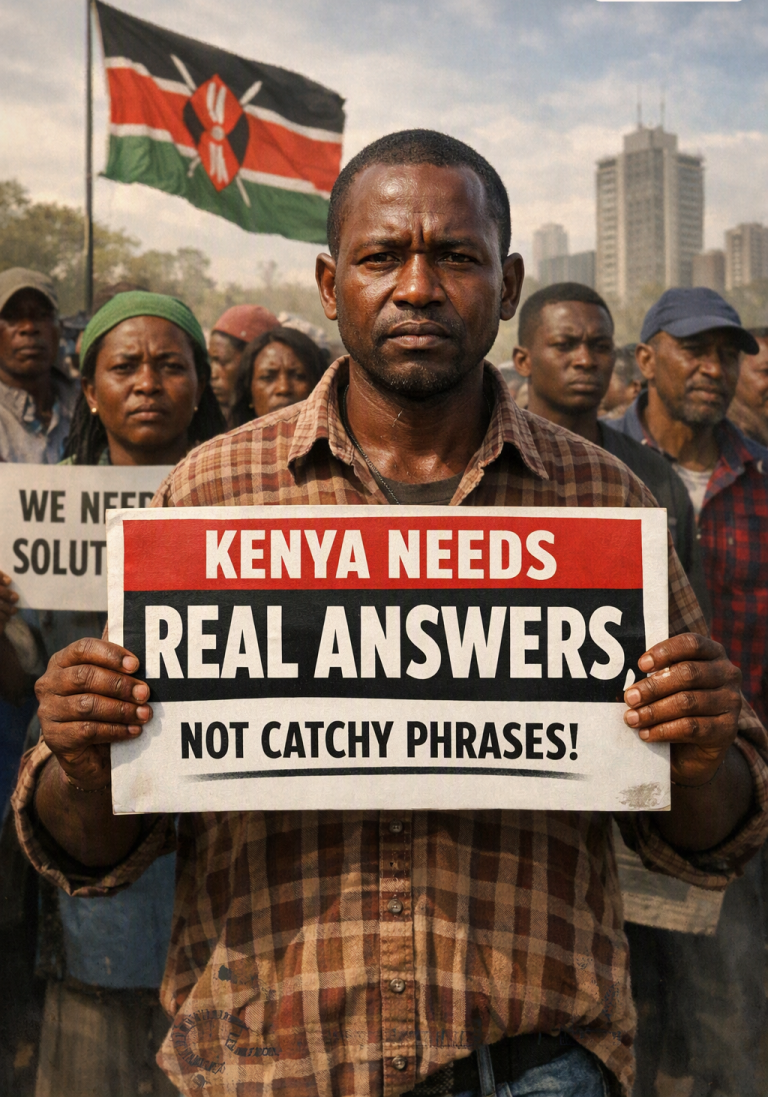
Populist rhetoric and empty promises have become the currency of these nefarious leaders, who have exploited the hopes and dreams of the masses for their own avaricious gain. Their actions have eroded public trust, undermined the rule of law, and fostered a climate of uncertainty and despair, where the fundamental rights and freedoms of the Kenyan people have been compromised.
It is incumbent upon the citizens of Kenya to break free from the shackles of this iniquitous leadership and reclaim their rightful place as the architects of their nation’s destiny. Through a concerted effort to cultivate a culture of active citizenship and civic engagement, Kenyans must hold their leaders accountable, demand transparency, and actively participate in the decision-making processes that shape their collective future. Only then can the nation begin to heal the wounds inflicted by the scourge of immoral leadership and chart a course towards a brighter, more equitable tomorrow, where justice, equity, and the rule of law are the guiding principles that govern the land.
The consequences of this curse manifest in myriad forms, each more pernicious than the last. From the blatant disregard for the sacrosanct principles of constitutionalism and due process to the brazen subversion of the checks and balances enshrined within the hallowed halls of democracy, the actions of these depraved leaders have left an indelible stain upon the fabric of Kenyan society. As the great Kenyan writer, Ngugi wa Thiong’o, poignantly remarked, “A nation’s leaders should be the custodians of its dreams, not the harbingers of its nightmares.”
The deleterious impact of such leadership extends far beyond the realm of governance, permeating into the very core of the nation’s socio-economic fabric. The wanton plunder of public resources, facilitated by the flagrant circumvention of fiscal accountability mechanisms, has deprived Kenyans of the means to uplift themselves from the shackles of poverty and deprivation. This travesty is further compounded by the proliferation of corruption, a malignant force that has metastasized throughout the body politic, eroding public trust and undermining the foundations of justice and equity.
In the realm of human rights, the actions of these leaders have cast a long and ominous shadow. The callous disregard for the inviolable rights enshrined in the Kenyan Constitution, coupled with the unbridled use of state apparatus to suppress dissent and stifle civil liberties, has left a trail of human suffering in its wake. As the revered South African leader, Nelson Mandela, once affirmed, “A nation should not be judged by how it treats its highest citizens, but its lowest ones.”
The consequences of such leadership transcend the immediate realm, extending into the realm of intergenerational equity and environmental stewardship. The unbridled pursuit of short-term gains and the willful neglect of sustainable development practices have precipitated an environmental crisis that threatens to undermine the very foundations of Kenya’s future prosperity. As the Kenyan Nobel Laureate, Wangari Maathai, sagely observed, “We owe it to ourselves and to the next generation to conserve the environment so that we can bequeath our children a sustainable world that benefits all.”
In the face of such adversity, the clarion call for restorative justice echoes through the halls of Kenyan jurisprudence. It is a call that demands accountability, redress, and the restoration of the rule of law – a call that seeks to heal the wounds inflicted upon the nation’s psyche and chart a path towards a more equitable and just society. The pursuit of restorative justice in Kenya must be underpinned by a robust legal framework that enshrines the principles of transparency, accountability, and the inviolability of human rights. Drawing inspiration from the immortal words of the great Senegalese scholar, Cheikh Anta Diop, who declared, “To remake the human being is to remake the universe,” Kenya must embark on a journey of systemic reform, one that seeks to dismantle the very structures that have enabled and perpetuated the scourge of iniquitous leadership.
Central to this endeavor is the establishment of independent and impartial institutions, insulated from the corrosive influence of political expediency and vested interests. These institutions must be endowed with the requisite authority and resources to investigate, prosecute, and adjudicate cases of malfeasance, corruption, and human rights violations, without fear or favor. As the Kenyan jurist, Willy Mutunga, aptly stated, “The true measure of a nation’s commitment to justice lies not in the grandeur of its laws, but in the resolve with which they are enforced.”
The pursuit of restorative justice demands a comprehensive strategy for asset recovery and the repatriation of ill-gotten gains. By leveraging international cooperation mechanisms and employing robust legal frameworks, such as the United Nations Convention against Corruption, Kenya can reclaim the resources plundered by these nefarious leaders, thereby restoring the means for socio-economic development and the advancement of the collective good.
The pursuit of restorative justice in Kenya must transcend mere rhetoric and manifestos; it demands a steadfast commitment to cultivating an environment where active citizenship and civic engagement are not only encouraged but fostered as indispensable pillars of a thriving democracy. Kenyans must be empowered to hold their leaders accountable, to scrutinize their actions, and to actively participate in the decision-making processes that shape the nation’s collective destiny. This is not a mere idealistic notion but a fundamental necessity, for true democracy cannot be imposed from without; it must emanate from the hearts and minds of the people themselves, deeply rooted in their cultural traditions and value systems.
The Ghanaian philosopher, Kwasi Wiredu, aptly captured this essence when he sagely remarked, “A people’s democracy must be rooted in their culture and traditions, for true freedom cannot be imposed from without, but must spring from within.” These words resonate with profound wisdom, reminding us that the path to genuine freedom and self-determination is not one that can be externally imposed but must be cultivated and nurtured by the people themselves, drawing strength from their rich cultural heritage and the collective aspirations that bind them together.
In this odyssey towards restorative justice, Kenya must draw inspiration from the resilience and indomitable spirit of its people, a spirit that has endured through countless trials and tribulations. The nation’s history is replete with instances where its citizens have risen above adversity, defying the odds and overcoming seemingly insurmountable challenges. It is in the crucible of these adversities that the true mettle of a nation is forged, and it is through the collective resolve of its citizens that the shackles of iniquitous leadership can be broken.
The renowned Kenyan writer, Binyavanga Wainaina, eloquently proclaimed, “We are the dream and the hope of the slave.” These powerful words encapsulate the essence of Kenya’s struggle for justice and self-determination, evoking the collective memory of a people who have endured generations of oppression and subjugation. Yet, in the face of these adversities, the indomitable spirit of the Kenyan people has persevered, fueled by the unwavering hope that a brighter, more equitable future lies ahead.
It is with this clarion call that Kenya must march forth, undeterred, towards a future where justice, equity, and the rule of law reign supreme, unshackled from the curse of iniquitous leadership. The journey may be arduous, fraught with challenges and obstacles, but it is a path that must be trodden, for it is only through the collective resolve and unwavering determination of its citizens that Kenya can truly realize its full potential as a beacon of hope, a shining example of restorative justice and democratic ideals in action.
The Writer is a lawyer and legal researcher
Similar Posts by The Mt Kenya Times:
- Dr. Ekrah Ndung’u wins TVET advocacy award after 12 years
- Mt Kenya Times ePAPER October 17-18, 2026
- Ruto bets billions on Kerio Valley — with one eye on 2027
- Ruto’s health ministry kills Murang’a’s digital hospitals
- Kenya bets on Mount Kenya to drive a billion-shilling tourism revival
About the Author